Skip to content
Terrorism PortalConflict, Terrorism & Geopolitical Analysis
World atlas

Visual Timelines · 2012–2026

MaliFrom the 2012 rebellion to the siege of Bamako

In January 2012 a Tuareg separatist rebellion broke out in northern Mali. Within three months a coup had toppled the government in Bamako and jihadist groups linked to al-Qaeda had taken Gao, Timbuktu and Kidal. A French intervention, a UN mission and a peace agreement followed; none brought the war to an end.

This timeline follows how the conflict moved south from the desert into central Mali and towards the capital, how al-Qaeda's affiliate JNIM and the Islamic State's Sahel branch grew into the main armed forces outside the state, and how the coups of 2020 and 2021, the departure of France and the UN and the arrival of Russian forces changed the country. It runs to 22 October 2026, after the largest offensive the insurgents have yet mounted.

Explore the timeline92 sources

TogoSierra LeoneSenegalNigeriaNigerMoroccoWestern SaharaMauritaniaMaliLiberiaGuinea-BissauGuineaGhanaGambiaIvory CoastBurkina FasoBeninAlgeriaBamako — 3. A mutiny becomes a coup; 8. The UN deploys MINUSMA; 12. A peace agreement, without the jihadists; 13. Gunmen kill 20 at the Radisson Blu; 17. Two coups in nine months; 21. MINUSMA is told to leave; 24. JNIM strikes Bamako; 25. A Sahel confederation; Wagner gives way to Africa Corps; 26. The fuel siege of BamakoBamako3·8·12·13·17·21·24·25·26Kati — 3. A mutiny becomes a coup; 17. Two coups in nine months; 27. Coordinated offensive; the defence minister is killedKati3·17·27Gao — 4. The north falls; the MNLA declares 'Azawad'; 5. Jihadist rule and the Timbuktu mausoleums; 6. Konna falls; France launches Operation Serval; 14. Four groups merge into JNIM; 18. Wagner arrives; France leaves; 27. Coordinated offensive; the defence minister is killedGao4·5·6·14·18·27Kidal — 4. The north falls; the MNLA declares 'Azawad'; 9. Defeat in Kidal; 22. The army retakes Kidal; the peace deal ends; 27. Coordinated offensive; the defence minister is killed; 31. The army returns to KidalKidal4·9·22·27·31Timbuktu — 4. The north falls; the MNLA declares 'Azawad'; 5. Jihadist rule and the Timbuktu mausoleums; 6. Konna falls; France launches Operation Serval; 7. Army reprisals against Fulani, Tuareg and Arab menTimbuktu4·5·6·7Konna — 6. Konna falls; France launches Operation Serval; 28. A second wave, and executed prisonersKonna6·28Ménaka — 1. A separatist rebellion in the north; 11. The Islamic State in the Greater Sahara; 19. The Islamic State's war on the Ménaka region; 32. Massacre in the Ménaka regionMénaka1·11·19·32Aguelhok — 2. Soldiers executed at Aguelhok; 28. A second wave, and executed prisonersAguelhok2·28Tessalit — 1. A separatist rebellion in the northTessalit1Tinzaouaten — 23. Wagner's defeat at TinzaouatenTinzaouaten23Ogossagou — 15. Massacres in Fulani and Dogon villagesOgossagou15Sobane Da — 15. Massacres in Fulani and Dogon villagesSobane Da15Moura — 20. The Moura massacreMoura20Kayes — 26. The fuel siege of BamakoKayes26Anéfis — 12. A peace agreement, without the jihadists; 28. A second wave, and executed prisonersAnéfis12·28Niamey — 25. A Sahel confederation; Wagner gives way to Africa CorpsNiamey25Mbera camp — 29. Civilians caught between both sidesMbera camp29Sévaré — 6. Konna falls; France launches Operation Serval; 7. Army reprisals against Fulani, Tuareg and Arab men; 27. Coordinated offensive; the defence minister is killedSévaré6·7·27Koulogon — 15. Massacres in Fulani and Dogon villagesKoulogon15Boulkessi — 16. The army loses its outpostsBoulkessi16Indelimane — 16. The army loses its outpostsIndelimane16Nioro du Sahel — 26. The fuel siege of BamakoNioro du Sahel26Nampala — 10. The war moves to central MaliNampala10Dioura — 30. The fall of the Dioura campDioura30Kenieroba — 28. A second wave, and executed prisonersKenieroba28Tabrichat — 28. A second wave, and executed prisonersTabrichat28Bombori — 29. Civilians caught between both sidesBombori29
Numbers refer to the events of the timeline. Thin lines are the regional boundaries of Mali in Natural Earth (before the 2023 reorganisation, so Ménaka still falls within Gao). Points mark where events happened, not areas of control. Coordinates: Wikidata; OpenStreetMap (ODbL) where marked in the sources. Map: Natural Earth (public domain); places: Wikidata (CC0). Points mark where events took place, not areas of control.

Photo: NASA Johnson Space Center · Wikimedia Commons · Public domain (NASA) · original

Chronology 2012–2026

  1. Rebellion and the fall of the north

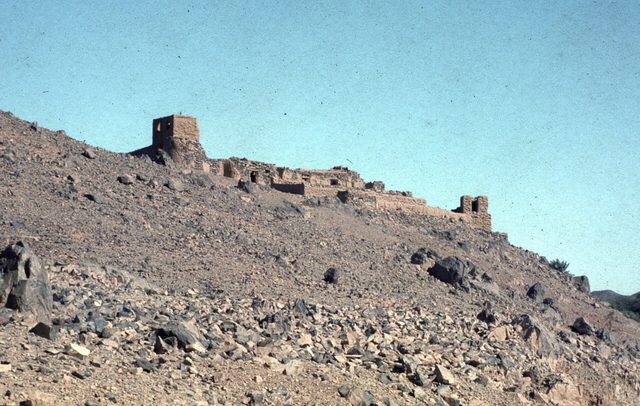
    A stone fort on a rocky ridge above desert ground.

    A separatist rebellion in the north

    Fighters of the National Movement for the Liberation of Azawad (MNLA), a secular Tuareg separatist movement, attacked the army base at Ménaka. Over the following weeks the MNLA and the jihadist groups Ansar Dine, AQIM and MUJAO overran army camps in the Kidal region, among them Aguelhok and Tessalit. The separatists wanted their own state; the jihadists did not.
    Political crisisConfirmed

  2. Rebellion and the fall of the north

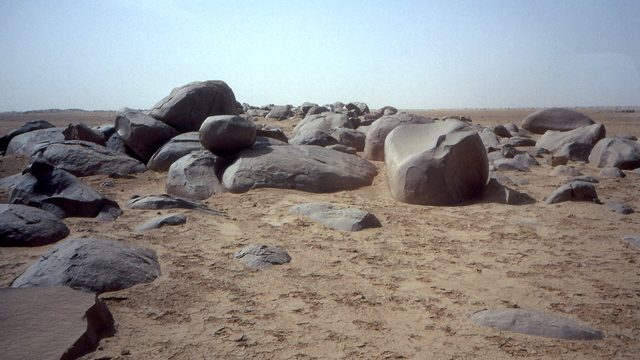
    Flat desert scattered with dark boulders under a pale sky.

    Soldiers executed at Aguelhok

    After a week-long siege, armed groups overran the army camp at Aguelhok on 24 January. Soldiers who had surrendered or were wounded were shot. The UN Commission of Inquiry counted about a hundred dead and attributed the assault to Ansar Dine and AQIM. The killings caused deep anger in the army and among the public in the south.

    AttacksDisputed

  3. Rebellion and the fall of the north

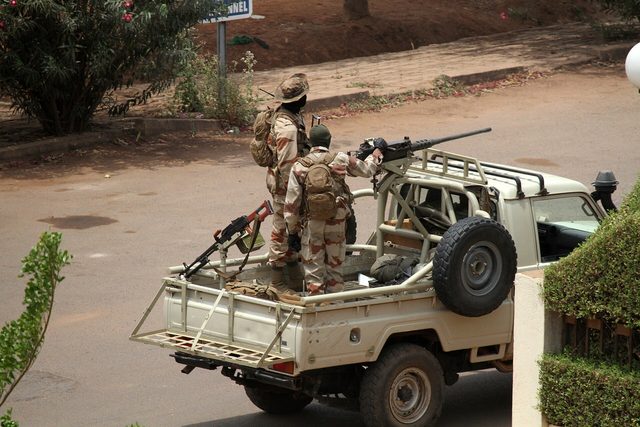
    Two soldiers with a mounted machine gun on a pickup truck in a tree-lined street.

    A mutiny becomes a coup

    Soldiers angered by the defeats in the north mutinied at the Kati camp and marched on Bamako. On 22 March Captain Amadou Haya Sanogo's junta suspended the Constitution and overthrew President Amadou Toumani Touré, weeks before a scheduled election. Under a deal with ECOWAS on 6 April, the speaker of parliament, Dioncounda Traoré, became interim president.

    Political crisisConfirmed

  4. Rebellion and the fall of the north

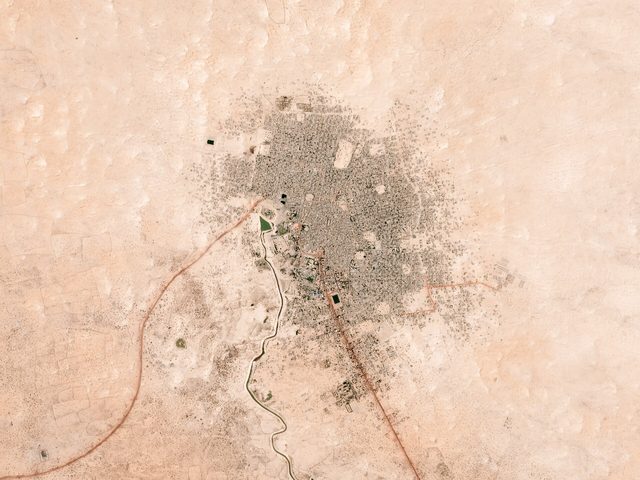
    Satellite view of a compact grey city surrounded by pale sand.

    The north falls; the MNLA declares 'Azawad'

    In three days armed groups took Kidal, Gao and Timbuktu, the three northern regional capitals. On 6 April the MNLA proclaimed an independent state of Azawad, which no government recognised. Ansar Dine, which held Kidal and, with AQIM, Timbuktu, rejected independence and said it fought for Islam. Human Rights Watch counted at least 284,000 people displaced.

    ExpansionConfirmed

  5. Rebellion and the fall of the north

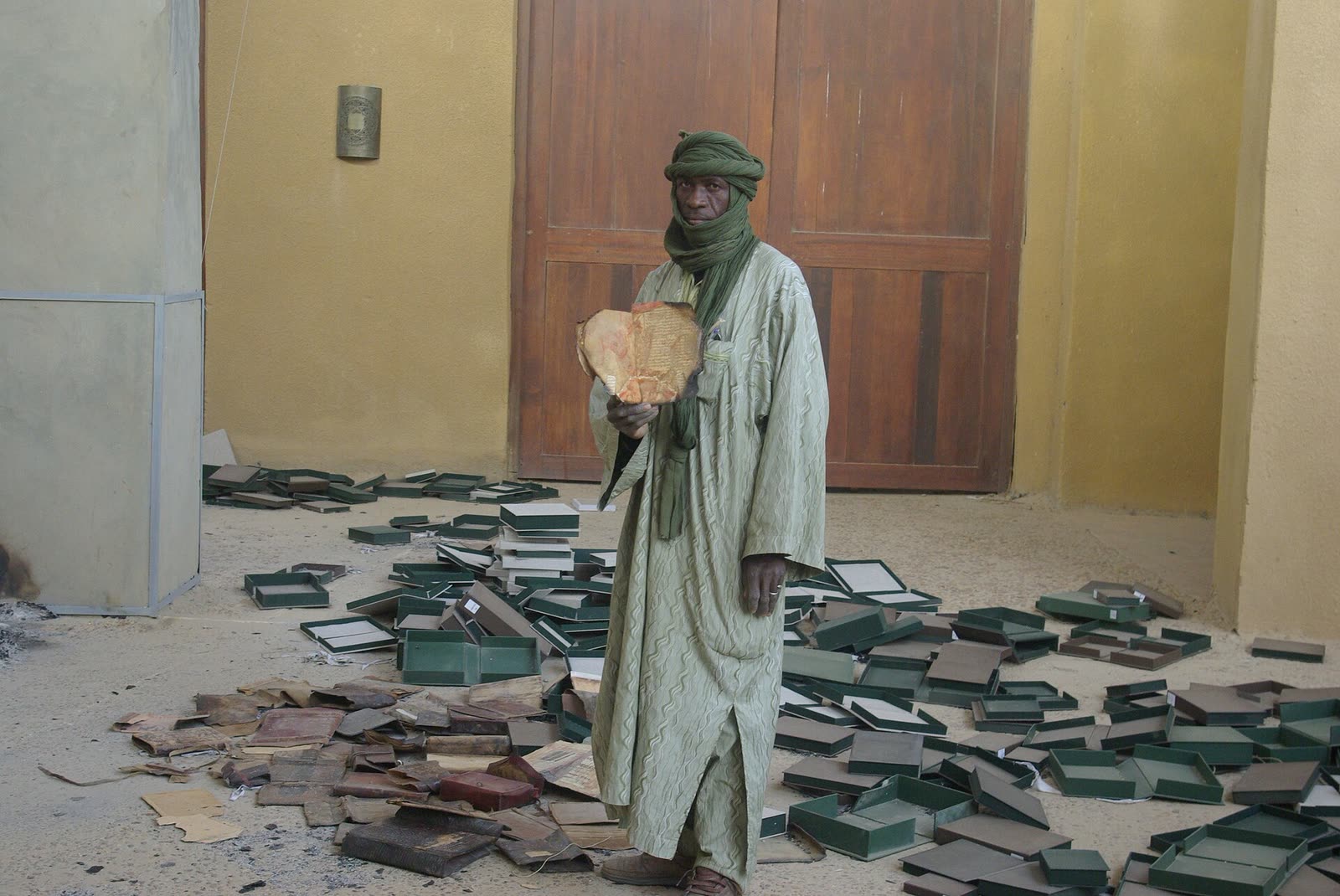
    Hands holding the charred remains of a manuscript.

    Jihadist rule and the Timbuktu mausoleums

    On 27 June MUJAO drove the MNLA out of Gao; jihadist groups now held all three northern capitals. Days later Ansar Dine and AQIM began smashing Sufi mausoleums in Timbuktu, a World Heritage site. Islamic courts ordered floggings, amputations and executions. The UN Commission of Inquiry documented at least 84 cases of rape by members of both the MNLA and jihadist groups.

    AttacksConfirmed

  6. Intervention

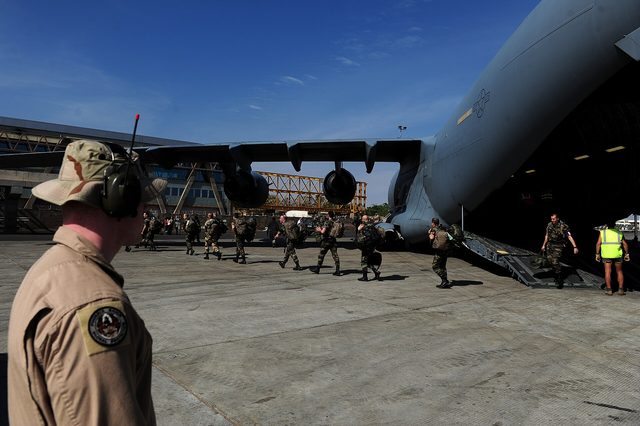
    Soldiers walk down the rear ramp of a large grey military transport aircraft on an airport apron.

    Konna falls; France launches Operation Serval

    Ansar Dine, AQIM and MUJAO pushed south and took Konna, the last town before the army base at Sévaré. At the interim government's request France intervened on 11 January, alongside the African mission AFISMA that the Security Council had authorised in December. By the end of January French and Malian troops had retaken Gao and Timbuktu.

    International interventionConfirmed

  7. Intervention

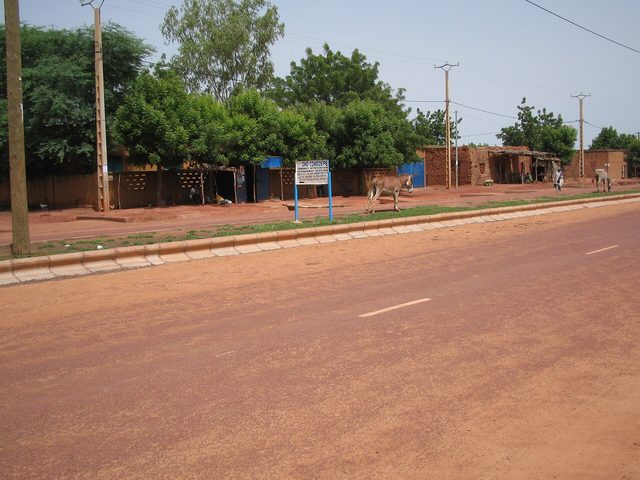
    A wide, empty red-earth road lined with trees and low buildings.

    Army reprisals against Fulani, Tuareg and Arab men

    As the army advanced, soldiers detained and executed men they accused of supporting the jihadists, most of them Fulani, Tuareg or Arab. In Sévaré, the UN Commission of Inquiry found, at least 12 people were executed and thrown into wells on 11 January. After Timbuktu was retaken, most Tuareg and Arab families fled the city for fear of reprisals.

    State operationsConfirmed

  8. Intervention

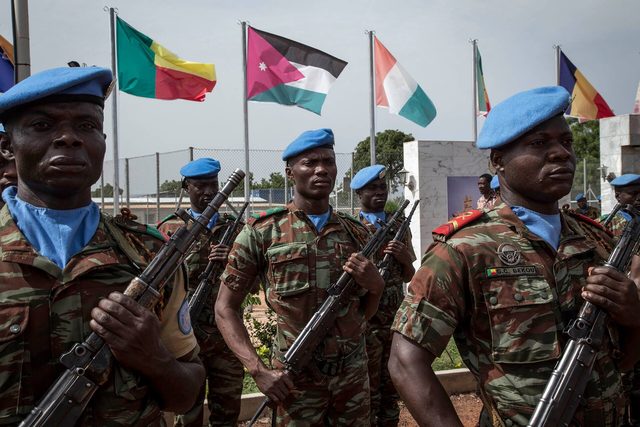
    Peacekeepers in blue berets stand in line in front of national flags.

    The UN deploys MINUSMA

    The Security Council created the UN Multidimensional Integrated Stabilization Mission in Mali, authorising up to 11,200 troops and 1,440 police; on 1 July it took over the African troops of AFISMA. In June a preliminary agreement signed in Ouagadougou with the MNLA and the HCUA allowed a presidential election. Ibrahim Boubacar Keïta won it in August with 77.6% of the vote.

    International interventionConfirmed

  9. Intervention

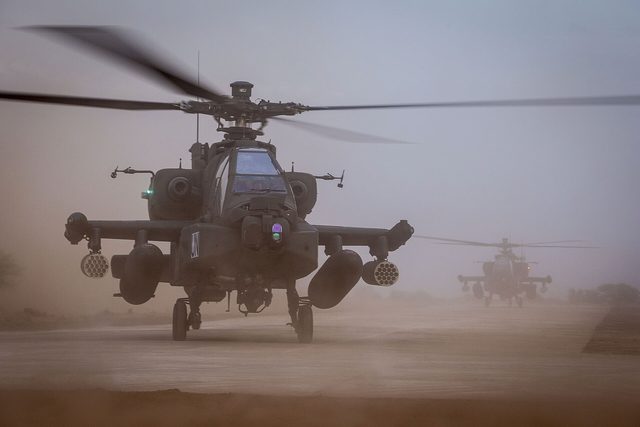
    An attack helicopter lands in a cloud of dust, a second one behind it.

    Defeat in Kidal

    Fighting broke out during Prime Minister Moussa Mara's visit to Kidal. On 21 May an army assault was repulsed by the MNLA and allied armed groups, and within days the troops had left the town. MINUSMA confirmed 41 deaths, eight of them civilians. The army would not retake Kidal until November 2023.

    State operationsConfirmed

  10. A peace on paper

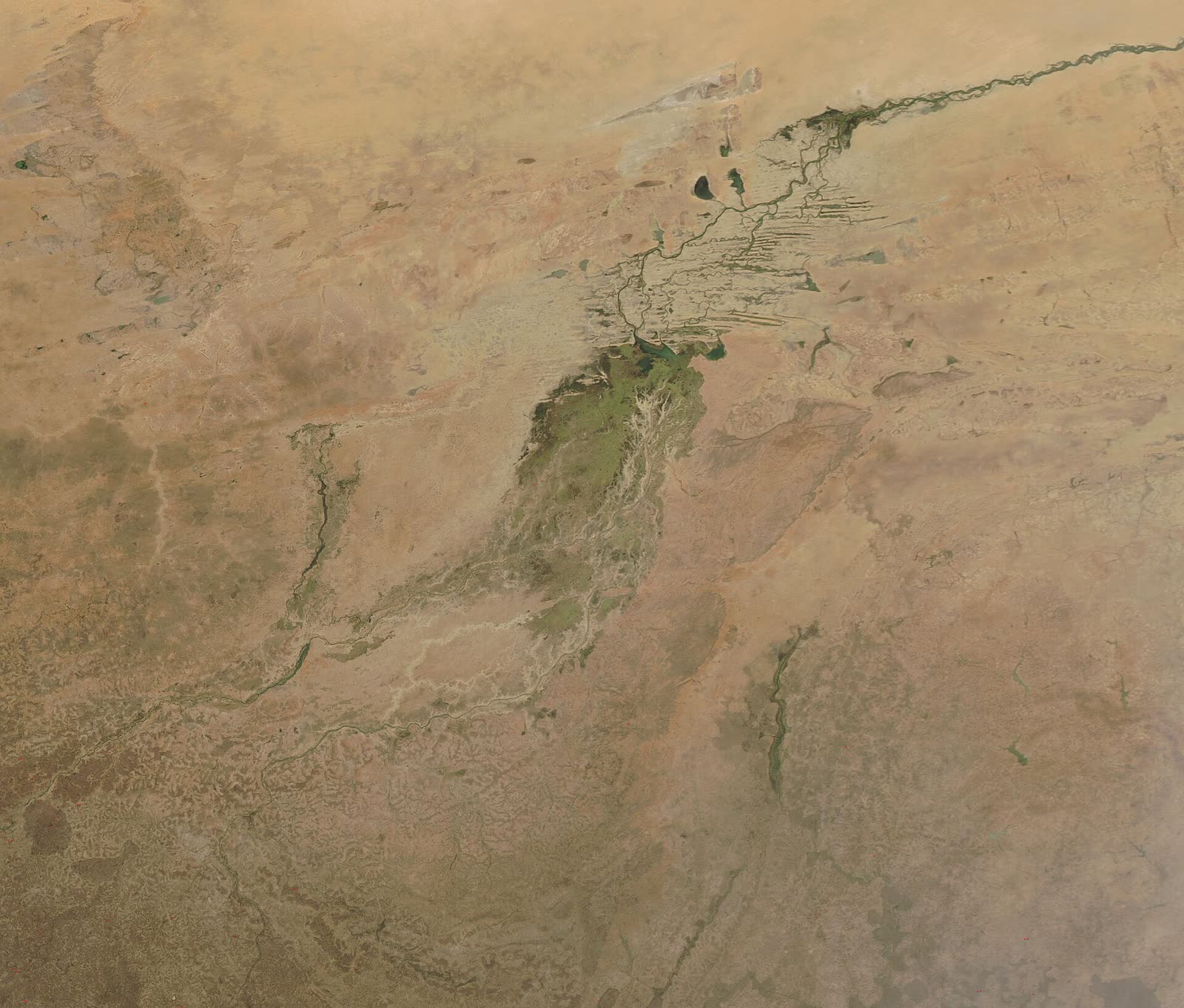
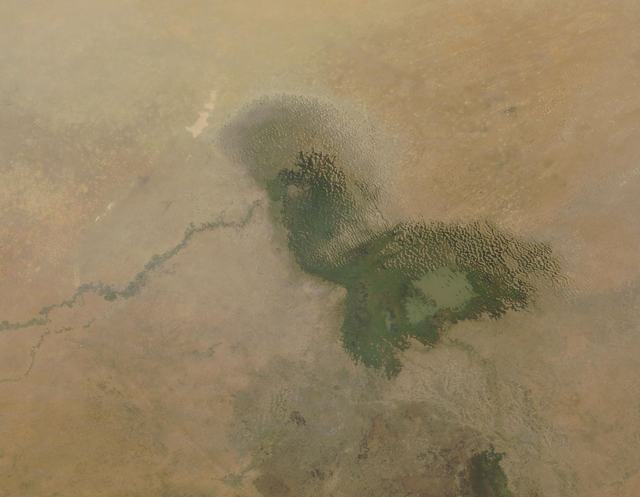
    Satellite image of green wetlands against arid land.

    The war moves to central Mali

    Attacks on Nampala and Ténenkou in January opened a new front in the Mopti and Ségou regions. A newly created group, the Macina Liberation Front, later known as Katiba Macina, claimed the Ténenkou attack. Its leader, the Fulani preacher Amadou Koufa, recruited among communities with grievances over abuses by security forces, corruption, land disputes and banditry.

    Emergence of groupsAssessed

  11. A peace on paper

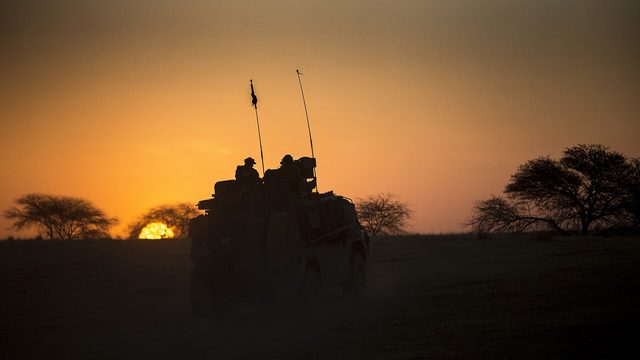
    Silhouette of an armoured vehicle against a setting sun over the savanna.

    The Islamic State in the Greater Sahara

    Adnan Abu Walid al-Sahrawi pledged allegiance to the Islamic State and broke away from al-Mourabitoun, an al-Qaeda-aligned group. The Islamic State accepted the pledge in October 2016. The new group operated where Mali, Niger and Burkina Faso meet. The United States designated it a terrorist organisation in 2018; the UN listed it in 2020.

    Emergence of groupsConfirmed

  12. A peace on paper

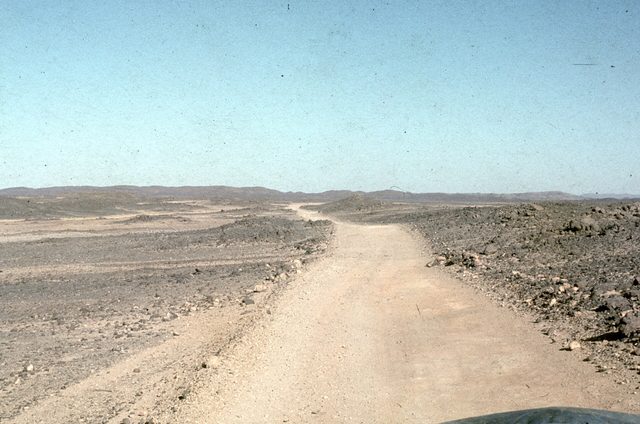
    A dirt track running across a stony desert plain.

    A peace agreement, without the jihadists

    The government and the pro-government Platform signed the Algiers peace agreement in Bamako on 15 May; the Coordination of Azawad Movements (CMA), the separatist coalition, signed on 20 June. It promised decentralisation, the integration of fighters and joint patrols. Jihadist groups were not party to it. In August a Platform militia seized Anéfis from the CMA, the first major ceasefire violation.

    Political crisisConfirmed

  13. A peace on paper

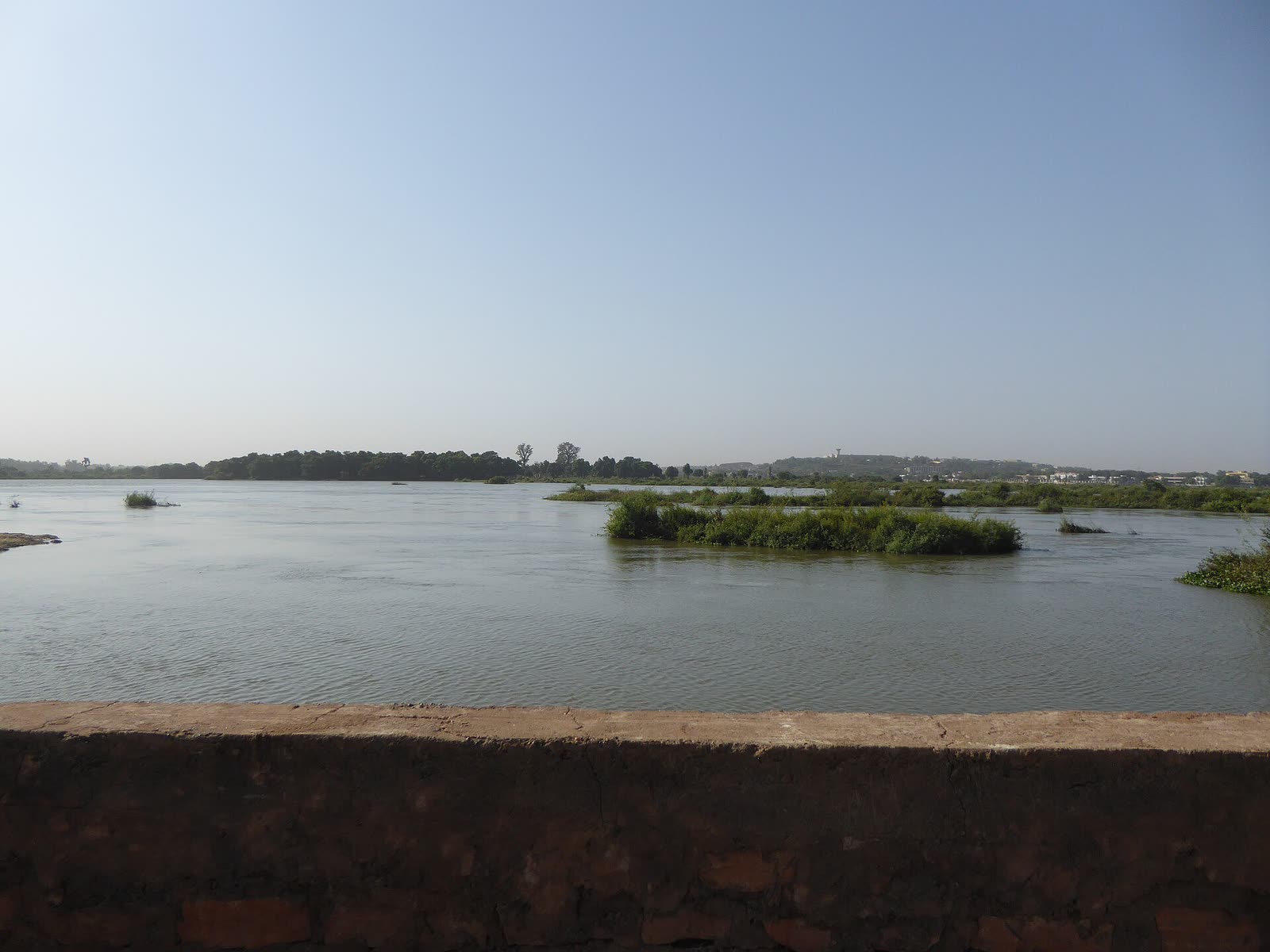
    Wide river with buildings and greenery on the far bank.

    Gunmen kill 20 at the Radisson Blu

    Gunmen stormed the Radisson Blu hotel in Bamako and fired indiscriminately on guests and staff. Malian special forces, supported by MINUSMA, ended the siege the same day. The UN counted 19 civilians and one soldier killed, besides three attackers. The government declared a state of emergency. Two months later a hotel in Ouagadougou was attacked in a similar way.

    AttacksReported

  14. A peace on paper

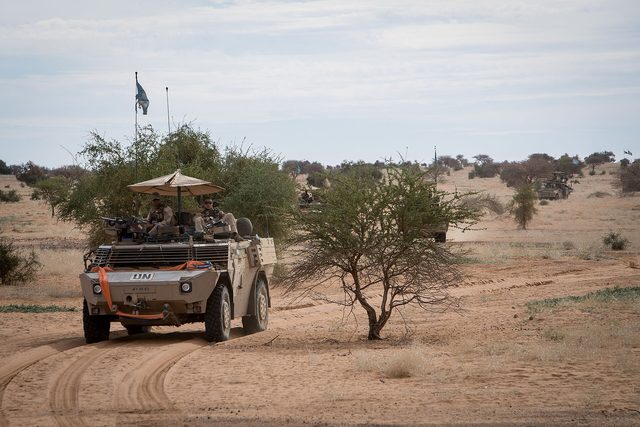
    A small armoured vehicle with a UN flag drives along a sandy track among bushes.

    Four groups merge into JNIM

    Ansar Dine, AQIM's Sahara branch, al-Mourabitoun and the Macina Liberation Front announced their merger as Jama'at Nusrat al-Islam wal-Muslimin (JNIM) under Iyad Ag Ghaly, as al-Qaeda's branch in Mali. Six weeks earlier a suicide car bomb claimed by al-Mourabitoun had killed 54 people in Gao, at the camp where army, CMA and Platform fighters were preparing joint patrols.

    Emergence of groupsConfirmed

  15. A peace on paper

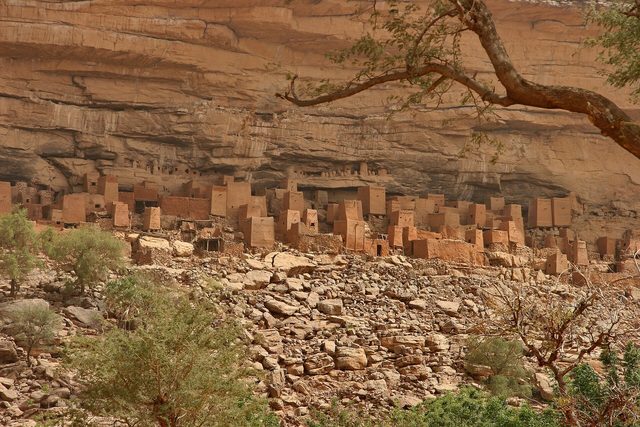
    Mud-brick dwellings built into the foot of a tall sandstone cliff.

    Massacres in Fulani and Dogon villages

    Massacres by community militias and by armed men from rival communities hit Fulani and Dogon villages in central Mali. On 1 January 37 Fulani civilians were killed at Koulogon. On 23 March armed men described by the UN as mainly Dozo hunters killed at least 157 Fulani at Ogossagou, 46 of them children. In June at least 35 Dogon villagers were killed at Sobane Da.

    AttacksAssessed

  16. A peace on paper

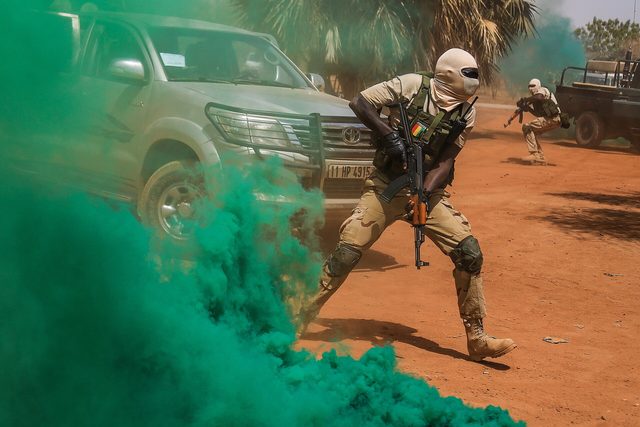
    A masked soldier runs through green smoke past a pickup truck.

    The army loses its outposts

    Attackers overran the army camps at Boulkessi and Mondoro, near the border with Burkina Faso, and the post of Indelimane in the Ménaka region, where at least 53 soldiers died. The UN counted 193 soldiers killed in three months, and the army withdrew from several exposed posts. In January 2020 France and the G5 Sahel states agreed in Pau to focus on the Islamic State.

    ExpansionDisputed

  17. Juntas and new partners

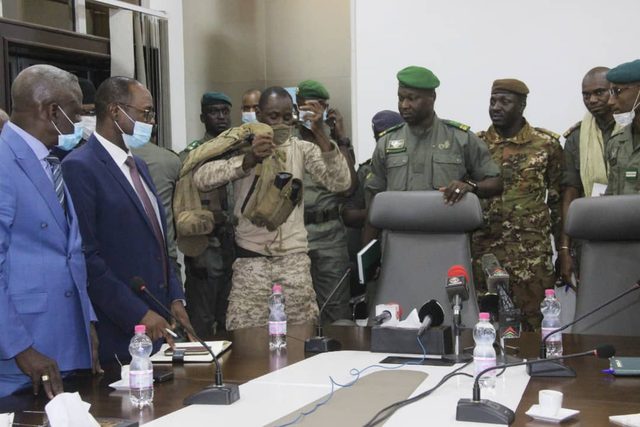
    Officers in uniform and men in suits gather around a table with microphones.

    Two coups in nine months

    After months of street protests, soldiers detained President Keïta and took him to the Kati camp, where he resigned on television. A junta in which Colonel Assimi Goïta emerged as leader promised a transition. In May 2021, after a cabinet reshuffle dropped two officers, soldiers detained the interim president and prime minister, who resigned, and Goïta took power.

    Political crisisConfirmed

  18. Juntas and new partners

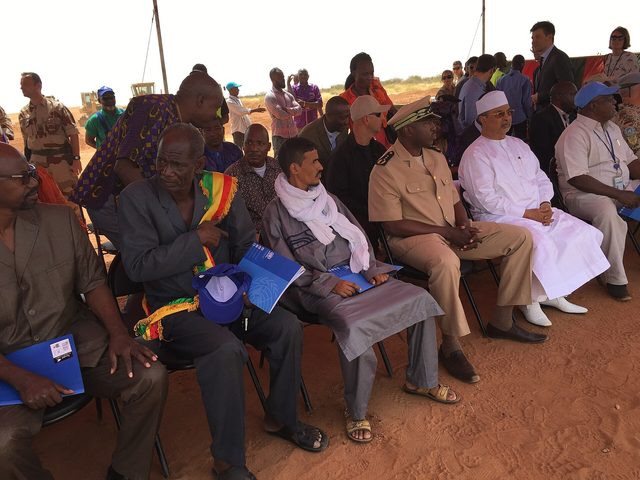
    Officials and guests seated under an awning at an outdoor ceremony.

    Wagner arrives; France leaves

    Fifteen Western governments condemned the deployment of Russian Wagner Group mercenaries in Mali in December 2021. France announced its withdrawal in February 2022, and the last Barkhane troops left Mali through Gao on 15 August. In 2023 Russian officials confirmed to UN investigators that Wagner was operating in Mali as a private contractor, alongside a small number of Russian military instructors.

    International interventionConfirmed

  19. Juntas and new partners

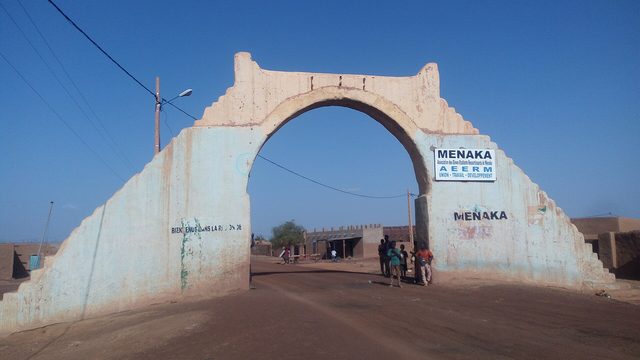
    A whitewashed arch over a dirt road, with the town name painted on it.

    The Islamic State's war on the Ménaka region

    After clashes with Tuareg armed groups in March, Islamic State fighters attacked dozens of villages in the Ménaka and Gao regions, killing hundreds of civilians, many of them Daoussahak, and raping women and girls. Tens of thousands fled. The UN Panel of Experts found that the group had almost doubled its areas of control in Mali in less than a year.

    ExpansionConfirmed

  20. Juntas and new partners

    Wooden pirogues on a wide brown river.

    The Moura massacre

    During an operation against Katiba Macina, Malian troops and foreign military personnel took over Moura, a market town in the Mopti region, and over the following days executed people they had detained. The UN human rights office found reasonable grounds to believe that at least 500 people were killed and 58 women and girls raped. The government said 203 'terrorists' died.

    State operationsConfirmed

  21. Juntas and new partners

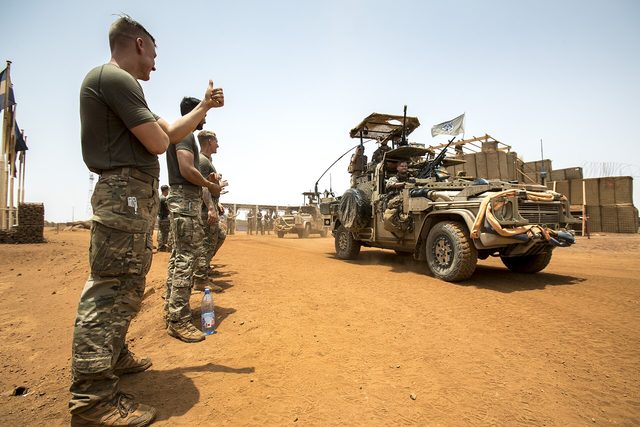
    Soldiers applaud as an armoured patrol vehicle drives into a camp.

    MINUSMA is told to leave

    At the transitional government's request the Security Council ended MINUSMA's mandate and set 31 December as the date to complete its withdrawal. After ten years the mission closed on schedule. Fighting between the army and the separatist movements followed over the camps it vacated in the north, Kidal among them.

    International interventionConfirmed

  22. Juntas and new partners

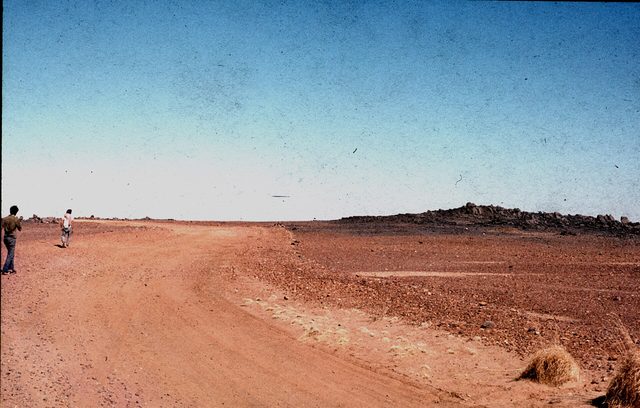
    Red sandy ground stretching to a low horizon, with two figures in the distance.

    The army retakes Kidal; the peace deal ends

    With Wagner fighters alongside, the army took Kidal, held by the separatists since 2014; the separatist coalition said it withdrew for strategic reasons. On 25 January 2024 the junta ended the 2015 Algiers agreement with immediate effect, accusing Algeria of hostile acts. 'All negotiation channels are now closed,' a separatist spokesman said.

    State operationsConfirmed

  23. Siege and offensive

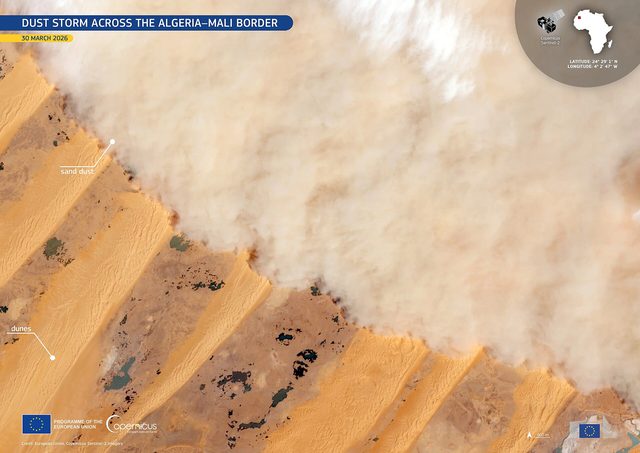
    Satellite image of a pale dust cloud drifting over orange dunes.

    Wagner's defeat at Tinzaouaten

    Near the Algerian border, separatist fighters routed an army and Wagner column after three days of fighting; Wagner acknowledged losses. Mali broke off relations with Ukraine after a Ukrainian intelligence spokesman suggested the rebels had received help. A month later a drone strike on Tinzaouaten killed seven civilians, five of them children, Human Rights Watch found.

    State operationsConfirmed

  24. Siege and offensive

    Soldiers stand behind a low wall in front of an airport terminal.

    JNIM strikes Bamako

    At dawn JNIM fighters attacked the gendarmerie training school and the military zone of Bamako's airport, and claimed the attack. The junta acknowledged 'some losses' but published no toll. A security source told AFP that 77 people were killed and 255 wounded. The attack showed JNIM could strike inside the capital.

    AttacksConfirmed

  25. Siege and offensive

    A Sahel confederation; Wagner gives way to Africa Corps

    Mali, Burkina Faso and Niger, all ruled by juntas, formed the Alliance of Sahel States in September 2023 and turned it into a confederation by a treaty signed in Niamey in July 2024. Their withdrawal from ECOWAS took effect on 29 January 2025. In June 2025 Wagner announced it was leaving Mali; Russian personnel stayed under Africa Corps, which answers to Russia's Ministry of Defence.

    International interventionConfirmed

  26. Siege and offensive

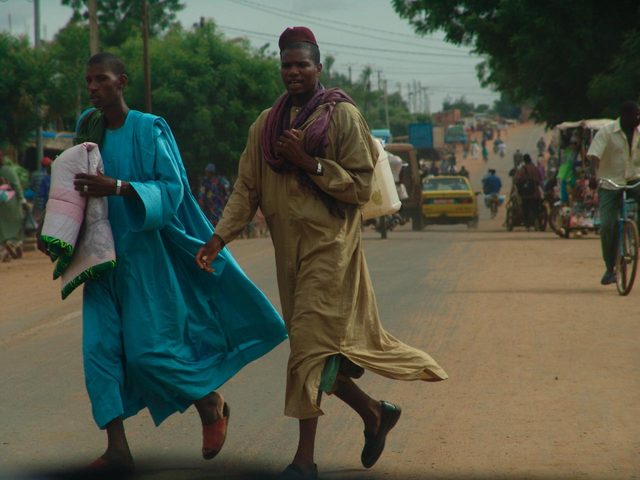
    Two men in long robes cross a busy street lined with trees.

    The fuel siege of Bamako

    On 1 July JNIM attacked army positions in seven towns of western and central Mali, including Kayes, Nioro du Sahel and Diboli. From September it blockaded fuel imports, attacking and destroying hundreds of tankers on the roads from neighbouring countries. Bamako ran short of fuel and electricity, and schools and universities closed nationwide from 27 October to 9 November.

    ExpansionConfirmed

  27. Siege and offensive

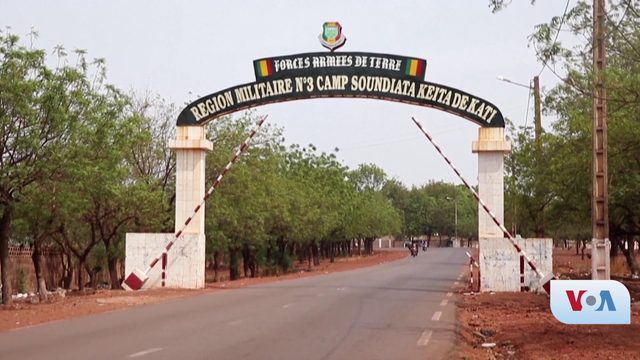
    A white archway with a barrier over a tree-lined road.

    Coordinated offensive; the defence minister is killed

    JNIM and the separatist Azawad Liberation Front (FLA) attacked Kati, Bamako, Kidal, Gao, Sévaré and Mopti at the same time. In Kati a suicide car bomb killed Defence Minister Sadio Camara. The FLA took Kidal; Russia's Defence Ministry confirmed that Africa Corps had withdrawn. Africa Corps reportedly negotiated safe corridors out of other northern posts, and JNIM announced a blockade of Bamako.

    ExpansionConfirmed

  28. Siege and offensive

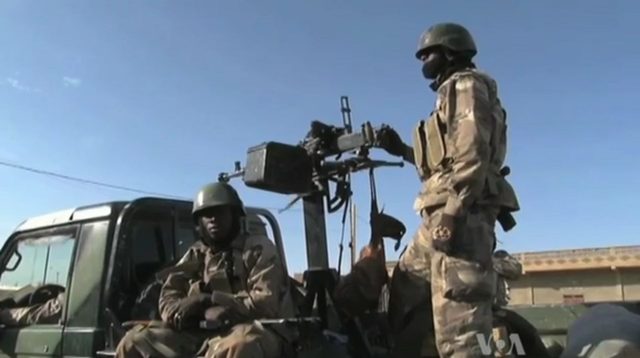
    Soldiers on a pickup truck with a mounted machine gun.

    A second wave, and executed prisoners

    Coordinated attacks claimed by JNIM and the FLA hit army positions in the north and the centre; the army also reported an attack on the Kenieroba prison, south-west of Bamako, and said all were repelled. On 18 July the two groups ambushed an army and Africa Corps convoy on the Anéfis–Gao road. At least 19 soldiers who had surrendered were tortured and executed, Human Rights Watch found.

    ExpansionConfirmed

  29. Siege and offensive

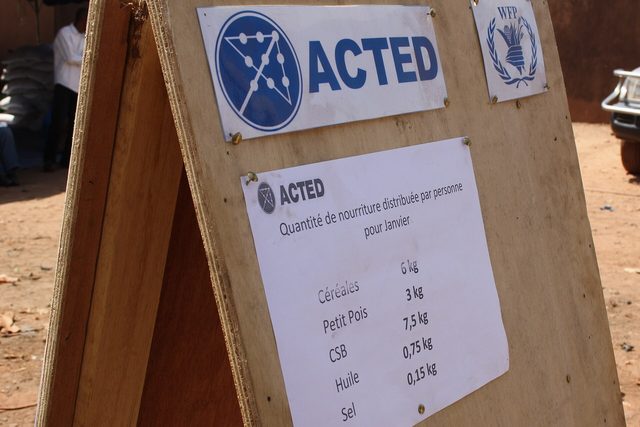
    A signboard listing quantities of cereals, peas, oil and salt.

    Civilians caught between both sides

    Human Rights Watch documented Africa Corps air strikes on villages and a raid on Bombori, in the Mopti region, in which Russian fighters killed nine villagers, four of them children. Apparent army drone strikes hit a market and a health centre. Amnesty International found JNIM ultimatums and forced recruitment driving families into exile; by July UNHCR counted 290,000 Malian refugees in eastern Mauritania.

    Humanitarian tollAssessed

  30. Siege and offensive

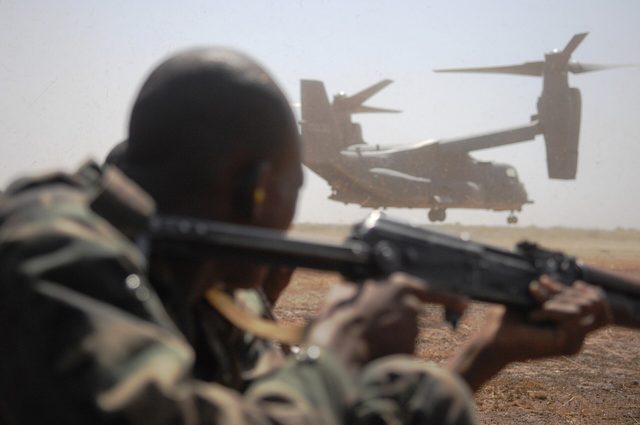
    A soldier aims a rifle while a tilt-rotor aircraft takes off behind him.

    The fall of the Dioura camp

    JNIM fighters overran the army camp at Dioura, in central Mali, and released videos of dozens of captured soldiers giving their names. The army announced air and ground operations against the attackers but gave no toll. A week later troops had not returned to the camp, according to RFI.

    ExpansionConfirmed

  31. Siege and offensive

    The army returns to Kidal

    Five months after losing Kidal, the government announced that troops 'supported by their Russian partners' had consolidated their positions in the city after intense air and ground operations. The FLA called it a strategic and controlled withdrawal forced by Africa Corps air power. The army was back in the town that symbolises the northern rebellions.

    State operationsConfirmed

  32. Siege and offensive

    Massacre in the Ménaka region

    Gunmen killed at least 48 civilians in at least five localities of the Ménaka region, burning houses and stealing livestock, and hundreds of people fled to the town of Ménaka. A local lawmaker and other sources blamed the Islamic State's Sahel branch, which, according to AP, accused villagers of informing the army. The army said it struck a militant base south-west of Ménaka.

    AttacksAssessed

Scroll or drag the timeline; use the arrow keys between events. Select an event for details, map and sources.

From the desert to the capital 2013–2026

In 2012 the war was fought in the north, around Kidal, Gao and Timbuktu. Each arc below joins Kidal to an attack or offensive that marked the conflict's arrival in a new area — central Mali, the capital, a neighbouring country, the far west — to show how it moved south over fourteen years. Press play to watch the sequence.

TogoSierra LeoneSenegalNigeriaNigerMoroccoWestern SaharaMauritaniaMaliLiberiaGuinea-BissauGuineaGhanaGambiaIvory CoastBurkina FasoBeninAlgeriaKidal10 January 2013 — Konna, central Mali2013 KonnaJanuary 2015 — Ténenkou, the inner Niger delta2015 Ténenkou20 November 2015 — Bamako2015 Bamako15 January 2016 — Ouagadougou, Burkina Faso2016 Ouagadougou22 July 2022 — Kati, 15 km from Bamako2022 Kati1 July 2025 — Kayes and the west2025 Kayes2025 Nioro du Sahel4 July 2026 — Kenieroba, south-west of Bamako2026 Kenieroba
Attack marking the conflict's spread to a new areaArcs show the order of events, not routes, the movement of fighters or territorial control. Map: Natural Earth (public domain); places: Wikidata (CC0). Points mark where events took place, not areas of control.
  1. A new group, the Macina Liberation Front, claimed an attack on the prefecture: the start of the war in the centre.

    Uncertainty: The claim was reported by the UN; the group's founding date is not documented.

    ReportedOpen the event

    Sources 1
  2. Gunmen killed 20 people at the Radisson Blu hotel, the deadliest attack in the capital up to then; a restaurant attack in March 2015 had killed five.

    Uncertainty: Competing claims by al-Mourabitoun with AQIM and by the Macina Liberation Front.

    ReportedOpen the event

    Sources 3
  3. A hotel attack in Burkina Faso's capital followed the same pattern as Bamako; the UN said it was reportedly carried out by three Malians.

    Uncertainty: The UN Secretary-General reported the attackers' nationality; it was not established in court.

    Reported

    Sources 1
  4. Car bombs claimed by JNIM's Katiba Macina hit the main army base outside the capital, the seat of the junta's power.

    Confirmed

    Sources 1
  5. JNIM attacked seven towns in western and central Mali, Kayes and Diboli near the Senegalese border among them, then blockaded fuel bound for Bamako.

    ConfirmedOpen the event

    Sources 1
  6. During the second coordinated wave by JNIM and the FLA, the army reported an attack on the prison where opposition figures are held.

    Uncertainty: The army confirmed an attack at Kenieroba; no source attributes it to a specific group.

    ReportedOpen the event

    Sources 1

Kidal is used as the origin because the 2012 rebellion and the jihadist takeover began in the north; the arcs do not imply that each attack was directed from there.

Who is who: the armed groups and their mergers 2012–2026

Mali's armed groups are not one movement. Separatists fought for a state of their own; jihadist groups fought for an Islamic order and rejected independence. Each line shows when a group is documented as active; numbered marks are the splits, mergers and alliances that reshaped them. A shared front does not mean a shared ideology.

Diagram of armed groups in Mali from 2012 to 2026: the separatist movements, Ansar Dine, AQIM, MUJAO and al-Mourabitoun, Katiba Macina, JNIM and the Islamic State in the Sahel

Documented activityReported, assessed or disputedNumbered turning points

  1. 1April 2012 The MNLA declares Azawad's independence; Ansar Dine rejects it. EventUN International Commission of Inquiry for Mali — Report of the International Commission of Inquiry for Mali (S/2020/1332) (29 January 2021)Al Jazeera — Tuaregs claim 'independence' from Mali (6 April 2012)
  2. 2June 2012 MUJAO drives the MNLA out of Gao; the alliance of circumstance ends. EventUN International Commission of Inquiry for Mali — Report of the International Commission of Inquiry for Mali (S/2020/1332) (29 January 2021)
  3. 3August 2013 MUJAO and Mokhtar Belmokhtar's group merge into al-Mourabitoun.UN Security Council ISIL (Da'esh) and Al-Qaida Sanctions Committee — Narrative summary: Al-Mourabitoun (2 June 2014)
  4. 4May 2015 Abu Walid al-Sahrawi pledges allegiance to the Islamic State and splits from al-Mourabitoun. EventUN Security Council (press release SC/14118) — ISIL (Da'esh) and Al-Qaida Sanctions Committee adds two entries, including the Islamic State in the Greater Sahara (23 February 2020)US Federal Register (Department of State) — Designation of ISIS in the Greater Sahara as a Foreign Terrorist Organization (23 May 2018)
  5. 5May–June 2015 The separatist CMA signs the Algiers peace agreement (ended by the junta in January 2024). EventUN Secretary-General — Report on the situation in Mali (S/2015/426) (11 June 2015)UN Secretary-General — Report on the situation in Mali (S/2015/732) (22 September 2015)Africanews (AFP) — Mali announces immediate termination of key Algerian accord (26 January 2024)
  6. 6March 2017 Ansar Dine, AQIM's Sahara branch, al-Mourabitoun and Katiba Macina merge into JNIM. EventUN Secretary-General — Report on the situation in Mali (S/2017/271) (30 March 2017)UN Security Council ISIL (Da'esh) and Al-Qaida Sanctions Committee — Narrative summary: Jama'a Nusrat ul-Islam wa al-Muslimin (JNIM) (4 October 2018)
  7. 7April 2026 JNIM and the separatist FLA plan and fight a joint offensive (UN Monitoring Team). EventUN Security Council — Thirty-eighth report of the Analytical Support and Sanctions Monitoring Team (S/2026/651) (10 August 2026)International Centre for Counter-Terrorism (ICCT) — Mali: What Were the Reasons and the Consequences of the 25 April Attacks? (28 May 2026)

The separatist line covers successive coalitions: the MNLA, the CMA, the CSP and, from 2024, the FLA. Hatched bars: activity that is assessed rather than documented in detail.

Geographic reach, by phase

TogoSierra LeoneSenegalNigeriaNigerMoroccoWestern SaharaMauritaniaMaliLiberiaGuinea-BissauGuineaGhanaGambiaIvory CoastBurkina FasoBeninAlgeriaBamako — 3. A mutiny becomes a coup; 8. The UN deploys MINUSMA; 12. A peace agreement, without the jihadists; 13. Gunmen kill 20 at the Radisson Blu; 17. Two coups in nine months; 21. MINUSMA is told to leave; 24. JNIM strikes Bamako; 25. A Sahel confederation; Wagner gives way to Africa Corps; 26. The fuel siege of BamakoBamakoKati — 3. A mutiny becomes a coup; 17. Two coups in nine months; 27. Coordinated offensive; the defence minister is killedKatiGao — 4. The north falls; the MNLA declares 'Azawad'; 5. Jihadist rule and the Timbuktu mausoleums; 6. Konna falls; France launches Operation Serval; 14. Four groups merge into JNIM; 18. Wagner arrives; France leaves; 27. Coordinated offensive; the defence minister is killedGaoKidal — 4. The north falls; the MNLA declares 'Azawad'; 9. Defeat in Kidal; 22. The army retakes Kidal; the peace deal ends; 27. Coordinated offensive; the defence minister is killed; 31. The army returns to KidalKidalTimbuktu — 4. The north falls; the MNLA declares 'Azawad'; 5. Jihadist rule and the Timbuktu mausoleums; 6. Konna falls; France launches Operation Serval; 7. Army reprisals against Fulani, Tuareg and Arab menTimbuktuMénaka — 1. A separatist rebellion in the north; 11. The Islamic State in the Greater Sahara; 19. The Islamic State's war on the Ménaka region; 32. Massacre in the Ménaka regionMénakaAguelhok — 2. Soldiers executed at Aguelhok; 28. A second wave, and executed prisonersAguelhokTessalit — 1. A separatist rebellion in the northTessalit
2012 Rebellion and the fall of the north
TogoSierra LeoneSenegalNigeriaNigerMoroccoWestern SaharaMauritaniaMaliLiberiaGuinea-BissauGuineaGhanaGambiaIvory CoastBurkina FasoBeninAlgeriaBamako — 3. A mutiny becomes a coup; 8. The UN deploys MINUSMA; 12. A peace agreement, without the jihadists; 13. Gunmen kill 20 at the Radisson Blu; 17. Two coups in nine months; 21. MINUSMA is told to leave; 24. JNIM strikes Bamako; 25. A Sahel confederation; Wagner gives way to Africa Corps; 26. The fuel siege of BamakoBamakoKati — 3. A mutiny becomes a coup; 17. Two coups in nine months; 27. Coordinated offensive; the defence minister is killedKatiGao — 4. The north falls; the MNLA declares 'Azawad'; 5. Jihadist rule and the Timbuktu mausoleums; 6. Konna falls; France launches Operation Serval; 14. Four groups merge into JNIM; 18. Wagner arrives; France leaves; 27. Coordinated offensive; the defence minister is killedGaoKidal — 4. The north falls; the MNLA declares 'Azawad'; 9. Defeat in Kidal; 22. The army retakes Kidal; the peace deal ends; 27. Coordinated offensive; the defence minister is killed; 31. The army returns to KidalKidalTimbuktu — 4. The north falls; the MNLA declares 'Azawad'; 5. Jihadist rule and the Timbuktu mausoleums; 6. Konna falls; France launches Operation Serval; 7. Army reprisals against Fulani, Tuareg and Arab menTimbuktuKonna — 6. Konna falls; France launches Operation Serval; 28. A second wave, and executed prisonersKonnaMénaka — 1. A separatist rebellion in the north; 11. The Islamic State in the Greater Sahara; 19. The Islamic State's war on the Ménaka region; 32. Massacre in the Ménaka regionMénakaAguelhok — 2. Soldiers executed at Aguelhok; 28. A second wave, and executed prisonersAguelhokTessalit — 1. A separatist rebellion in the northTessalitSévaré — 6. Konna falls; France launches Operation Serval; 7. Army reprisals against Fulani, Tuareg and Arab men; 27. Coordinated offensive; the defence minister is killedSévaré
2013–2014 Intervention
TogoSierra LeoneSenegalNigeriaNigerMoroccoWestern SaharaMauritaniaMaliLiberiaGuinea-BissauGuineaGhanaGambiaIvory CoastBurkina FasoBeninAlgeriaBamako — 3. A mutiny becomes a coup; 8. The UN deploys MINUSMA; 12. A peace agreement, without the jihadists; 13. Gunmen kill 20 at the Radisson Blu; 17. Two coups in nine months; 21. MINUSMA is told to leave; 24. JNIM strikes Bamako; 25. A Sahel confederation; Wagner gives way to Africa Corps; 26. The fuel siege of BamakoBamakoKati — 3. A mutiny becomes a coup; 17. Two coups in nine months; 27. Coordinated offensive; the defence minister is killedKatiGao — 4. The north falls; the MNLA declares 'Azawad'; 5. Jihadist rule and the Timbuktu mausoleums; 6. Konna falls; France launches Operation Serval; 14. Four groups merge into JNIM; 18. Wagner arrives; France leaves; 27. Coordinated offensive; the defence minister is killedGaoKidal — 4. The north falls; the MNLA declares 'Azawad'; 9. Defeat in Kidal; 22. The army retakes Kidal; the peace deal ends; 27. Coordinated offensive; the defence minister is killed; 31. The army returns to KidalKidalTimbuktu — 4. The north falls; the MNLA declares 'Azawad'; 5. Jihadist rule and the Timbuktu mausoleums; 6. Konna falls; France launches Operation Serval; 7. Army reprisals against Fulani, Tuareg and Arab menTimbuktuKonna — 6. Konna falls; France launches Operation Serval; 28. A second wave, and executed prisonersKonnaMénaka — 1. A separatist rebellion in the north; 11. The Islamic State in the Greater Sahara; 19. The Islamic State's war on the Ménaka region; 32. Massacre in the Ménaka regionMénakaAguelhok — 2. Soldiers executed at Aguelhok; 28. A second wave, and executed prisonersAguelhokTessalit — 1. A separatist rebellion in the northTessalitOgossagou — 15. Massacres in Fulani and Dogon villagesOgossagouSobane Da — 15. Massacres in Fulani and Dogon villagesSobane DaAnéfis — 12. A peace agreement, without the jihadists; 28. A second wave, and executed prisonersAnéfisSévaré — 6. Konna falls; France launches Operation Serval; 7. Army reprisals against Fulani, Tuareg and Arab men; 27. Coordinated offensive; the defence minister is killedSévaréKoulogon — 15. Massacres in Fulani and Dogon villagesKoulogonBoulkessi — 16. The army loses its outpostsBoulkessiIndelimane — 16. The army loses its outpostsIndelimaneNampala — 10. The war moves to central MaliNampala
2015–2019 A peace on paper
TogoSierra LeoneSenegalNigeriaNigerMoroccoWestern SaharaMauritaniaMaliLiberiaGuinea-BissauGuineaGhanaGambiaIvory CoastBurkina FasoBeninAlgeriaBamako — 3. A mutiny becomes a coup; 8. The UN deploys MINUSMA; 12. A peace agreement, without the jihadists; 13. Gunmen kill 20 at the Radisson Blu; 17. Two coups in nine months; 21. MINUSMA is told to leave; 24. JNIM strikes Bamako; 25. A Sahel confederation; Wagner gives way to Africa Corps; 26. The fuel siege of BamakoBamakoKati — 3. A mutiny becomes a coup; 17. Two coups in nine months; 27. Coordinated offensive; the defence minister is killedKatiGao — 4. The north falls; the MNLA declares 'Azawad'; 5. Jihadist rule and the Timbuktu mausoleums; 6. Konna falls; France launches Operation Serval; 14. Four groups merge into JNIM; 18. Wagner arrives; France leaves; 27. Coordinated offensive; the defence minister is killedGaoKidal — 4. The north falls; the MNLA declares 'Azawad'; 9. Defeat in Kidal; 22. The army retakes Kidal; the peace deal ends; 27. Coordinated offensive; the defence minister is killed; 31. The army returns to KidalKidalTimbuktu — 4. The north falls; the MNLA declares 'Azawad'; 5. Jihadist rule and the Timbuktu mausoleums; 6. Konna falls; France launches Operation Serval; 7. Army reprisals against Fulani, Tuareg and Arab menTimbuktuKonna — 6. Konna falls; France launches Operation Serval; 28. A second wave, and executed prisonersKonnaMénaka — 1. A separatist rebellion in the north; 11. The Islamic State in the Greater Sahara; 19. The Islamic State's war on the Ménaka region; 32. Massacre in the Ménaka regionMénakaAguelhok — 2. Soldiers executed at Aguelhok; 28. A second wave, and executed prisonersAguelhokTessalit — 1. A separatist rebellion in the northTessalitOgossagou — 15. Massacres in Fulani and Dogon villagesOgossagouSobane Da — 15. Massacres in Fulani and Dogon villagesSobane DaMoura — 20. The Moura massacreMouraAnéfis — 12. A peace agreement, without the jihadists; 28. A second wave, and executed prisonersAnéfisSévaré — 6. Konna falls; France launches Operation Serval; 7. Army reprisals against Fulani, Tuareg and Arab men; 27. Coordinated offensive; the defence minister is killedSévaréKoulogon — 15. Massacres in Fulani and Dogon villagesKoulogonBoulkessi — 16. The army loses its outpostsBoulkessiIndelimane — 16. The army loses its outpostsIndelimaneNampala — 10. The war moves to central MaliNampala
2020–2023 Juntas and new partners
TogoSierra LeoneSenegalNigeriaNigerMoroccoWestern SaharaMauritaniaMaliLiberiaGuinea-BissauGuineaGhanaGambiaIvory CoastBurkina FasoBeninAlgeriaBamako — 3. A mutiny becomes a coup; 8. The UN deploys MINUSMA; 12. A peace agreement, without the jihadists; 13. Gunmen kill 20 at the Radisson Blu; 17. Two coups in nine months; 21. MINUSMA is told to leave; 24. JNIM strikes Bamako; 25. A Sahel confederation; Wagner gives way to Africa Corps; 26. The fuel siege of BamakoBamakoKati — 3. A mutiny becomes a coup; 17. Two coups in nine months; 27. Coordinated offensive; the defence minister is killedKatiGao — 4. The north falls; the MNLA declares 'Azawad'; 5. Jihadist rule and the Timbuktu mausoleums; 6. Konna falls; France launches Operation Serval; 14. Four groups merge into JNIM; 18. Wagner arrives; France leaves; 27. Coordinated offensive; the defence minister is killedGaoKidal — 4. The north falls; the MNLA declares 'Azawad'; 9. Defeat in Kidal; 22. The army retakes Kidal; the peace deal ends; 27. Coordinated offensive; the defence minister is killed; 31. The army returns to KidalKidalTimbuktu — 4. The north falls; the MNLA declares 'Azawad'; 5. Jihadist rule and the Timbuktu mausoleums; 6. Konna falls; France launches Operation Serval; 7. Army reprisals against Fulani, Tuareg and Arab menTimbuktuKonna — 6. Konna falls; France launches Operation Serval; 28. A second wave, and executed prisonersKonnaMénaka — 1. A separatist rebellion in the north; 11. The Islamic State in the Greater Sahara; 19. The Islamic State's war on the Ménaka region; 32. Massacre in the Ménaka regionMénakaAguelhok — 2. Soldiers executed at Aguelhok; 28. A second wave, and executed prisonersAguelhokTessalit — 1. A separatist rebellion in the northTessalitTinzaouaten — 23. Wagner's defeat at TinzaouatenTinzaouatenOgossagou — 15. Massacres in Fulani and Dogon villagesOgossagouSobane Da — 15. Massacres in Fulani and Dogon villagesSobane DaMoura — 20. The Moura massacreMouraKayes — 26. The fuel siege of BamakoKayesAnéfis — 12. A peace agreement, without the jihadists; 28. A second wave, and executed prisonersAnéfisNiamey — 25. A Sahel confederation; Wagner gives way to Africa CorpsNiameyMbera camp — 29. Civilians caught between both sidesMbera campSévaré — 6. Konna falls; France launches Operation Serval; 7. Army reprisals against Fulani, Tuareg and Arab men; 27. Coordinated offensive; the defence minister is killedSévaréKoulogon — 15. Massacres in Fulani and Dogon villagesKoulogonBoulkessi — 16. The army loses its outpostsBoulkessiIndelimane — 16. The army loses its outpostsIndelimaneNioro du Sahel — 26. The fuel siege of BamakoNioro du SahelNampala — 10. The war moves to central MaliNampalaDioura — 30. The fall of the Dioura campDiouraKenieroba — 28. A second wave, and executed prisonersKenierobaTabrichat — 28. A second wave, and executed prisonersTabrichatBombori — 29. Civilians caught between both sidesBombori
2024–2026 Siege and offensive

Each map shows the places of the events of one phase in colour, and those of earlier phases in grey. They show the reach of the conflict, not territorial control: no open source maps the armed groups' control of Mali in a consistent, dated way.

Main actors

  • JNIMNon-state armed groupJama'at Nusrat al-Islam wal-Muslimin, al-Qaeda's branch in the Sahel, led by Iyad Ag Ghaly. Formed in 2017; designated by the US and listed by the UN in 2018. The leading terrorist threat in the Sahel, according to the UN.
  • Islamic State SahelNon-state armed groupFormerly the Islamic State in the Greater Sahara, founded in 2015. Strongest in the Ménaka and Gao regions and in Niger; at war with JNIM. Designated by the US (2018) and listed by the UN (2020).
  • Azawad Liberation Front (FLA)Non-state armed groupTuareg-led separatist coalition formed in 2024, heir to the MNLA and the CMA. Allied with JNIM in the 2026 offensives; not on the UN sanctions list.
  • Community militiasNon-state armed groupDozo hunters and the Dogon group Dan Na Ambassagou in central Mali, and pro-government Tuareg groups in the north. Accused of massacres; not designated as terrorist.
  • Malian Armed Forces (FAMa)StateUnder military rule since 2020, led by Gen. Assimi Goïta. Documented by the UN and Human Rights Watch as responsible for mass killings of civilians, including at Moura.
  • Wagner Group / Africa CorpsInternationalRussian forces fighting alongside the army since late 2021: Wagner until June 2025, then Africa Corps, which answers to Russia's Ministry of Defence.
  • France (Serval, Barkhane)InternationalIntervened in January 2013 and led regional counter-terrorism operations until its last troops left Mali in August 2022.
  • MINUSMAInternationalUN stabilisation mission from 2013 to 2023, ended at the junta's request. Its human rights division documented abuses by every side.

Selected attacks

  1. 2012Soldiers executed at Aguelhok≈100 soldiers (UN Commission of Inquiry)
  2. 2012Jihadist rule and the Timbuktu mausoleums
  3. 2015Gunmen kill 20 at the Radisson Blu20 killed (UN), besides the attackers
  4. 2019Massacres in Fulani and Dogon villages≥157 killed at Ogossagou (MINUSMA)
  5. 2024JNIM strikes Bamako77 to about 100 killed (AFP sources)
  6. 2026Massacre in the Ménaka region≥48 killed (AP; 48–70+ per Reuters' sources)

Tolls are the figures given by the cited sources; where counts differ, the range or the competing figures are given.

Terms used

Separatist movements (the MNLA, the CMA and today's FLA) seek self-rule for the north they call Azawad. Jihadist groups (Ansar Dine, AQIM, MUJAO, al-Mourabitoun, Katiba Macina, then JNIM and the Islamic State's Sahel branch) fight for an Islamic order and rejected independence. Their cooperation in 2012 and again in 2026 is described here as an alliance of separate movements: in 2026 the FLA reportedly accepted a moderate form of Sharia in jointly held areas, but it remains a separatist movement and is not on the UN sanctions list.

Terrorism, here, means violence by a non-state group against civilians or symbolic targets to intimidate a population or pressure a government. Fighting between armed groups and the army is armed conflict. Killings of civilians by the army, its Russian partners or community militias are recorded as abuses or massacres, with the responsible party named, and are not labelled terrorism.

Sources by event

Every event rests on at least one identified document. Links open the original source; certainty labels follow the portal's source and confidence criteria.

  1. 1 · A separatist rebellion in the north

    Political crisisConfirmed

    Places: Ménaka · Tessalit

    Uncertainty: The MNLA and the jihadist groups fought side by side at first; the UN Commission of Inquiry describes them as 'allies at the beginning of the crisis', an alliance that lasted until the end of May 2012.

    The UN Commission of Inquiry dates the start of the crisis to this attack. Photograph: The fort overlooking the southern entrance to Tessalit, in the far north of Mali, photographed in 1982. The army camps near Tessalit fell in early 2012.

    Photo: Martinvl · Wikimedia Commons · CC BY-SA 4.0 · original

  2. 2 · Soldiers executed at Aguelhok

    AttacksDisputed

    Places: Aguelhok

    Uncertainty: Tolls range from about a hundred (UN Commission of Inquiry) to at least 128 (Al Jazeera, 2013); Mali and France said 82 men were executed. The MNLA first claimed the attack and later denied taking part. The Commission says responsibility remains highly contested.

    Photograph: Stony hamada desert south of Aguelhok, in the Kidal region (1990).

    Photo: Albert Backer · Wikimedia Commons · CC BY-SA 3.0 · original

  3. 3 · A mutiny becomes a coup

    Political crisisConfirmed

    Places: Kati · Bamako

    The UN Commission of Inquiry found that at least six people were shot dead during the mutiny and the coup, and that the coup deepened the army's disorganisation in the north. Photograph: Malian soldiers on guard outside the Kati barracks, headquarters of coup leader Captain Amadou Sanogo, October 2012.

    Photo: Magharebia · Wikimedia Commons · CC BY 2.0 · original

  4. 4 · The north falls; the MNLA declares 'Azawad'

    ExpansionConfirmed

    Places: Kidal · Gao · Timbuktu

    Human Rights Watch documented looting of hospitals and aid stocks, rapes and the recruitment of children by the armed groups in the first weeks. Photograph: Timbuktu seen by satellite in March 2017, on the edge of the Sahara north of the Niger river.

    Photo: Planet Labs, Inc. · Wikimedia Commons · CC BY-SA 4.0 · original

  5. 5 · Jihadist rule and the Timbuktu mausoleums

    AttacksConfirmed

    Places: Gao · Timbuktu

    In September 2016 the International Criminal Court sentenced Ahmad al-Faqi al-Mahdi to nine years for the destruction of ten Timbuktu sites. Photograph: A manuscript burnt at the Ahmed Baba Institute in Timbuktu, photographed in January 2013 after armed groups withdrew from the city.

    Photo: UNESCO Bureau of Mali · Wikimedia Commons · CC BY-SA 3.0 igo · original

  6. 6 · Konna falls; France launches Operation Serval

    International interventionConfirmed

    Places: Konna · Sévaré · Gao · Timbuktu

    Uncertainty: The UN Secretary-General dates the first clashes near Konna to 8 January; the Commission of Inquiry says the town fell on the evening of 10 January.

    In Kidal only French troops entered, which left the MNLA in control of the town. The Commission of Inquiry documented a helicopter strike on Konna on 11 January that killed a woman and her three children. Photograph: French troops leave a US Air Force C-17 transport aircraft in Bamako on 21 January 2013, ten days into Operation Serval.

    Photo: U.S. Air Force, Senior Airman James Richardson · Wikimedia Commons · Public domain (US military) · original

  7. 7 · Army reprisals against Fulani, Tuareg and Arab men

    State operationsConfirmed

    Places: Sévaré · Timbuktu

    Human Rights Watch documented at least 13 summary executions and five disappearances in Sévaré, Konna and nearby villages in the first weeks of the counter-offensive. Photograph: A road in Sévaré, the garrison town next to Mopti that the January 2013 jihadist offensive was approaching.

    Photo: David Sessoms · Wikimedia Commons · CC BY-SA 2.0 · original

  8. 8 · The UN deploys MINUSMA

    International interventionConfirmed

    Places: Bamako

    By June 2018, 174 peacekeepers had died, 101 of them in hostile acts, according to the UN Secretary-General.

    Photo: Kassim Traoré (VOA) · Wikimedia Commons · Public domain (VOA) · original

  9. 9 · Defeat in Kidal

    State operationsConfirmed

    Places: Kidal

    Uncertainty: The government blamed the armed groups for killing six civil servants at the governorate; the MNLA said the army provoked the fighting.

    On 1 August 2014 France replaced Serval with Barkhane, a regional counter-terrorism operation run with the five G5 Sahel states. Photograph: Dutch Apache helicopters of MINUSMA land at Camp Castor in Gao on 16 May 2014, the eve of the fighting in Kidal.

    Photo: Ministerie van Defensie (Netherlands) · Wikimedia Commons · CC0 · original

  10. 10 · The war moves to central Mali

    Emergence of groupsAssessed

    Places: Nampala

    Uncertainty: The group's founding date is not documented; UN reports first name it in January 2015. The UN did not establish who carried out the Nampala attack, in which 11 soldiers died. Koufa's role rests on Human Rights Watch and other research, not on a claim.

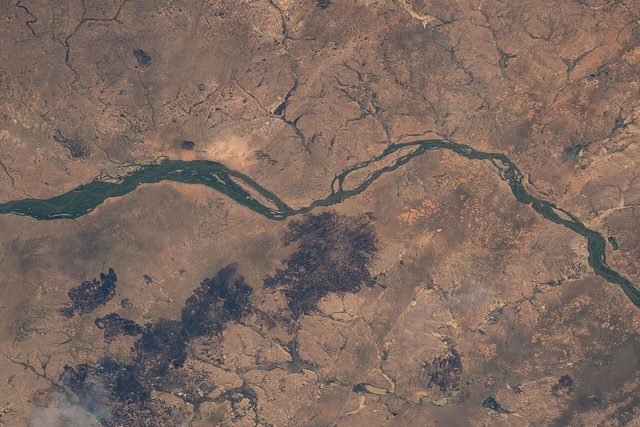
    Photograph: The Inner Niger Delta in central Mali seen from space (NASA, January 2020).

    Photo: MODIS Land Rapid Response Team, NASA GSFC · Wikimedia Commons · Public domain · original

  11. 11 · The Islamic State in the Greater Sahara

    Emergence of groupsConfirmed

    Places: Ménaka

    The UN sanctions list describes it as a splinter of al-Mourabitoun that committed attacks in Mali, Niger and Burkina Faso. Photograph: A Dutch MINUSMA armoured vehicle in the Indelimane area, Ménaka region, in February 2015: the borderlands where the Islamic State in the Greater Sahara would take root.

    Photo: Ministerie van Defensie (Netherlands) · Wikimedia Commons · CC BY-SA 4.0 · original

  12. 12 · A peace agreement, without the jihadists

    Political crisisConfirmed

    Places: Bamako · Anéfis

    Photograph: The desert road from Gao to the north, towards Anéfis, Kidal and Tessalit, photographed in 1982.

    Photo: Martinvl · Wikimedia Commons · CC BY-SA 4.0 · original

  13. 13 · Gunmen kill 20 at the Radisson Blu

    AttacksReported

    Places: Bamako

    Uncertainty: Al-Mourabitoun, together with AQIM, and the Macina Liberation Front each claimed the attack; President Keïta pointed to the Macina group. Early press tolls reached 27.

    Photograph: Bamako on the Niger River. Since September 2025 the Malian capital has faced a JNIM fuel blockade, extended to its access roads in April 2026.

    Photo: GMason · Wikimedia Commons · CC BY-SA 4.0 · original

  14. 14 · Four groups merge into JNIM

    Emergence of groupsConfirmed

    Places: Gao

    Uncertainty: Tolls for the Gao bombing of 18 January 2017 range from 54 (UN) to 60 (President Keïta).

    The United States designated JNIM a terrorist organisation in September 2018; the UN added it to its sanctions list on 4 October 2018. Photograph: A Dutch MINUSMA reconnaissance vehicle on patrol around Gao, December 2017.

    Photo: Ministerie van Defensie (Netherlands) · Wikimedia Commons · CC0 · original

  15. 15 · Massacres in Fulani and Dogon villages

    AttacksAssessed

    Places: Koulogon · Ogossagou · Sobane Da

    Uncertainty: The government dissolved the Dogon militia Dan Na Ambassagou after Ogossagou; its leader denied involvement. The first toll for Sobane Da, 95, was revised to 35. Responsibility rests on UN findings; no court has ruled on these massacres.

    A second attack on Ogossagou on 14 February 2020 killed at least 35 Fulani, hours after soldiers left their post in the village (UN, Human Rights Watch). Photograph: Cliff dwellings on the Bandiagara escarpment, in the Dogon country of the Mopti region, where the 2019 massacres took place on the plain below.

    Photo: Ferdinand Reus · Wikimedia Commons · CC BY-SA 2.0 · original

  16. 16 · The army loses its outposts

    ExpansionDisputed

    Places: Boulkessi · Indelimane

    Uncertainty: JNIM claimed Boulkessi and Mondoro and said it killed at least 85 soldiers; the government gave 40 dead. The Islamic State claimed Indelimane. The G5 Sahel first blamed another group, Ansarul Islam (The Defense Post).

    Photograph: Malian special forces training during the multinational Flintlock exercise, February 2019.

    Photo: US Africa Command · Wikimedia Commons · CC BY 2.0 · original

  17. 17 · Two coups in nine months

    Political crisisConfirmed

    Places: Kati · Bamako

    The UN, the African Union, ECOWAS, the European Union and the United States jointly condemned the detentions of May 2021. Photograph: Colonel Assimi Goïta (centre) with members of the National Committee for the Salvation of the People, the day after the coup of 18 August 2020.

    Photo: Kassim Traoré (VOA) · Wikimedia Commons · Public domain (VOA) · original

  18. 18 · Wagner arrives; France leaves

    International interventionConfirmed

    Places: Gao

    Uncertainty: The date Wagner arrived and the number of its personnel have not been established.

    France lost 59 soldiers in the Sahel in nine years of operations (AFP). Photograph: Officials at the launch of works at Gao airport, October 2017. The last troops of France's Barkhane force left Mali through Gao in August 2022.

    Photo: Kassim Traoré (VOA) · Wikimedia Commons · Public domain (VOA) · original

  19. 19 · The Islamic State's war on the Ménaka region

    ExpansionConfirmed

    Places: Ménaka

    Uncertainty: Death tolls are local estimates: community leaders spoke of nearly 1,000 killed, and Human Rights Watch could not confirm the totals. Pro-government armed groups carried out reprisals of their own.

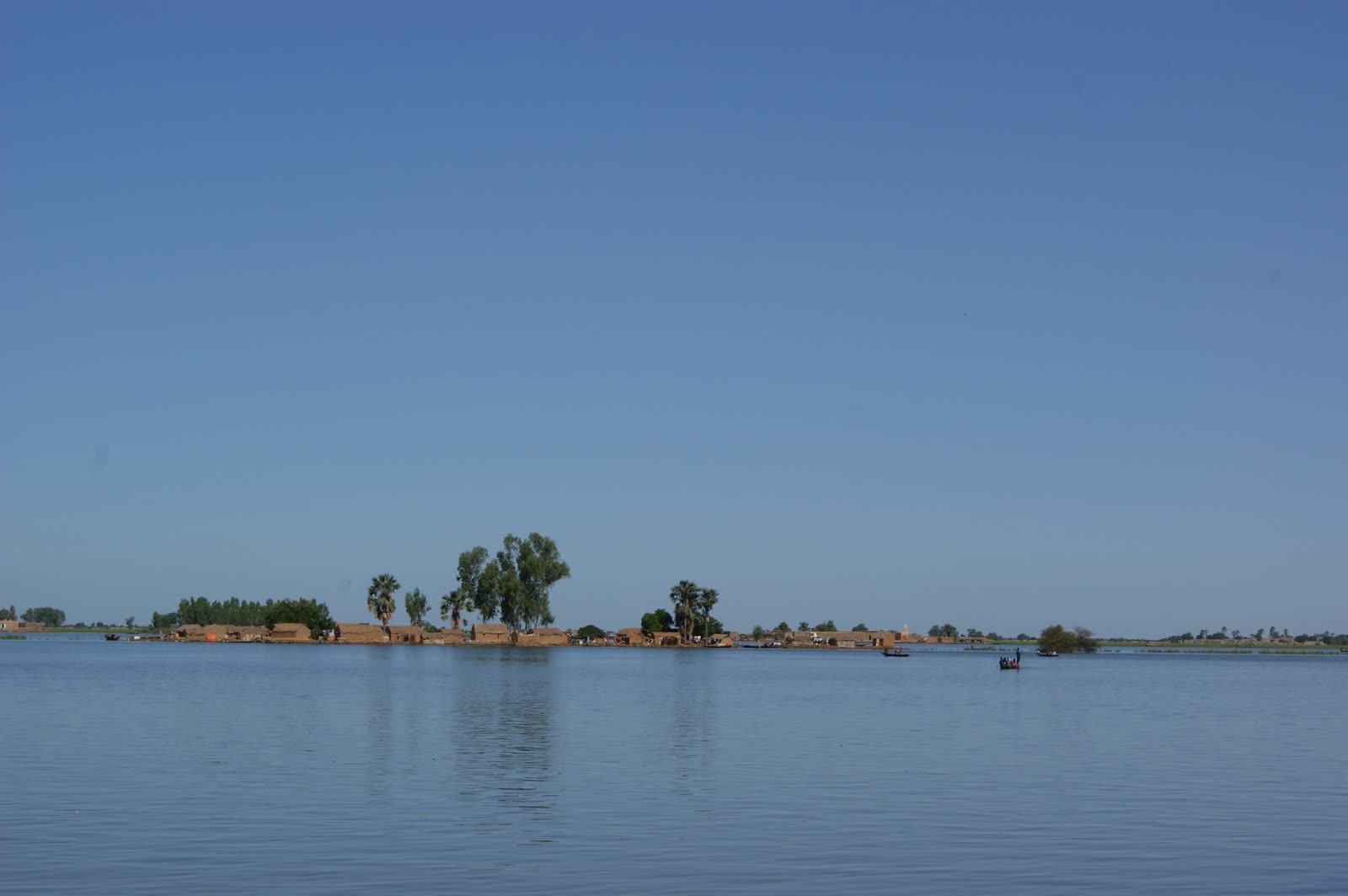
    Photograph: The arch at the entrance to Ménaka, August 2017.

    Photo: Kassim Traoré (VOA) · Wikimedia Commons · Public domain (VOA) · original

  20. 20 · The Moura massacre

    State operationsConfirmed

    Places: Moura

    Uncertainty: The UN did not identify the foreign personnel; Human Rights Watch's sources and the UN Panel of Experts presumed them to be Russian Wagner fighters. Mali denied UN investigators access to the town.

    Photograph: The Niger River at Mopti, central Mali, the heartland of Katiba Macina's insurgency.

    Photo: Annabel Symington · Wikimedia Commons · CC BY 2.0 · original

  21. 21 · MINUSMA is told to leave

    International interventionConfirmed

    Places: Bamako

    Photograph: The last Dutch MINUSMA patrol returns to Gao, April 2019, as European contingents began to leave the mission.

    Photo: Ministerie van Defensie (Netherlands) · Wikimedia Commons · CC BY-SA 4.0 · original

  22. 22 · The army retakes Kidal; the peace deal ends

    State operationsConfirmed

    Places: Kidal

    Photograph: The desert between Gao and Tessalit, in the region of Kidal, photographed in 1982.

    Photo: Martinvl · Wikimedia Commons · CC BY-SA 4.0 · original

  23. 23 · Wagner's defeat at Tinzaouaten

    State operationsConfirmed

    Places: Tinzaouaten

    Uncertainty: The separatists claimed 84 Wagner fighters and 47 Malian soldiers killed; JNIM, which fought nearby, claimed its own toll. AFP could not corroborate either figure. Ukraine's role has not been established.

    Photograph: A dust storm over the Algeria–Mali border seen by the Copernicus Sentinel-2 satellite, 30 March 2026. Tinzaouaten lies on this border.

    Photo: Copernicus Sentinel-2 imagery, European Commission (DG DEFIS) · Wikimedia Commons · CC BY 4.0 · original

  24. 24 · JNIM strikes Bamako

    AttacksConfirmed

    Places: Bamako

    Uncertainty: A confidential official document cited by AFP put the dead at about 100; diplomats told Reuters the toll was in the seventies.

    Photograph: French soldiers watch the flight line at Bamako international airport, 23 January 2013. The airport's military zone was attacked by JNIM in September 2024.

    Photo: U.S. Air Force, Staff Sgt. Brandi Hansen · Wikimedia Commons · Public domain (US military) · original

  25. 25 · A Sahel confederation; Wagner gives way to Africa Corps

  26. 26 · The fuel siege of Bamako

    ExpansionConfirmed

    Places: Kayes · Nioro du Sahel · Bamako

    Uncertainty: The army said it killed more than 80 attackers on 1 July; JNIM said it took three barracks. Neither claim was independently verified.

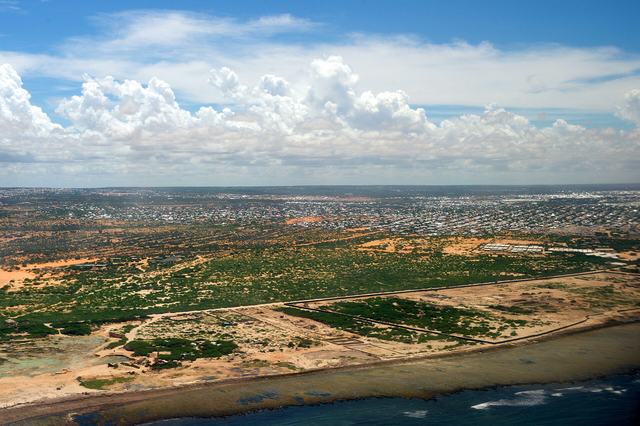
    Photograph: A street in Kayes, the main city of western Mali, attacked by JNIM in July 2025 (photograph from 2006).

    Photo: NOAA (AMMA campaign) · Wikimedia Commons · Public domain (US government) · original

  27. 27 · Coordinated offensive; the defence minister is killed

    ExpansionConfirmed

    Places: Kati · Kidal · Gao · Sévaré

    Uncertainty: There is no full toll. ACAPS counted at least 23 dead by 28 April; the UN says JNIM itself suffered several hundred casualties. Figures given by the army and Russia for attackers killed are unverified. The UN says the offensive was planned and conducted jointly, deepening earlier tactical coordination; the FLA is not on its sanctions list. ICCT reports that the FLA accepted a moderate form of Sharia in areas held jointly with JNIM.

    Photograph: The entrance to the Soundiata Keïta military camp in Kati, near Bamako, in 2020. The coups of 2012, 2020 and 2021 began here; in April 2026 the defence minister was killed in Kati.

    Photo: VOA Bambara · Wikimedia Commons · Public domain (VOA) · original

  28. 28 · A second wave, and executed prisoners

    ExpansionConfirmed

    Places: Anéfis · Aguelhok · Konna · Kenieroba · Tabrichat

    Uncertainty: A source close to the FLA put the convoy dead at more than 50; Reuters could not confirm it. Human Rights Watch could not determine whether the men filmed shooting prisoners were JNIM or FLA fighters. JNIM told the organisation the killings took place but that it had not ordered them; the FLA rejected any role. The Kenieroba attack has not been attributed to a specific group.

    Photograph: Malian soldiers in Gao, April 2013.

    Photo: VOA · Wikimedia Commons · Public domain (VOA) · original

  29. 29 · Civilians caught between both sides

    Humanitarian tollAssessed

    Places: Bombori · Mbera camp

    Uncertainty: The findings rest on witness interviews, videos and satellite images; neither Bamako nor Moscow answered Human Rights Watch. ACLED data cited by the organisation show 89 civilians killed in air strikes between April and August 2026, against 44 a year earlier.

    Photograph: A sign at a food distribution site for displaced people in Bamako, February 2013, listing each person's monthly ration.

    Photo: UK Department for International Development (DFID) · Wikimedia Commons · CC BY 2.0 · original

  30. 30 · The fall of the Dioura camp

    ExpansionConfirmed

    Places: Dioura

    Uncertainty: Sources cited by AFP counted at least 50 soldiers and five Africa Corps members killed; RFI later reported at least a hundred dead. There is no official figure.

    Photograph: A Malian soldier during the Flintlock exercise near Bamako, November 2008.

    Photo: U.S. Air Force · Wikimedia Commons · Public domain (US military) · original

  31. 31 · The army returns to Kidal

    State operationsConfirmed

    Places: Kidal

    Uncertainty: The two sides give opposing accounts: the army describes a military operation, the armed groups say the troops entered without a fight. No casualty figures have been published.

  32. 32 · Massacre in the Ménaka region

All sources

UN and African Union documents

  1. UN International Commission of Inquiry for Mali — Report of the International Commission of Inquiry for Mali (S/2020/1332) (29 January 2021)
  2. UN Secretary-General — Report on the situation in Mali (S/2012/894) (28 November 2012)
  3. UN Security Council — Resolution 2085 (2012): authorisation of AFISMA (20 December 2012)
  4. UN Secretary-General — Report on the situation in Mali (S/2013/189) (26 March 2013)
  5. UN Security Council — Resolution 2100 (2013): establishment of MINUSMA (25 April 2013)
  6. UN Secretary-General — Report on the situation in Mali (S/2013/582) (1 October 2013)
  7. UN Secretary-General — Report on the situation in Mali (S/2014/403) (9 June 2014)
  8. UN Secretary-General — Report on the situation in Mali (S/2015/219) (27 March 2015)
  9. UN Secretary-General — Report on the situation in Mali (S/2015/426) (11 June 2015)
  10. UN Secretary-General — Report on the situation in Mali (S/2015/732) (22 September 2015)
  11. UN Secretary-General — Report on the situation in Mali (S/2015/1030) (24 December 2015)
  12. UN Secretary-General — Report on the situation in Mali (S/2016/281) (28 March 2016)
  13. UN Secretary-General — Report on the situation in Mali (S/2017/271) (30 March 2017)
  14. UN Secretary-General — Report on the situation in Mali (S/2018/541) (6 June 2018)
  15. UN Secretary-General — Report on the situation in Mali (S/2019/262) (26 March 2019)
  16. UN Secretary-General — Report on the situation in Mali (S/2019/454) (31 May 2019)
  17. UN Secretary-General — Report on the situation in Mali (S/2019/782) (1 October 2019)
  18. UN Secretary-General — Report on the situation in Mali (S/2019/983) (30 December 2019)
  19. UN Secretary-General — Report on the situation in Mali (S/2020/223) (20 March 2020)
  20. UN Secretary-General — Report on the situation in Mali (S/2020/476) (2 June 2020)
  21. UN Security Council ISIL (Da'esh) and Al-Qaida Sanctions Committee — Narrative summary: Al-Mourabitoun (2 June 2014)
  22. UN Security Council ISIL (Da'esh) and Al-Qaida Sanctions Committee — Narrative summary: Jama'a Nusrat ul-Islam wa al-Muslimin (JNIM) (4 October 2018)
  23. UN Security Council (press release SC/13531) — ISIL (Da'esh) and Al-Qaida Sanctions Committee adds one entry (JNIM) to its sanctions list (4 October 2018)
  24. UN Security Council (press release SC/14118) — ISIL (Da'esh) and Al-Qaida Sanctions Committee adds two entries, including the Islamic State in the Greater Sahara (23 February 2020)
  25. UN Panel of Experts on Mali — Final report of the Panel of Experts established pursuant to resolution 2374 (2017) (S/2023/578) (3 August 2023)
  26. UN Office of the High Commissioner for Human Rights — Report on the events in Moura, 27–31 March 2022 (French) (12 May 2023)
  27. UN Security Council — Resolution 2690 (2023): termination of MINUSMA's mandate (30 June 2023)
  28. MINUSMA — United Nations Multidimensional Integrated Stabilization Mission in Mali (closed on 31 December 2023)
  29. UN Security Council — Thirty-seventh report of the Analytical Support and Sanctions Monitoring Team (S/2026/44) (4 February 2026)
  30. UN Security Council — Thirty-eighth report of the Analytical Support and Sanctions Monitoring Team (S/2026/651) (10 August 2026)
  31. UN OCHA — Mali: 2026 Humanitarian Needs and Response Plan (executive summary) (February 2026)

Government documents

  1. International Criminal Court — Al Mahdi found guilty of the war crime of attacking historic and religious buildings in Timbuktu, sentenced to nine years (27 September 2016)
  2. French Armed Forces General Staff — Weekly communication letter, 28 July 2022 (French) (28 July 2022)
  3. US Federal Register (Department of State) — Designation of ISIS in the Greater Sahara as a Foreign Terrorist Organization (23 May 2018)
  4. US Federal Register (Department of State) — Designation of Jama'at Nusrat al-Islam wal-Muslimin (JNIM) as a Foreign Terrorist Organization (6 September 2018)
  5. Élysée (Presidency of France) — Pau summit: joint declaration of the heads of state (French) (13 January 2020)

Data and monitoring

  1. ACLED — Africa Overview: May 2026 (11 May 2026)
  2. ACAPS — Mali: Escalation of conflict in northern and central regions (briefing note) (30 April 2026)
  3. FEWS NET — Mali: Food security update, August 2026 (French) (August 2026)
  4. Institute for Economics & Peace — Global Terrorism Index 2026 (March 2026)

Research and analysis

  1. Human Rights Watch — Mali: War Crimes by Northern Rebels (30 April 2012)
  2. Human Rights Watch — Mali: Malian Army, Islamist Groups Executed Prisoners (1 February 2013)
  3. Human Rights Watch — "We Used to Be Brothers": Self-Defense Group Abuses in Central Mali (7 December 2018)
  4. Human Rights Watch — Mali: Army, UN Fail to Stop Massacre (18 March 2020)
  5. Human Rights Watch — Mali: Massacre by Army, Foreign Soldiers (5 April 2022)
  6. Human Rights Watch — Mali: Coordinated Massacres by Islamist Armed Groups (27 October 2022)
  7. Human Rights Watch — Mali: Mounting Islamist Armed Group Killings, Rape (13 July 2023)
  8. Human Rights Watch — Mali: Atrocities by the Army and Wagner Group (12 December 2024)
  9. Human Rights Watch — Education in Mali Shuttered Amid Islamist Armed Group's Siege (28 October 2025)
  10. Human Rights Watch — Mali: Russia's 'Africa Corps' Airstrikes Kill Civilians (31 July 2026)
  11. Human Rights Watch — Mali: Russia's 'Africa Corps' Massacres Villagers (20 August 2026)
  12. Human Rights Watch — Mali: Military Attacks on Civilians, Insurgent Abuses (19 October 2026)
  13. Amnesty International — 'They told us to leave and never to come back': Malian survivors in exile (15 September 2026)
  14. FDD's Long War Journal — Islamic State recognizes oath of allegiance from jihadists in Mali (31 October 2016)
  15. International Centre for Counter-Terrorism (ICCT) — Mali: What Were the Reasons and the Consequences of the 25 April Attacks? (28 May 2026)

News reports

  1. Al Jazeera — International condemnation for Mali coup (23 March 2012)
  2. Al Jazeera — Tuaregs claim 'independence' from Mali (6 April 2012)
  3. Al Jazeera — Ansar Dine fighters destroy Timbuktu shrines (1 July 2012)
  4. Al Jazeera — French-led troops seize northern Timbuktu (28 January 2013)
  5. Al Jazeera — Investigating 'massacre' of soldiers in Mali (24 April 2013)
  6. Al Jazeera — Mali's president doubts al-Mourabitoun role in attack (23 November 2015)
  7. Anadolu Agency — Death toll in Mali attack rises to 60, with 115 injured (19 January 2017)
  8. Al Jazeera — Mali: Fresh ethnic fighting as government revises massacre toll (12 June 2019)
  9. AP (via Fox News) — Militia head refutes his group responsible for Mali massacre (25 March 2019)
  10. Burkina24 (AFP) — Mali: JNIM claims the attacks on the Boulkessi and Mondoro army camps (French) (10 October 2019)
  11. The Defense Post — Mali: Deadly attacks on army camps at Mondoro and Boulkessi (1 October 2019)
  12. Al Jazeera — Mali: Dozens of troops killed in military outpost attack (3 November 2019)
  13. Al Jazeera — Mali's Keita resigns as president after military coup (19 August 2020)
  14. Al Jazeera — Mali's president, prime minister resign after arrests by military (26 May 2021)
  15. Al Jazeera — Western powers slam 'deployment' of Russian mercenaries in Mali (24 December 2021)
  16. Africanews (AFP) — Mali: Last French forces have left after nine years (15 August 2022)
  17. Al Jazeera — Al-Qaeda affiliate group claims deadly Mali attack (23 July 2022)
  18. Africanews (AFP) — Mali's military seize control of Kidal rebel stronghold (14 November 2023)
  19. Africanews (AFP) — Mali announces immediate termination of key Algerian accord (26 January 2024)
  20. VOA (AFP) — Mali separatists say they killed dozens of Wagner, government fighters (2 August 2024)
  21. Anadolu Agency — Mali cuts diplomatic relations with Ukraine after terrorist attack (5 August 2024)
  22. Al Jazeera — Attack by al-Qaeda-linked group in Mali killed more than 70 people (20 September 2024)
  23. China Daily Hong Kong (Xinhua, AFP) — Sahel juntas sign confederation treaty in Niamey (7 July 2024)
  24. Morocco World News — West African trio Mali, Niger and Burkina Faso officially exit ECOWAS (29 January 2025)
  25. Al Jazeera — Russia's Wagner mercenaries leaving Mali, Africa Corps to remain (6 June 2025)
  26. Al Jazeera — Mali army says 80 fighters killed after earlier al-Qaeda linked attacks (1 July 2025)
  27. Al Jazeera — Is Mali about to fall to al-Qaeda affiliate JNIM? (6 November 2025)
  28. Al Jazeera — Mali's defence minister Sadio Camara killed amid coordinated attacks (26 April 2026)
  29. The Moscow Times — Kremlin calls for stability in Mali as rebels seize Kidal and target capital (28 April 2026)
  30. Al Jazeera — What to know about the renewed coordinated attacks across Mali (5 July 2026)
  31. Al Jazeera — Armed groups attack Malian military convoy in Gao region (18 July 2026)
  32. Reuters (via The Star) — Mali insurgents ambush army convoy, source says more than 50 killed (20 July 2026)
  33. Africanews (AFP) — At least 50 soldiers killed in jihadist attack on Malian army base (14 September 2026)
  34. RFI (via allAfrica) — Mali: Toll of the JNIM attack on Dioura rises to about a hundred soldiers killed (French) (19 September 2026)
  35. Al Jazeera (AFP, Reuters) — Mali's army says it has taken Kidal from Tuareg rebels, with Russia's help (6 October 2026)
  36. Reuters (via Internazionale) — Islamic State-linked militants kill at least 48 civilians in eastern Mali, sources say (20 October 2026)
  37. AP (via ABC News) — Attack by Islamic State-affiliated group in Mali kills 48 people, official says (20 October 2026)

Method and limits

Events were selected for the change they mark in the war — in who holds territory, in the groups' organisation, in foreign involvement or in the harm done to civilians — rather than for their death toll alone. Each rests on at least one primary or independent source: UN Security Council and Secretary-General documents, the UN Commission of Inquiry for Mali, the UN human rights office, the Panel of Experts and the Monitoring Team; Human Rights Watch and Amnesty International; ACLED, ACAPS and FEWS NET; official records; and contemporaneous reporting by Al Jazeera, AFP, Reuters, AP, RFI and others.

Figures are given only when an identified source publishes them; claims by governments and armed groups are labelled as such. Where sources disagree on a date, a toll or the group responsible, the entry says so. Places are mapped as points; no area of control is drawn. Information is current to 22 October 2026.

Version history

  • — Published — first edition (information up to 22 October 2026) (v1.0)

Report an error or suggest a source

Photographs