Skip to content
Terrorism PortalConflict, Terrorism & Geopolitical Analysis
World atlas

Visual Timelines · 1991–2026

SomaliaFrom state collapse to regional threat

When the state collapsed in 1991, no authority replaced it. Fifteen years of clan war, failed intervention and stillborn governments left a space that an Islamist movement filled in 2006 — and that a foreign invasion turned into a jihadist insurgency.

Al-Shabaab lost Somalia's cities after 2011 but not its capacity to strike, inside the country and across the region. This timeline follows the structural turns that made today's threat: who held power, who intervened, and how the war crossed borders.

Explore the timeline50 sources

YemenUgandaTanzaniaSouth SudanSudanSomaliaSomaliland (self-declared)RwandaKenyaEthiopiaEritreaDjiboutiDR CongoBurundiMogadishu — 1. The Somali state collapses; 2. UN intervention and withdrawal; 3. The Islamic Courts take Mogadishu; 4. Ethiopia invades; al-Shabaab goes its own way; 5. The African Union sends AMISOM; 7. Al-Shabaab loses the cities; 12. Zoobe junction bombing; 13. 'Total war' and the clan militias; 16. A contested state at warMogadishu1·2·3·4·5·7·12·13·16Hargeisa — 1. The Somali state collapsesHargeisa1Kismayo — 7. Al-Shabaab loses the citiesKismayo7Baidoa — 16. A contested state at warBaidoa16Bosaso — 11. Islamic State splits off in Puntland; 14. Puntland's war on Islamic StateBosaso11·14Beledweyne — 13. 'Total war' and the clan militiasBeledweyne13Kampala — 6. Kampala: the war crosses the borderKampala6Nairobi — 9. Westgate, NairobiNairobi9Garissa — 10. Garissa University CollegeGarissa10
Numbers refer to the events of the timeline. Somaliland, self-declared independent in 1991, is outlined with a dashed line. Map: Natural Earth (public domain); places: Wikidata (CC0). Points mark where events took place, not areas of control.

Photo: US Department of State · Wikimedia Commons · Public domain (US government) · original

Chronology 1991–2026

  1. State collapse

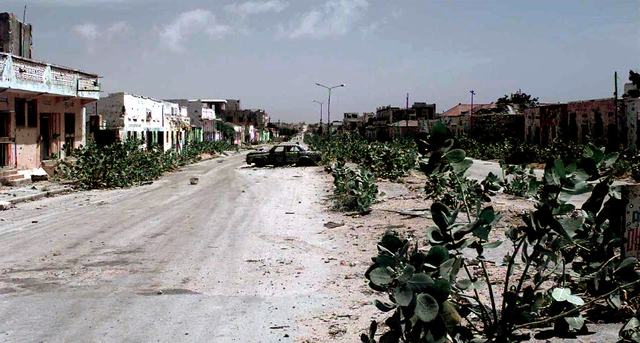
    Empty, overgrown street lined with damaged buildings and a burned-out car.

    The Somali state collapses

    President Siad Barre fled Mogadishu before an armed, clan-based uprising, ending the military regime in power since 1969. No faction could replace him: the capital split between rival militias and state institutions dissolved. On 18 May the Somali National Movement proclaimed an independent Somaliland in the north-west — a claim no country recognised until Israel did in December 2025.
    Political crisisConfirmed

  2. State collapse

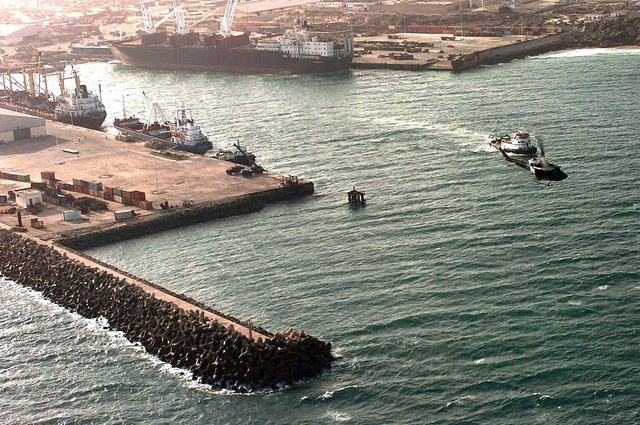
    Aerial view of port docks with moored cargo ships and a helicopter.

    UN intervention and withdrawal

    After an arms embargo in January 1992 and a small first UN mission, the Security Council authorised "all necessary means" to protect famine relief. A US-led force landed in December; UNOSOM II took over in 1993. The battle of 3–4 October 1993 in Mogadishu killed 18 US soldiers. The last UN troops left on 2 March 1995, with no government in place.

    International interventionConfirmed

  3. Courts and insurgency

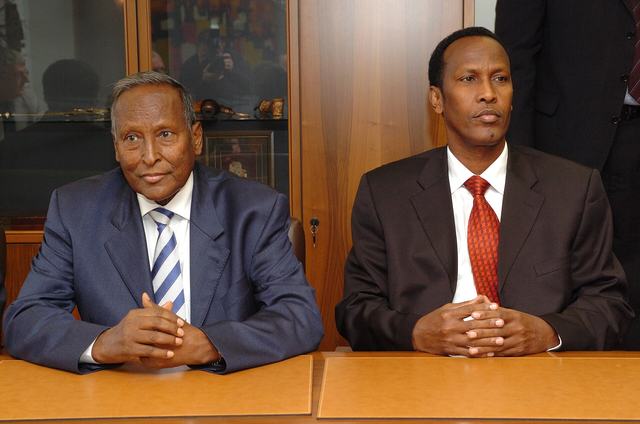
    Two Somali leaders in suits seated at an official meeting.

    The Islamic Courts take Mogadishu

    A coalition of Sharia courts defeated the capital's warlords and gave Mogadishu its first unified authority since 1991. The Transitional Federal Government, formed in Nairobi in October 2004, stayed confined to the provinces. Inside the Courts, veterans of al-Itihaad al-Islami — an armed Islamist group of the 1990s — and a militant youth wing, al-Shabaab, pushed the hardest line.

    Emergence of groupsConfirmed

  4. Courts and insurgency

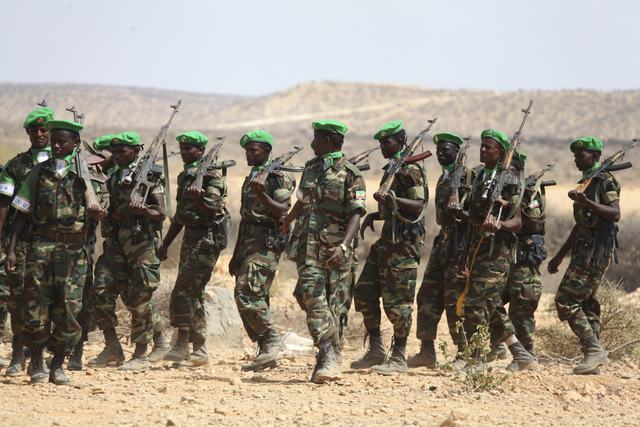
    A column of soldiers in green berets marching with rifles across dry ground.

    Ethiopia invades; al-Shabaab goes its own way

    Ethiopia launched a full offensive in support of the transitional government. The Courts' leaders fled, and government and Ethiopian troops entered Mogadishu on 28 December. Al-Shabaab, the Courts' militant wing, survived the collapse as an independent organisation and recast the war as resistance to foreign occupation — the turn from Islamist movement to insurgency.

    International interventionConfirmed

  5. Courts and insurgency

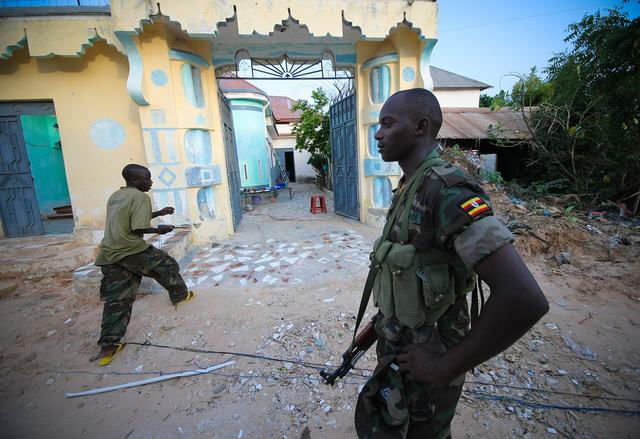
    Ugandan peacekeepers in a street of northern Mogadishu.

    The African Union sends AMISOM

    The African Union's Peace and Security Council authorised AMISOM on 19 January 2007 for six months; the UN Security Council endorsed it a month later in Resolution 1744. Ugandan and then Burundian troops held a few districts of Mogadishu against a growing insurgency. The mission lasted fifteen years before it was reconfigured as ATMIS in 2022.

    International interventionConfirmed

  6. Regional war

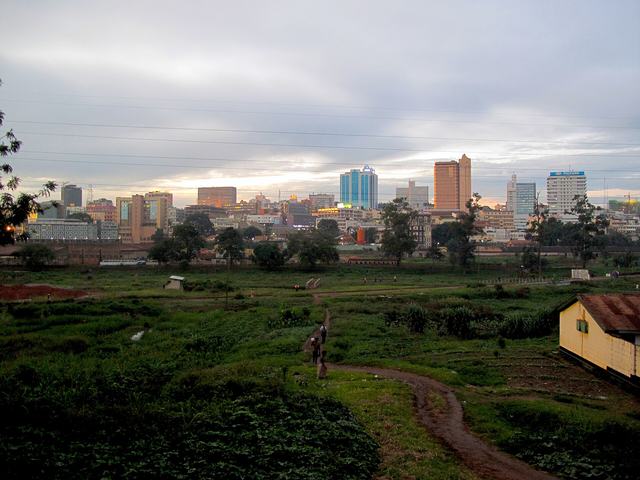
    City skyline of Kampala behind green open ground.

    Kampala: the war crosses the border

    Suicide bombers struck the Kyadondo Rugby Club and an Ethiopian restaurant in Kampala, where crowds were watching the World Cup final. It was al-Shabaab's first attack outside Somalia, aimed at one of the two countries then providing AMISOM's troops. Uganda's High Court convicted seven men in 2016.

    AttacksReported

  7. Regional war

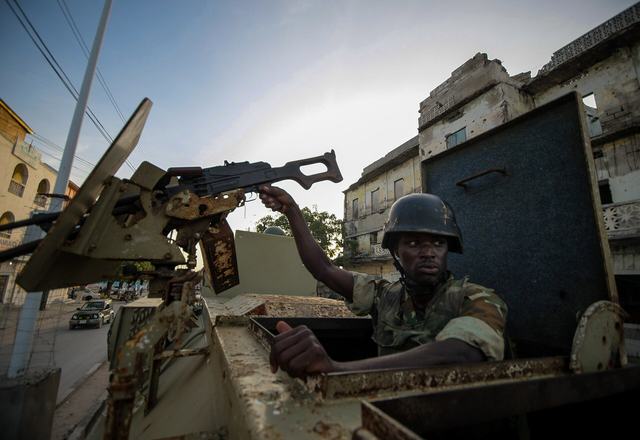
    Soldier atop an armoured vehicle in a Mogadishu street.

    Al-Shabaab loses the cities

    Under AMISOM pressure, al-Shabaab pulled its fighters out of Mogadishu overnight on 6 August 2011. In October Kenya sent troops across the border (Operation Linda Nchi); they joined AMISOM in February 2012 and took Kismayo, the group's last major port city, on 28 September 2012. The insurgents lost the cities but not the war in the countryside.

    State operationsConfirmed

  8. Regional war

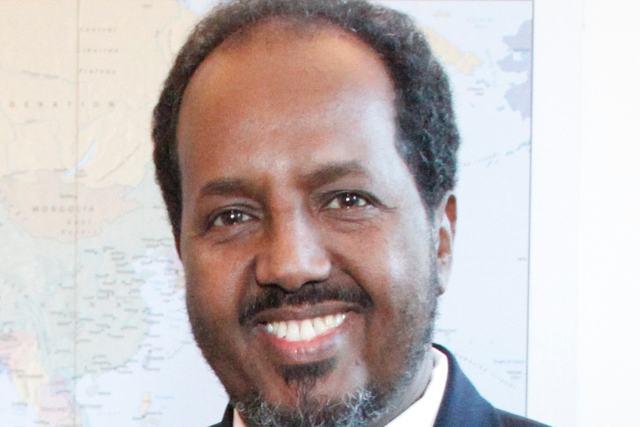
    Portrait of a smiling man in a dark suit in front of a wall map.

    Formal merger with al-Qaeda

    In a video, al-Shabaab's leader Ahmed Abdi Godane pledged allegiance to al-Qaeda and Ayman al-Zawahiri accepted it, formalising ties that predated the announcement. Months later Somalia adopted a provisional constitution (1 August) and its parliament elected Hassan Sheikh Mohamud president (10 September), ending the transitional period: a jihadist franchise now faced a permanent federal state.

    Emergence of groupsConfirmed

  9. Regional war

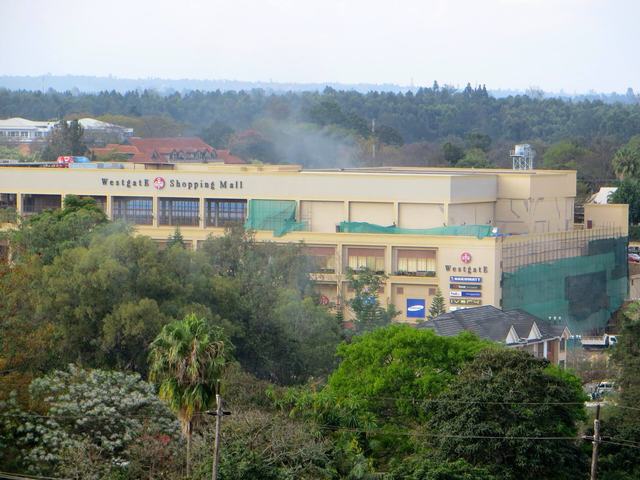
    The Westgate mall building seen from a distance, with smoke rising behind it.

    Westgate, Nairobi

    Gunmen attacked the Westgate shopping centre in Nairobi and held parts of it for four days. Kenya's president gave the official toll as 67 — 61 civilians and six members of the security forces. Al-Shabaab claimed the attack; it had repeatedly threatened to retaliate for Kenya's intervention in Somalia two years earlier, turning a regional war into a threat to East African cities.

    AttacksConfirmed

  10. Regional war

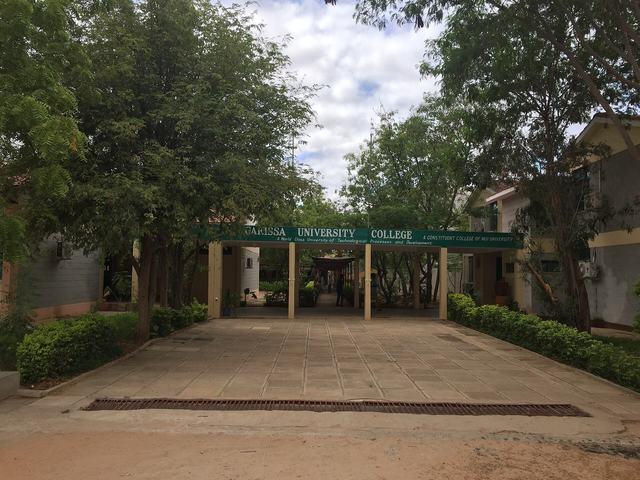
    Tree-lined entrance gate of a university campus.

    Garissa University College

    Four gunmen attacked Garissa University College in north-eastern Kenya and killed 148 people before security forces ended the siege, in which the attackers died. It was the deadliest attack in Kenya since the 1998 US embassy bombing. Eighteen months after Westgate, it showed that al-Shabaab could strike repeatedly inside Kenya, far from the Somali front lines.

    AttacksConfirmed

  11. Regional war

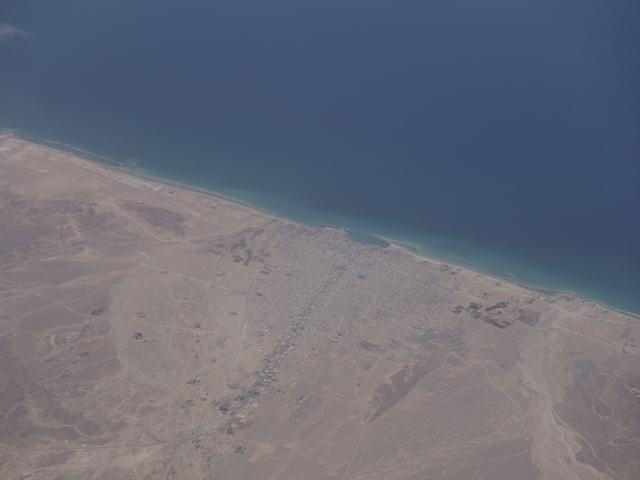
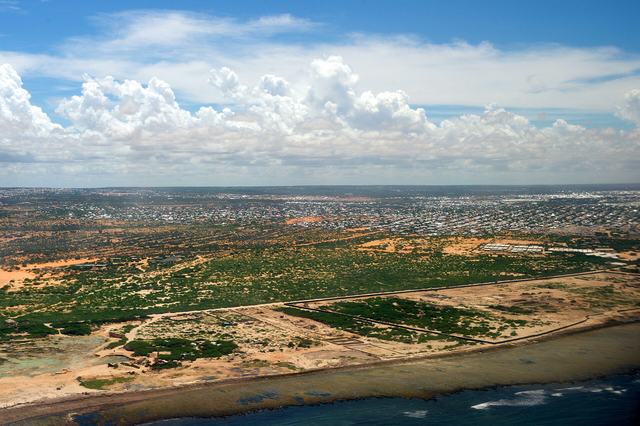
    Aerial view of a coastline and arid land.

    Islamic State splits off in Puntland

    A small group led by Abdulqadir Mumin defected from al-Shabaab in the mountains of Puntland and moved to the Cal Miskaad range in Bari region, pledging allegiance to the Islamic State. Two jihadist organisations now competed in Somalia; UN sanctions monitors later described the Puntland branch as a financial hub of the Islamic State in Africa.

    Emergence of groupsConfirmed

  12. Regional war

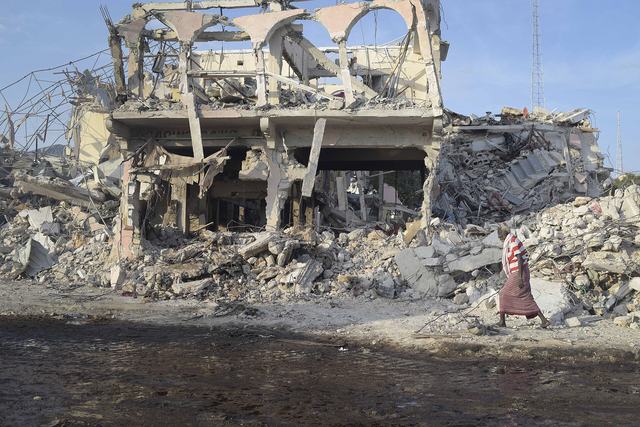
    A man walks past a gutted, collapsed building and rubble.

    Zoobe junction bombing

    A truck bomb exploded at a busy junction in central Mogadishu in the deadliest attack in Somalia's history. No group claimed it; the government blamed al-Shabaab, and a military court convicted the leader of the cell in 2018. The toll rose for weeks: a government committee counted 512 dead by December 2017.

    AttacksDisputed

  13. Total war and persistence

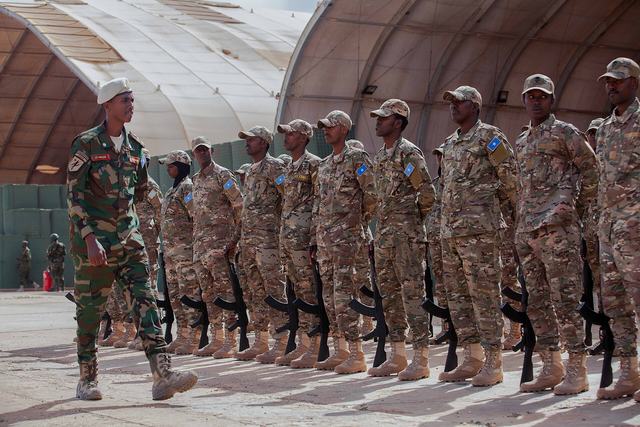
    Rows of Somali soldiers standing in formation.

    'Total war' and the clan militias

    After al-Shabaab's siege of the Hayat Hotel in Mogadishu killed at least 21 people, President Hassan Sheikh Mohamud declared "total war" on the group. Government troops and clan militias (macawisley) pushed it out of towns in Hiraan and Middle Shabelle. On 29 October al-Shabaab answered with twin car bombs at the Education Ministry that killed at least 121 people.

    State operationsConfirmed

  14. Total war and persistence

    Puntland's war on Islamic State

    Puntland launched Operation Hilaac against Islamic State–Somalia in the Cal Miskaad mountains with about 4,000 troops, supported by international air strikes. Officials told UN monitors that around 900 fighters were killed, and Puntland declared the group eliminated in October 2025, although unofficial estimates cited by the monitors say a small force remains. Puntland reported 241 of its soldiers killed.

    State operationsReported

  15. Total war and persistence

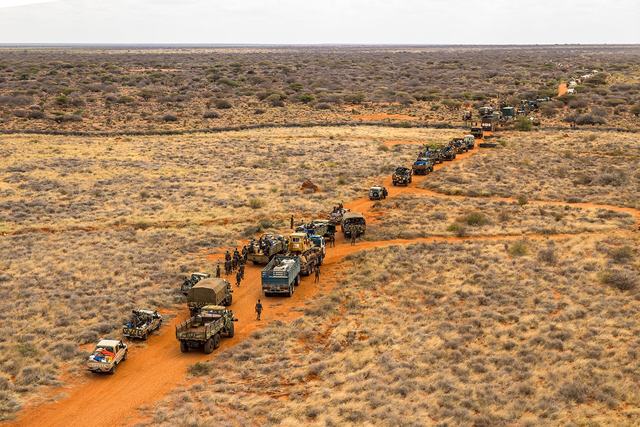
    A long military convoy crossing dry scrubland.

    Al-Shabaab strikes back

    Al-Shabaab opened a major offensive towards Lower Shabelle and Hirshabelle with more than 3,000 fighters, according to UN monitors, retaking ground lost in 2022–23 — Adan Yabaal in April, Moqokori in July — and pressing towards Mogadishu. From mid-2025 the offensive slowed, and Somali and AU forces retook and defended some key towns near the capital.

    ExpansionConfirmed

  16. Total war and persistence

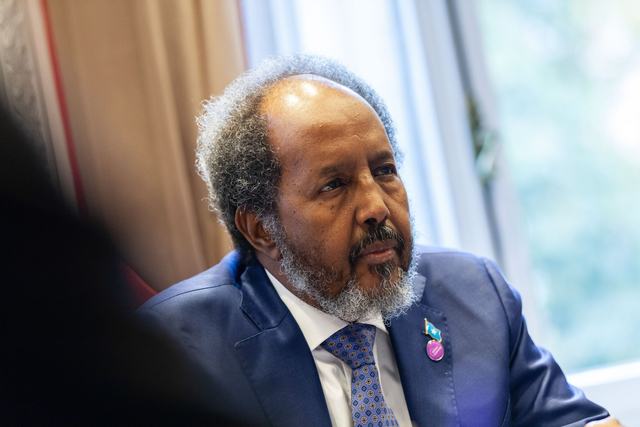
    Hassan Sheikh Mohamud seated, looking down, in a suit and tie.

    A contested state at war

    Parliament extended the president's and legislature's terms from four to five years; Puntland, Jubaland and South-West suspended ties with Mogadishu, and federal forces took Baidoa as South-West's leader resigned. The underfunded AU mission, AUSSOM, is authorised until 31 December 2026. UN monitors describe al-Shabaab shifting to targeted operations. Elections are set for April–May 2027.

    Political crisisConfirmed

Scroll or drag the timeline; use the arrow keys between events. Select an event for details, map and sources.

Geographic reach, by phase

YemenUgandaTanzaniaSouth SudanSudanSomaliaSomaliland (self-declared)RwandaKenyaEthiopiaEritreaDjiboutiDR CongoBurundiMogadishu — 1. The Somali state collapses; 2. UN intervention and withdrawal; 3. The Islamic Courts take Mogadishu; 4. Ethiopia invades; al-Shabaab goes its own way; 5. The African Union sends AMISOM; 7. Al-Shabaab loses the cities; 12. Zoobe junction bombing; 13. 'Total war' and the clan militias; 16. A contested state at warMogadishuHargeisa — 1. The Somali state collapsesHargeisa
1991–2005 State collapse
YemenUgandaTanzaniaSouth SudanSudanSomaliaSomaliland (self-declared)RwandaKenyaEthiopiaEritreaDjiboutiDR CongoBurundiMogadishu — 1. The Somali state collapses; 2. UN intervention and withdrawal; 3. The Islamic Courts take Mogadishu; 4. Ethiopia invades; al-Shabaab goes its own way; 5. The African Union sends AMISOM; 7. Al-Shabaab loses the cities; 12. Zoobe junction bombing; 13. 'Total war' and the clan militias; 16. A contested state at warMogadishuHargeisa — 1. The Somali state collapsesHargeisa
2006–2009 Courts and insurgency
YemenUgandaTanzaniaSouth SudanSudanSomaliaSomaliland (self-declared)RwandaKenyaEthiopiaEritreaDjiboutiDR CongoBurundiMogadishu — 1. The Somali state collapses; 2. UN intervention and withdrawal; 3. The Islamic Courts take Mogadishu; 4. Ethiopia invades; al-Shabaab goes its own way; 5. The African Union sends AMISOM; 7. Al-Shabaab loses the cities; 12. Zoobe junction bombing; 13. 'Total war' and the clan militias; 16. A contested state at warMogadishuHargeisa — 1. The Somali state collapsesHargeisaKismayo — 7. Al-Shabaab loses the citiesKismayoBosaso — 11. Islamic State splits off in Puntland; 14. Puntland's war on Islamic StateBosasoKampala — 6. Kampala: the war crosses the borderKampalaNairobi — 9. Westgate, NairobiNairobiGarissa — 10. Garissa University CollegeGarissa
2010–2017 Regional war
YemenUgandaTanzaniaSouth SudanSudanSomaliaSomaliland (self-declared)RwandaKenyaEthiopiaEritreaDjiboutiDR CongoBurundiMogadishu — 1. The Somali state collapses; 2. UN intervention and withdrawal; 3. The Islamic Courts take Mogadishu; 4. Ethiopia invades; al-Shabaab goes its own way; 5. The African Union sends AMISOM; 7. Al-Shabaab loses the cities; 12. Zoobe junction bombing; 13. 'Total war' and the clan militias; 16. A contested state at warMogadishuHargeisa — 1. The Somali state collapsesHargeisaKismayo — 7. Al-Shabaab loses the citiesKismayoBaidoa — 16. A contested state at warBaidoaBosaso — 11. Islamic State splits off in Puntland; 14. Puntland's war on Islamic StateBosasoBeledweyne — 13. 'Total war' and the clan militiasBeledweyneKampala — 6. Kampala: the war crosses the borderKampalaNairobi — 9. Westgate, NairobiNairobiGarissa — 10. Garissa University CollegeGarissa
2018–2026 Total war and persistence

Each map shows the places of the events of one phase in colour, and those of earlier phases in grey. They show the reach of the conflict — not territorial control, which no open source maps consistently for the whole period.

Main actors

  • Al-ShabaabNon-state armed groupFormer militant wing of the Islamic Courts, independent since about December 2006; al-Qaeda affiliate since 2012. Designated a Foreign Terrorist Organization by the US in March 2008 (still in force) and under a UN arms embargo.
  • Islamic State–SomaliaNon-state armed groupSplinter of al-Shabaab founded in Puntland in October 2015 by Abdulqadir Mumin; heavily degraded by the 2025 offensive but not eliminated.
  • Federal Government of SomaliaStateEstablished in 2012 after the transitional institutions (2004–2012). President Hassan Sheikh Mohamud; term extension of 2026 contested.
  • AMISOM → ATMIS → AUSSOMInternationalAfrican Union mission since 2007, reconfigured in 2022 and 2025; authorised until 31 December 2026, with a chronic funding gap.
  • EthiopiaRegional stateCrushed al-Itihaad bases in 1996–97 and overthrew the Islamic Courts in December 2006; later a troop contributor to the AU mission.
  • KenyaRegional stateIntervened in October 2011, joined AMISOM in 2012 and took Kismayo; target of Westgate (2013), Garissa (2015) and the Manda Bay attack (2020).
  • United StatesInternationalAir strikes against al-Shabaab and Islamic State–Somalia through US Africa Command; three Americans were killed at Manda Bay, Kenya, in January 2020.
  • PuntlandSub-national authorityFederal member state in the north-east; led Operation Hilaac against Islamic State–Somalia from December 2024 and suspended ties with Mogadishu in 2026.

Selected attacks

  1. 2010Kampala: the war crosses the border≈76 killed (2016 trial)
  2. 2013Westgate, Nairobi67 killed (Kenyan government)
  3. 2015Garissa University College148 killed
  4. 2017Zoobe junction bombing512–655 killed (official counts differ)

Death tolls are official figures as reported by the cited sources; where counts differ, the range is given.

Terms used

Terrorism, here, means violence by a non-state group against civilians or symbolic targets to intimidate a population or pressure a government — the attacks in Kampala, Nairobi, Garissa and Mogadishu.

Al-Shabaab is also an insurgency: it fights the state's forces for territory and runs its own taxation and courts. Much of Somalia's war is armed conflict between organised forces, which is why battle deaths (ACLED) far exceed terrorism deaths (Global Terrorism Index).

State violence by Somali or foreign forces, including air strikes, is recorded as such and never labelled terrorism.

Sources by event

Every event rests on at least one identified document. Links open the original source; certainty labels follow the portal's source and confidence criteria.

  1. 1 · The Somali state collapses

    Political crisisConfirmed

    Places: Mogadishu · Hargeisa

    Uncertainty: Contemporary sources date Barre's flight from the capital to 26 or 27 January 1991.

    The photograph shows the 'Green Line' that divided north and south Mogadishu between rival factions, in January 1993.

    Photo: PH1 R. Oriez, US Navy · Wikimedia Commons · Public domain (US military) · original

  2. 2 · UN intervention and withdrawal

    International interventionConfirmed

    Places: Mogadishu

    No authoritative source establishes the number of Somalis killed in the October 1993 battle; it is not given here.

    Photo: TSgt Perry Heimer, US Air Force · Wikimedia Commons · Public domain (US military) · original

  3. 3 · The Islamic Courts take Mogadishu

    Emergence of groupsConfirmed

    Places: Mogadishu

    Uncertainty: Sources date the final takeover of the city to 4 or 5 June 2006.

    Photograph: the transitional president Abdullahi Yusuf Ahmed and prime minister Ali Mohammed Ghedi in Brussels, March 2006.

    Photo: Georges Boulougouris, © European Union · Wikimedia Commons · CC BY 4.0 · original

  4. 4 · Ethiopia invades; al-Shabaab goes its own way

    International interventionConfirmed

    Places: Mogadishu

    Researchers date al-Shabaab's emergence as a separate organisation to 'around December 2006'; there is no single founding act. Photograph: Ethiopian troops in Somalia, by then serving in the African Union mission, February 2014.

    Photo: AMISOM Public Information · Wikimedia Commons · CC0 · original

  5. 5 · The African Union sends AMISOM

    International interventionConfirmed

    Places: Mogadishu

    Photograph: Ugandan AMISOM soldiers on the northern outskirts of Mogadishu, November 2011.

    Photo: AU-UN IST / Stuart Price (AMISOM Public Information) · Wikimedia Commons · CC0 · original

  6. 6 · Kampala: the war crosses the border

    AttacksReported

    Places: Kampala

    Uncertainty: Reported death tolls range from about 74 to 76; 76 is the figure cited when the Ugandan High Court convicted seven men in 2016.

    Photo: Todd Huffman · Wikimedia Commons · CC BY 2.0 · original

  7. 7 · Al-Shabaab loses the cities

    State operationsConfirmed

    Places: Mogadishu · Kismayo

    Uncertainty: Kenya's Ministry of Defence dates the crossing to 14 October 2011; most reports give 16 October.

    Photograph: a Burundian AMISOM soldier in Mogadishu, August 2012, one year after the withdrawal.

    Photo: AMISOM Public Information · Wikimedia Commons · CC0 · original

  8. 8 · Formal merger with al-Qaeda

    Emergence of groupsConfirmed

    Photograph: President Hassan Sheikh Mohamud in London, February 2013, five months after his election.

    Photo: DFID – UK Department for International Development · Wikimedia Commons · CC BY 2.0 · original

  9. 9 · Westgate, Nairobi

  10. 10 · Garissa University College

    AttacksConfirmed

    Places: Garissa

    The interior minister reported at least 147 dead on the day; 148 is the toll reported at the first anniversary.

    Photo: Adam H T Geelle · Wikimedia Commons · CC BY 3.0 · original

  11. 11 · Islamic State splits off in Puntland

    Emergence of groupsConfirmed

    Places: Bosaso

    Photograph: Bosaso, Puntland's main port, January 2025.

    Photo: Sam Wilson · Wikimedia Commons · CC BY-SA 4.0 · original

  12. 12 · Zoobe junction bombing

    AttacksDisputed

    Places: Mogadishu

    Uncertainty: Figures differ: 358 (government, 20 October 2017), 512 (government committee, December 2017), 587 (Voice of America, 2021) and 655 (response committee, March 2018). None is presented here as final.

    Photo: AMISOM Public Information · Wikimedia Commons · CC0 · original

  13. 13 · 'Total war' and the clan militias

    State operationsConfirmed

    Places: Beledweyne · Mogadishu

    Photograph: Somali National Army Danab soldiers at a graduation ceremony, October 2024.

    Photo: Capt. Darryl Padgett, US Army (SOCAFRICA) · Wikimedia Commons · Public domain (US military) · original

  14. 14 · Puntland's war on Islamic State

    State operationsReported

    Places: Bosaso

    Uncertainty: All casualty figures are official Puntland figures as reported to the UN Panel of Experts; they have not been independently verified.

  15. 15 · Al-Shabaab strikes back

  16. 16 · A contested state at war

    Political crisisConfirmed

    Places: Baidoa · Mogadishu

    The electoral commission announced on 15 October 2026 parliamentary elections for 15 April 2027 and a presidential vote for 15 May 2027; the opposition rejects the plan. Photograph: President Hassan Sheikh Mohamud at the Global Gateway Forum in Brussels, October 2023.

    Photo: Nicolas Landemard / European Union, 2023 · Wikimedia Commons · CC BY 4.0 · original

All sources

UN and African Union documents

  1. UN Security Council — Resolution 733 (1992) (23 January 1992)
  2. UN Security Council — Resolution 794 (1992) (3 December 1992)
  3. UN Security Council — Resolution 954 (1994) (4 November 1994)
  4. UN Peacekeeping — United Nations Operation in Somalia I (UNOSOM I) — Background
  5. UN Peacekeeping — United Nations Operation in Somalia II (UNOSOM II) — Background
  6. African Union Peace and Security Council — Communiqué of the 69th meeting, PSC/PR/Comm(LXIX) (19 January 2007)
  7. UN Security Council — Resolution 1744 (2007) (20 February 2007)
  8. UN Security Council — Resolution 2036 (2012) (22 February 2012)
  9. African Union / AMISOM — Press release on the adoption of the Provisional Constitution (1 August 2012)
  10. UN Security Council — Resolution 2628 (2022) (31 March 2022)
  11. UN Security Council — Resolution 2809 (2025) (23 December 2025)
  12. UN Panel of Experts on Somalia — Final report, S/2024/748 (28 October 2024)
  13. UN Analytical Support and Sanctions Monitoring Team — Report on ISIL (Da'esh), Al-Qaida and associates, S/2025/482 (24 July 2025)
  14. UN Panel of Experts on Somalia — Final report, S/2025/777 (28 November 2025)
  15. UN Analytical Support and Sanctions Monitoring Team — Report on ISIL (Da'esh), Al-Qaida and associates, S/2026/44 (4 February 2026)
  16. UN Secretary-General — Report on Somalia, S/2026/446 (29 May 2026)
  17. UN Analytical Support and Sanctions Monitoring Team — Report on ISIL (Da'esh), Al-Qaida and associates, S/2026/651 (10 August 2026)

Government documents

  1. Kenya Ministry of Defence — Kenya in AMISOM
  2. US Department of State (Federal Register) — Designation of al-Shabaab as a Foreign Terrorist Organization, Public Notice 6136 (18 March 2008)
  3. US Department of State (Federal Register) — Review of the Foreign Terrorist Organization Designation of al-Shabaab (9 July 2024)

Data and monitoring

  1. UNHCR Operational Data Portal — Somalia (22 July 2026)
  2. Institute for Economics & Peace — Global Terrorism Index 2026 (March 2026)
  3. European Union Agency for Asylum (ACLED data) — Somalia — Security Situation, Country of Origin Information report (May 2026)

Research and analysis

  1. Combating Terrorism Center at West Point — Al-Qa'ida's (Mis)Adventures in the Horn of Africa (2007)
  2. Stanford University, Mapping Militants Project — Islamic Courts Union
  3. Stanford University, Mapping Militants Project — Al Shabaab
  4. Middle East Research and Information Project (MERIP) — There and Back Again in Somalia (February 2007)
  5. FDD's Long War Journal — Shabaab formally joins al Qaeda (9 February 2012)
  6. FDD's Long War Journal — Shabaab seizes two towns in central Somalia (July 2025)

News reports

  1. The Christian Science Monitor — Somalia chronology (22 July 1991)
  2. Voice of America — Anniversary of Somalia Coup Marks 20 Years of War (25 January 2011)
  3. Al Jazeera — New Somali president sworn in (14 October 2004)
  4. NPR — Ethiopian Troops Among Those Entering Mogadishu (28 December 2006)
  5. Anadolu Agency — Ugandan court convicts 7 men over 2010 terror attack (27 May 2016)
  6. Al Jazeera — Al-Shabab rebels withdraw from Somali capital (6 August 2011)
  7. Voice of America — Somalia Elects a New President (10 September 2012)
  8. Capital FM — Key questions left unanswered after Kenya mall siege (September 2013)
  9. NPR — Siege Over, Kenya Has 'Defeated The Monster Of Terrorism' (24 September 2013)
  10. The EastAfrican — 147 killed as Garissa University College attacked by gunmen (2 April 2015)
  11. Associated Press (via KSL) — Kenya marks university attack anniversary that killed 148 (2 April 2016)
  12. NPR — Mogadishu Truck Bomb's Death Toll Now Tops 500, Probe Committee Says (2 December 2017)
  13. Radio Dalsan — Zoobe bombing claimed 655 lives, latest figures show (4 March 2018)
  14. Voice of America — Somalia Marks Anniversary of Deadliest Terror Attack (14 October 2021)
  15. Voice of America — Somalia's President Vows 'Total War' Against al-Shabab (24 August 2022)
  16. Human Rights Watch — Somalia Reeling from Devastating Attack on Education Ministry (1 November 2022)
  17. Daily Nation (Reuters) — Somalia's military base falls to Al Shabaab in heavy fighting (17 April 2025)
  18. Al Jazeera — Israel becomes first country to recognise Somaliland (26 December 2025)
  19. Citizen Digital (Reuters) — Somali parliament approves constitution change to extend president's term, delay election (4 March 2026)
  20. Al Jazeera — Somali army takes over key city in Southwest as state leader resigns (31 March 2026)
  21. Al Jazeera — Somalia says it will hold elections in 2027 (15 October 2026)

Method and limits

Events were selected for the structural change they mark — in power, in actors or in geographic reach — rather than for their death toll alone. Each one rests on at least one primary or independent source; UN Security Council resolutions and reports, African Union communiqués, government documents, academic research and contemporaneous reporting were preferred in that order.

Figures are given only when an identified source publishes them; estimates and official claims are labelled. Where sources disagree on a date or a toll, the entry says so. Information is current to 15 October 2026.

Version history

  • — Published — first edition (information up to 15 October 2026) (v1.0)

Report an error or suggest a source

Photographs