Skip to content
Terrorism PortalConflict, Terrorism & Geopolitical Analysis
World atlas

Visual Timelines · 2015–2026

Burkina FasoFrom the first attacks of 2015 to a divided country

Until 2015 Burkina Faso had been spared the jihadist violence of neighbouring Mali. The fall of Blaise Compaoré in October 2014 and the dissolution of his presidential guard weakened a security apparatus that had kept armed groups away. Within two years the country had suffered a rare kidnapping of a foreigner, a deadly siege in the capital and the birth of its own jihadist group in the northern province of Soum.

This timeline follows how the violence spread from the Malian border to most of the country, how al-Qaeda's JNIM and the Islamic State's Sahel branch fought the state and each other, and how arming civilians, two coups in 2022 and massacres by soldiers and militias deepened the war. It runs to 23 October 2026, ends with a map of where the groups operate, and separates attacks by jihadists from abuses by the state.

Explore the timelineTerritorial map91 sources

TogoNigeriaNigerMauritaniaMaliLiberiaGuineaGhanaIvory CoastBurkina FasoBeninOuagadougou — 2. Siege of the Splendid Hotel; 5. Twin attack on the army and France; 14. First coup: Damiba ousts Kaboré; 17. Second coup: Captain Traoré; 24. The break with FranceOuagadougou2·5·14·17·24Djibo — 11. Bodies along the roads of Djibo; 15. Djibo under siege; 22. JNIM storms Djibo and DiapagaDjibo11·15·22Titao — 23. Titao and the 2026 offensiveTitao23Fada N'Gourma — 6. A second front opens in the EastFada N'Gourma6Diapaga — 22. JNIM storms Djibo and DiapagaDiapaga22Yirgou — 7. Yirgou: a militia massacre of FulaniYirgou7Seytenga — 16. Seytenga: a village executedSeytenga16Barsalogho — 20. Barsalogho: killed while digging a trenchBarsalogho20Solenzo — 21. Solenzo: an ethnic massacreSolenzo21Gonadaouri — 25. Jihadist against jihadist in OudalanGonadaouri25Karma — 18. Karma: a massacre in uniformKarma18Nondin and Soro — 19. Nondin and SoroNondin and Soro19Tambao mine — 1. A kidnapping at the Tambao mineTambao mine1Markoye — 3. The Islamic State's Sahel faction crosses inMarkoye3Nassoumbou — 4. Nassoumbou and the birth of Ansarul IslamNassoumbou4Pama — 6. A second front opens in the EastPama6Solhan — 12. Solhan, the deadliest nightSolhan12Inata — 13. Inata: gendarmes left without foodInata13
Numbers refer to the events of the timeline. Points mark where events happened, not areas of control; for the areas where the armed groups operate, see the territorial map below. Coordinates: Wikidata; OpenStreetMap (ODbL) where marked in the sources. Map: Natural Earth (public domain); places: Wikidata (CC0). Points mark where events took place, not areas of control.

Photo: NASA Johnson Space Center (Earth Science and Remote Sensing Unit) · Wikimedia Commons · Public domain (NASA) · original

Chronology 2015–2026

  1. Spillover and first attacks

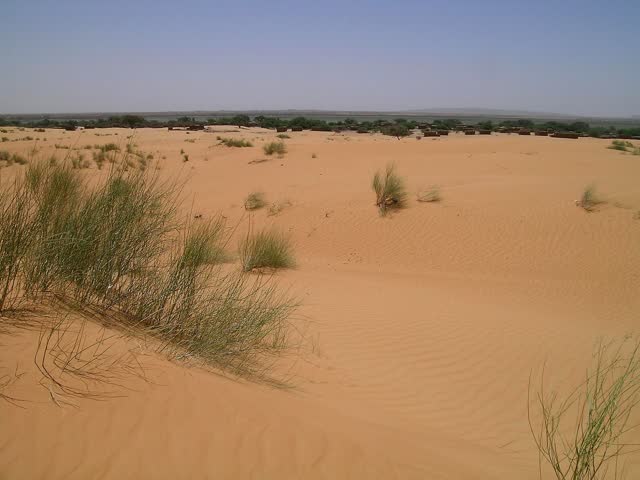
    Orange sand dunes with sparse grass under a pale sky.

    A kidnapping at the Tambao mine

    Five armed men attacked a patrol at the Tambao manganese mine in Oudalan province, near the borders with Mali and Niger. They wounded a gendarme and a security guard and abducted a Romanian security officer at the mine, Iulian Gherguț. The Sahel jihadist group al-Mourabitoun claimed the kidnapping. Crisis Group's chronology of jihadist violence in Burkina Faso begins with this attack.
    AttacksConfirmed

  2. Spillover and first attacks

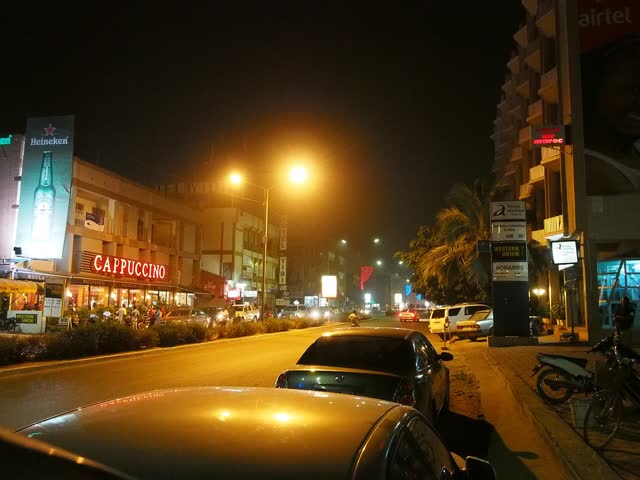
    A lit café front on a city avenue at night, with parked cars.

    Siege of the Splendid Hotel

    Gunmen opened fire at the Cappuccino café in central Ouagadougou and stormed the Splendid Hotel. Burkinabè forces, backed by French troops, ended the siege the next day and freed about 126 hostages. The UN counted 30 dead and 150 wounded; the victims came from 18 countries, the government said. AQIM claimed the attack, and the UN says al-Mourabitoun carried it out.

    AttacksConfirmed

  3. Spillover and first attacks

    Officials in suits and uniforms walk past a building in a dry landscape.

    The Islamic State's Sahel faction crosses in

    Gunmen attacked the customs post at Markoye, in Oudalan, killing a customs officer and a civilian. Adnan Abu Walid al-Sahraoui, who had broken away from al-Mourabitoun in 2015 and pledged allegiance to the Islamic State, claimed it through the Mauritanian agency Al-Akhbar. His faction, later known as the Islamic State in the Greater Sahara, was also credited with an attack on the army post at Intangom on 12 October.

    Emergence of groupsReported

  4. Spillover and first attacks

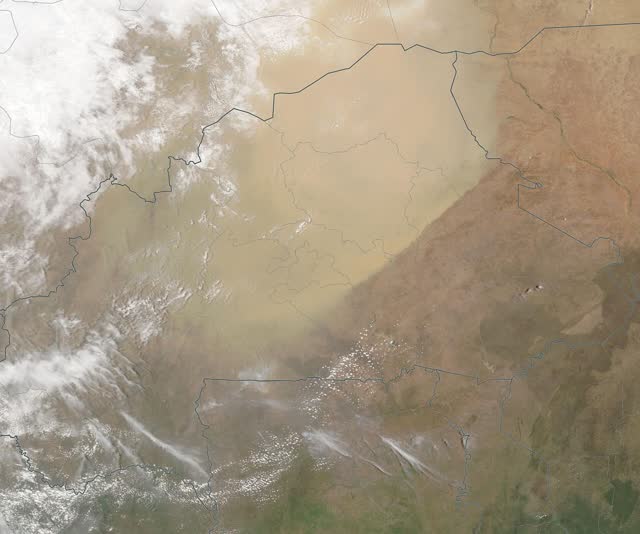
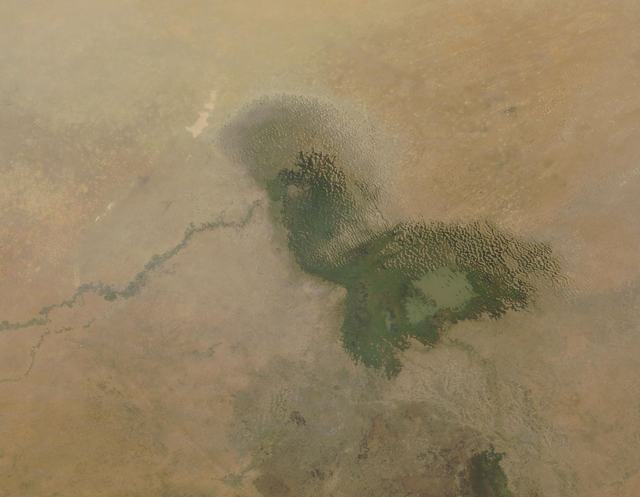
    Satellite view of a brown haze of dust over the Sahel, with thin border lines.

    Nassoumbou and the birth of Ansarul Islam

    About forty heavily armed men attacked an army counter-terrorism unit and a gendarmerie post at Nassoumbou, in Soum province, killing twelve soldiers. The attack revealed Ansarul Islam, the first jihadist group born in Burkina Faso. Its founder, Malam Ibrahim Dicko, a preacher from Soum, had won a following by denouncing the power of traditional chiefs, inequality and abuses by the state.

    Emergence of groupsReported

  5. Spillover and first attacks

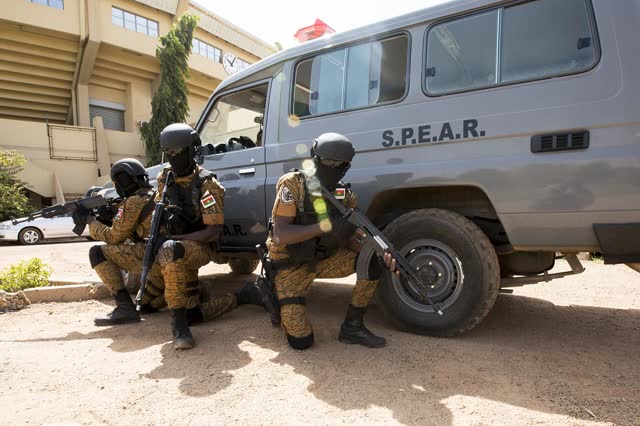
    Helmeted officers crouch behind a police vehicle marked S.P.E.A.R.

    Twin attack on the army and France

    Assailants struck the armed forces general staff and the French embassy in Ouagadougou at the same time. The UN reported at least eight dead and about eighty wounded; the army said eight security personnel and eight attackers were killed. JNIM, the alliance of al-Qaeda's Sahel groups formed a year earlier, claimed the attacks as revenge for a French raid that had killed several al-Mourabitoun commanders.

    AttacksConfirmed

  6. Spillover and first attacks

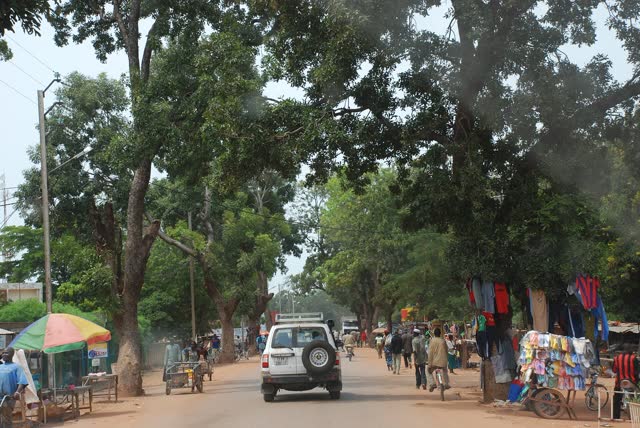
    A tree-lined street with stalls, motorbikes and a white vehicle.

    A second front opens in the East

    Gunmen attacked the gendarmerie at Pama, and reinforcements sent from Fada N'Gourma struck an explosive device; the government said seven members of the security forces died. The UN recorded more than 65 casualties from attacks in the East in the second half of 2018, against four in all of 2017. On 31 December the president declared a state of emergency in fourteen provinces.

    ExpansionReported

  7. Massacres and militias

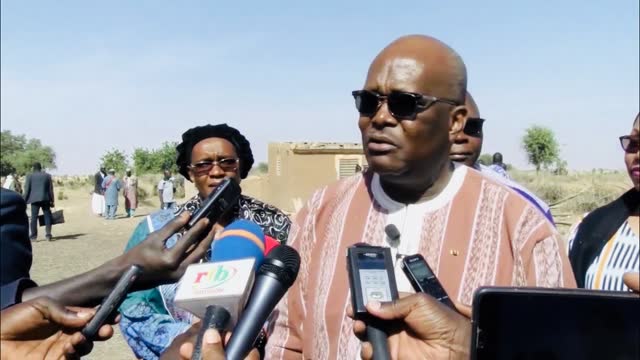
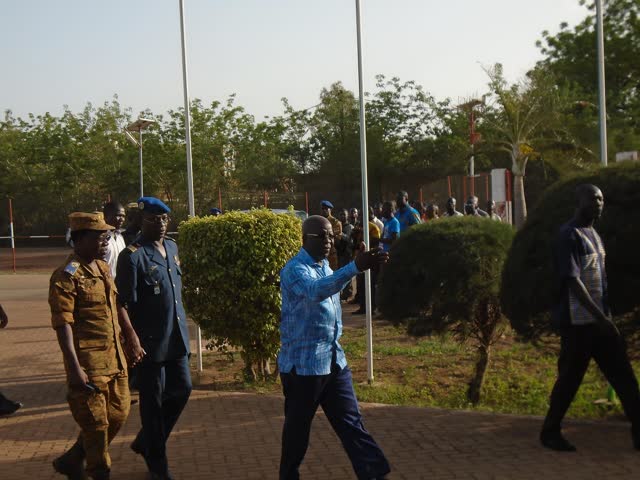
    A man in sunglasses and a patterned shirt speaks into several microphones outdoors.

    Yirgou: a militia massacre of Fulani

    Unidentified gunmen killed at least seven people in Yirgou, in the Centre-Nord region, including the village chief. In reprisal, villagers and members of the Koglweogo self-defence groups attacked at least eight Fulani (Peul) settlements over several days. The government counted 47, later 49, dead; civil society groups said about 210. Amnesty International reported in 2023 that no one had been tried.

    AttacksConfirmed

  8. Massacres and militias

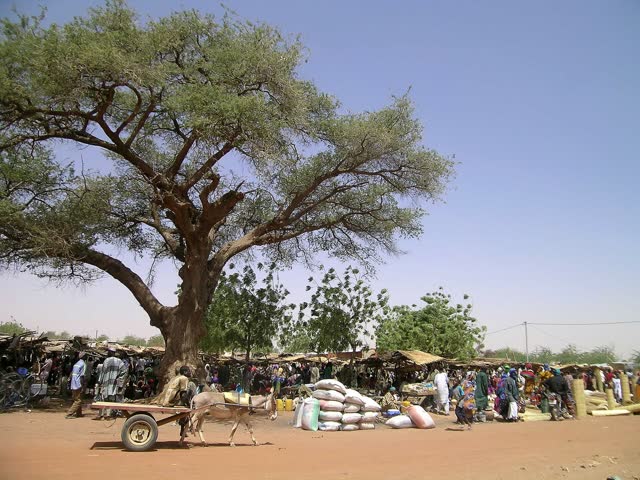
    A large acacia over a busy open-air market and a cart.

    Al-Qaeda and the Islamic State go to war

    For years the Sahel's al-Qaeda and Islamic State affiliates had avoided fighting each other, an exception analysts called the Sahelian anomaly. It ended after a firefight at Ariel, a Burkinabè border village, in July 2019. By mid-2020 the two had clashed at least 46 times across the Sahel, and in the first half of 2020 JNIM, backed by Ansarul Islam, drove the Islamic State out of central and eastern Burkina Faso, ACLED reports.

    Emergence of groupsAssessed

  9. Massacres and militias

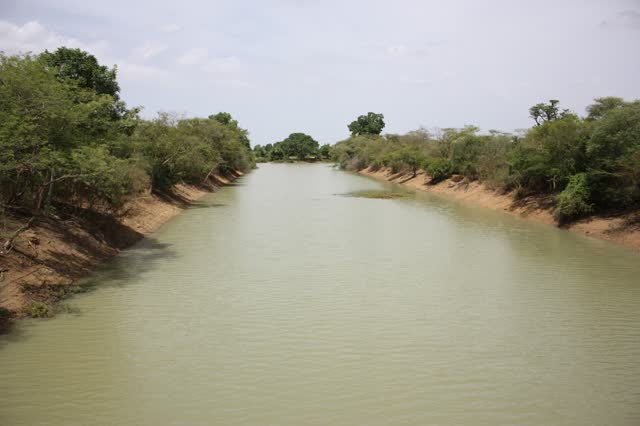
    A calm brown river between dense green banks.

    Ambush on a mining convoy

    A five-bus convoy carrying workers to the Boungou gold mine in the East, run by the Canadian company SEMAFO, was ambushed about 40 kilometres from the site. An explosive device hit the military escort, then gunmen fired on the buses. The regional governor gave a provisional toll of 37 civilians killed and more than 60 wounded. No group claimed the attack.

    AttacksConfirmed

  10. Massacres and militias

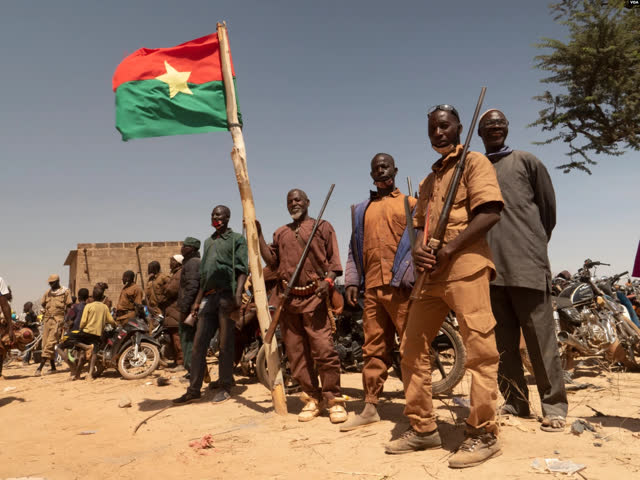
    Men with hunting rifles stand beside a Burkinabè flag.

    Arming civilians: the VDP

    Parliament unanimously adopted the law creating the Volunteers for the Defence of the Homeland (VDP): civilians given fourteen days of training to defend their own village under the Defence Ministry. The UN warned of abuses and community violence. In March at least 43 people were killed in three Fulani villages of Yatenga (government toll); survivors told Amnesty International the Koglweogo were responsible.

    State operationsConfirmed

  11. Massacres and militias

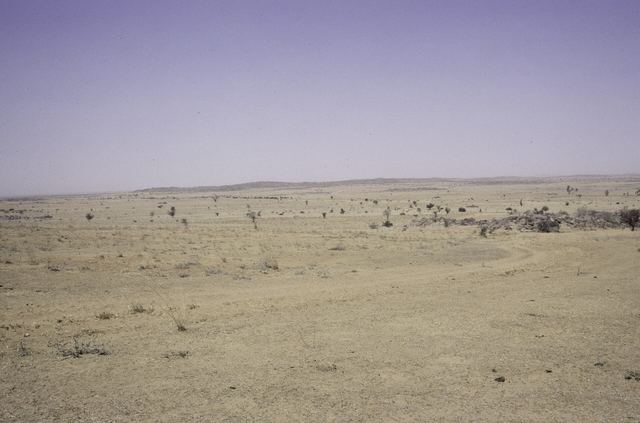
    Flat, dry sandy ground with a few bushes, white dead tree stumps and a lone tree under a pale sky.

    Bodies along the roads of Djibo

    Human Rights Watch documented at least 180 bodies left along roads, under bridges and in fields around Djibo, most of them Fulani men, many blindfolded and shot. Residents said the men had been detained by security forces. On 9 April 2020 alone, 31 detainees were reportedly executed hours after their arrest. The defence minister suggested armed groups wearing stolen uniforms.

    State operationsReported

  12. Massacres and militias

    A wide, almost treeless sandy plain stretching to a flat horizon.

    Solhan, the deadliest night

    Gunmen on motorbikes attacked an artisanal gold site, a VDP post, the market and homes in Solhan, Yagha province, executing residents through the night. The government counted 132 dead and 40 wounded; local sources said at least 160. Human Rights Watch called it the deadliest attack since the armed conflict began in 2016. The government said children were among the attackers.

    AttacksAssessed

  13. Massacres and militias

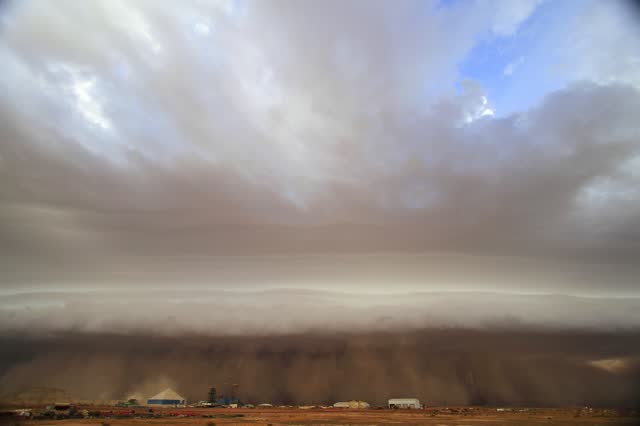
    A wall of dust under a grey sky over flat land and buildings.

    Inata: gendarmes left without food

    Fighters overran the gendarmerie detachment at Inata, near a gold mine in Soum, killing 49 gendarmes and four civilians, according to the government. A memo seen by Reuters showed the unit had run out of food and for two weeks had been slaughtering animals nearby to eat. The UN Monitoring Team says Ansarul Islam led the attack. Protests demanding President Kaboré's resignation followed.

    ExpansionConfirmed

  14. Coups and sieges

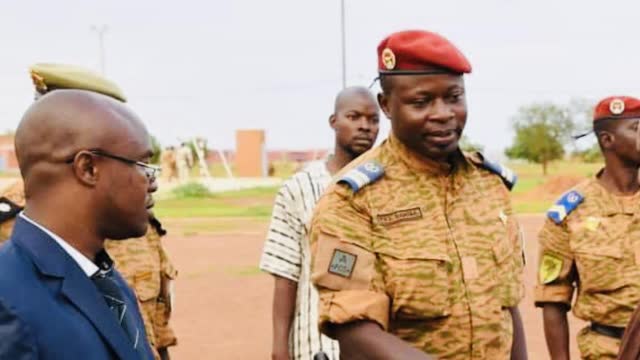
    An officer in a red beret and camouflage uniform with other officers.

    First coup: Damiba ousts Kaboré

    Soldiers of the Patriotic Movement for Safeguard and Restoration (MPSR), led by Lieutenant-Colonel Paul-Henri Sandaogo Damiba, overthrew President Roch Marc Christian Kaboré amid a deepening security crisis. They suspended the constitution and dissolved the government and parliament. ECOWAS and the African Union suspended Burkina Faso. That year most of Ansarul Islam joined JNIM, the UN Monitoring Team reported; Crisis Group dates the shift to after 2017.

    Political crisisConfirmed

  15. Coups and sieges

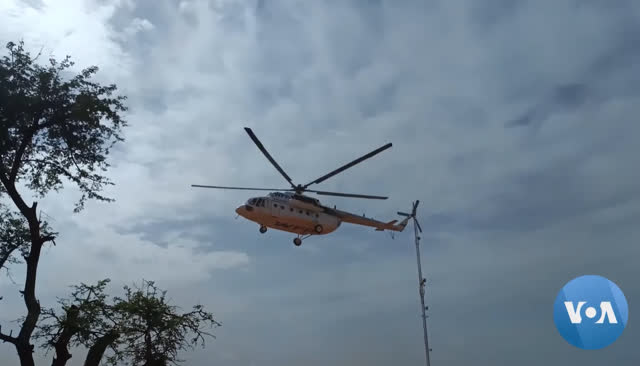
    A white and orange helicopter flies low over trees under a cloudy sky.

    Djibo under siege

    Groups affiliated with JNIM encircled Djibo, the capital of Soum province, controlling its access roads, laying explosives and destroying water points. ACAPS counted more than 89,000 residents and at least 285,000 displaced people inside. The UN described a strategy of attrition against towns such as Djibo, Pama and Dori. By the end of 2024 about forty localities were under siege.

    Humanitarian tollConfirmed

  16. Coups and sieges

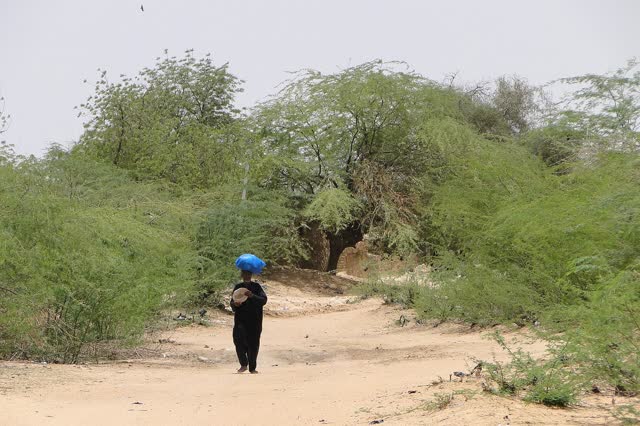
    A woman carrying a basin on her head walks along a sandy path between bushes.

    Seytenga: a village executed

    Gunmen went through Seytenga, in Séno province near the Niger border, killing the people they found; the EU's foreign policy chief spoke of the systematic execution of anyone encountered in the village. The government's toll rose from 79 to 86 dead; the UN counted at least 89. More than 16,000 people fled. Human Rights Watch called it the year's worst atrocity.

    AttacksAssessed

  17. Coups and sieges

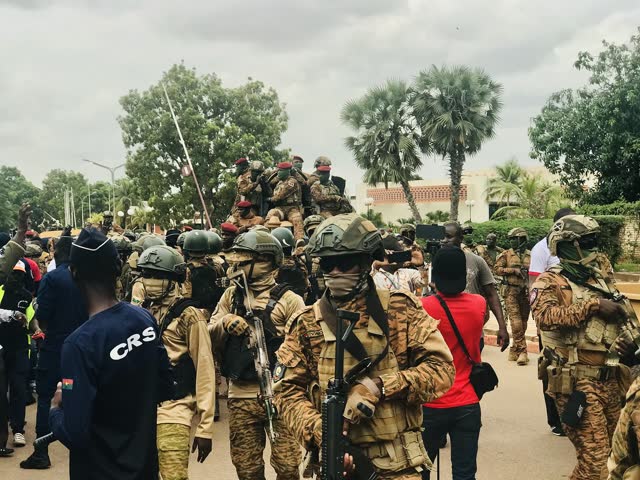
    A crowd of soldiers in camouflage and civilians outdoors.

    Second coup: Captain Traoré

    Four days after JNIM ambushed a supply convoy bound for Djibo at Gaskindé — at least 27 soldiers and 10 civilians were killed and 95 vehicles destroyed, Bellingcat reported — a faction of the junta led by Captain Ibrahim Traoré overthrew Damiba. It was the second coup in eight months. The new authorities stepped up recruitment of up to 50,000 more VDP.

    Political crisisConfirmed

  18. Coups and sieges

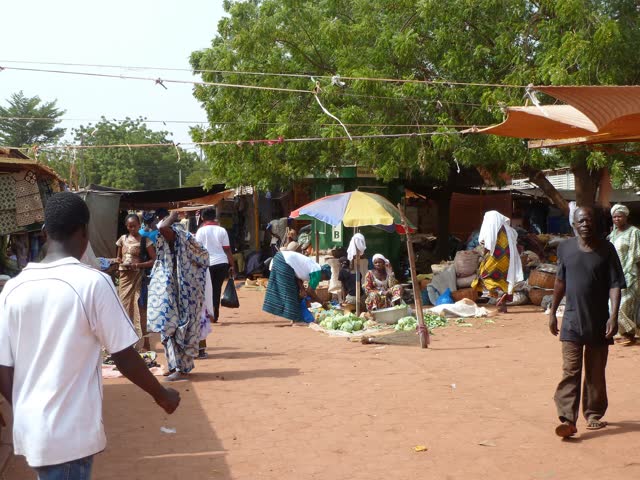
    People walk among stalls and parasols on a red dirt street.

    Karma: a massacre in uniform

    Men in military uniform encircled Karma, a village in Yatenga province near Ouahigouya, and shot residents at random. The UN human rights office said at least 150 civilians may have been killed. Human Rights Watch counted 156, including 45 children, and attributes the massacre to the army. A week earlier the junta had decreed a general mobilisation.

    State operationsReported

  19. A war on every front

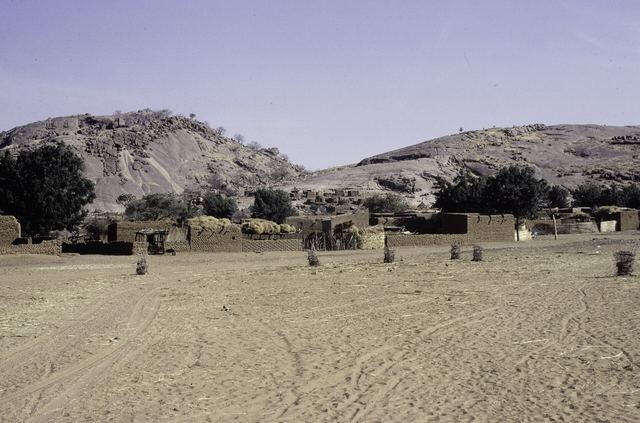
    Low mud-brick houses and fences below two rocky hills, with sandy ground and tyre tracks in front.

    Nondin and Soro

    After a JNIM attack on a military camp near Ouahigouya, soldiers went house to house in the villages of Nondin and Soro, Yatenga province, gathering residents and shooting them as suspected JNIM accomplices. Human Rights Watch documented 223 civilians killed, at least 56 of them children. When the BBC and Voice of America reported the findings, the authorities suspended both broadcasters.

    State operationsReported

  20. A war on every front

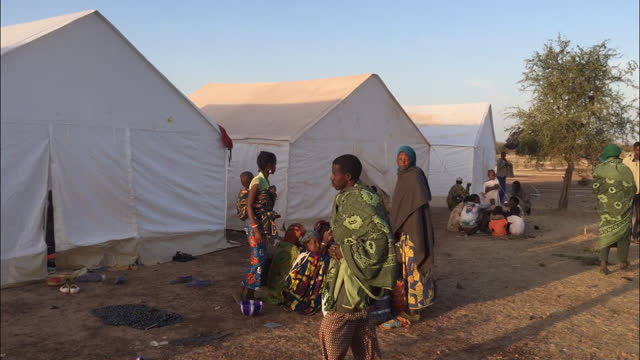
    Women and children beside white tents in a dry, sandy camp.

    Barsalogho: killed while digging a trench

    JNIM fighters attacked Barsalogho, in the Centre-Nord, while hundreds of residents, ordered by the authorities, were digging a defensive trench around the town. Human Rights Watch confirmed at least 133 dead and more than 200 wounded in under two hours. JNIM claimed it had killed about 300 militiamen. The government published no toll.

    AttacksConfirmed

  21. A war on every front

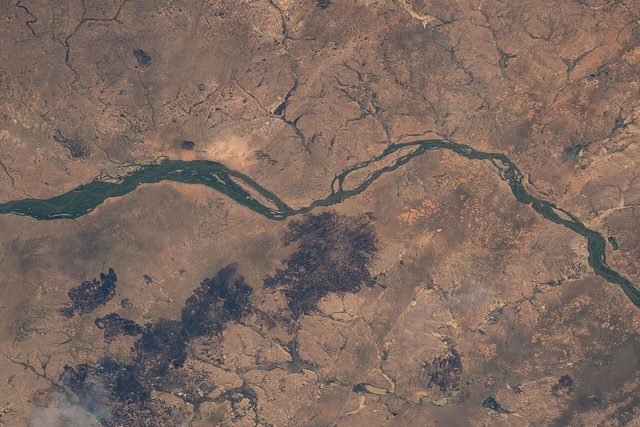
    A wide river between wooded banks.

    Solenzo: an ethnic massacre

    During a special forces campaign in the Boucle du Mouhoun, army units and hundreds of VDP militiamen killed Fulani civilians around Solenzo; in videos, militiamen walking among bodies called for the extermination of the Fulani. Human Rights Watch counted more than 130 dead, possibly many more, and says the army led the massacre. In early April JNIM killed at least 100 men in Sourou province in apparent retaliation.

    State operationsReported

  22. A war on every front

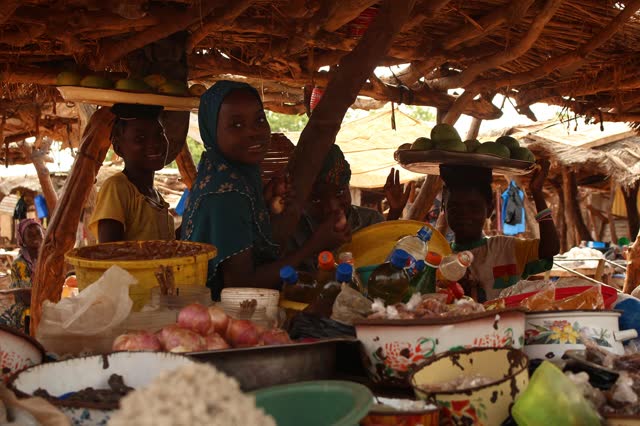
    Women sell vegetables under a thatched shelter.

    JNIM storms Djibo and Diapaga

    Hundreds of JNIM fighters attacked Djibo at dawn, overrunning the camp of the counter-terrorism unit and attacking the police station and the market. The next day they took the military base, the gendarmerie and the police station of Diapaga, in the East, and freed prisoners. The UN noted a change of strategy: JNIM was now occupying towns temporarily instead of raiding barracks for weapons.

    ExpansionConfirmed

  23. A war on every front

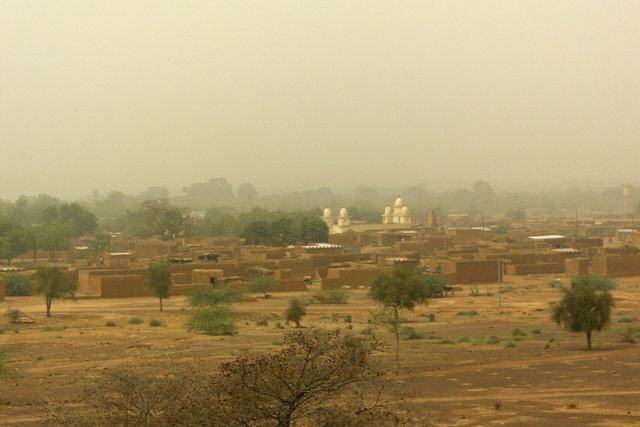
    A town of low earth-coloured buildings and a white mosque in hazy, dusty air, with trees in the foreground.

    Titao and the 2026 offensive

    Hundreds of JNIM fighters entered Titao, a garrison town in Loroum province, attacked its military base, shot men at the market, burned shops and brought down the telecommunications tower. Human Rights Watch documented at least 34 civilians executed, and seven Ghanaian traders also died, according to media cited by HRW. ACLED, cited by HRW, counted more than 30 attacks during the February offensive, with over 120 soldiers, forest guards and militiamen killed.

    AttacksConfirmed

  24. A war on every front

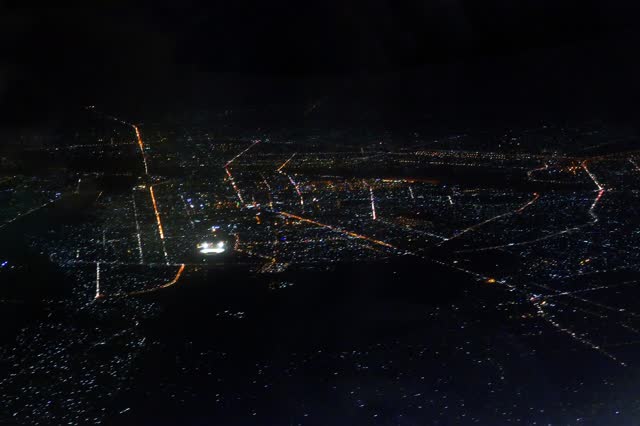
    City lights spread across a dark landscape seen from the air.

    The break with France

    Burkina Faso severed diplomatic relations with France with immediate effect, and France withdrew all its diplomats by early July. The junta has accused Paris of backing jihadist groups; France called the claims completely false. The rupture capped a turn away from old partners: French special forces left in February 2023, and Burkina Faso left ECOWAS with Mali and Niger in January 2025.

    International interventionConfirmed

  25. A war on every front

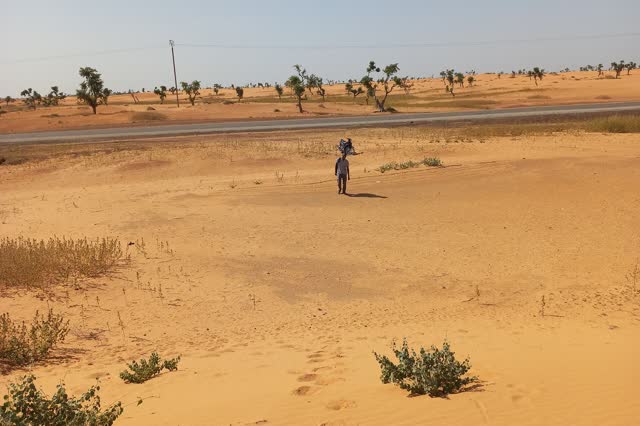
    A paved road crossing pale sand dunes with scattered shrubs.

    Jihadist against jihadist in Oudalan

    The Islamic State's Sahel branch and JNIM fought at Gonadaouri, in Oudalan province, in clashes that reportedly left several hundred dead. The fighting followed JNIM's killing in August of the Islamic State's commander in Burkina Faso, according to Agenzia Fides. The UN says the truce the two groups had kept earlier in 2025 broke down in Yagha that autumn.

    ExpansionDisputed

Scroll or drag the timeline; use the arrow keys between events. Select an event for details, map and sources.

Who operates where 2024–2026

This map shows where the two jihadist groups are documented in 2024–2026, province by province, as reported by the UN, ACLED, Human Rights Watch, Crisis Group and others. Colour shows the group; the fill shows how strong the evidence is. Only one source describes territorial control across most of two provinces: the Islamic State in Oudalan and Séno, in 2024. No source states that JNIM controls a whole province.

TogoNigeriaNigerMauritaniaMaliLiberiaGuineaGhanaIvory CoastBurkina FasoBeninJNIM — Historical presence: Where Ansarul Islam beganIslamic State Sahel — Historical presence: Islamic State presence before 2020JNIM + Islamic State Sahel — Documented activity: Liptako frontier: JNIM against the Islamic StateJNIM — Documented activity: North, Centre-Nord and Centre-EstJNIM — Documented activity: Boucle du MouhounJNIM — Documented activity: South-western borderlandsJNIM — Area of influence: The blockade belt: Soum, Loroum, Yagha and the EastIslamic State Sahel — Territorial control: Oudalan and Séno, outside the townsOuagadougouBobo-DioulassoDoriDjiboArbindaSebbaGorom-GoromTitaoOuahigouyaKayaFada N'GourmaDiapagaDédougouBanfora
Zones are built from the provinces named by the sources (the 45 provinces in use before the July 2025 reorganisation) and softened at the edges: they show areas, not front lines. Garrison towns such as Dori, Djibo and Arbinda are held by the state even where the countryside around them is not, according to the latest available sources. Activity is not control. Provinces: geoBoundaries, Institut Géographique du Burkina (CC BY 3.0 IGO). Zones: TerrorismPortal, from the sources listed for each zone; Jules Duhamel's 2025 map, based on ACLED data, used only as a cross-check.
  • Territorial control A credible source states that the group holds or administers the area.
  • Area of influence The group taxes, blockades or imposes rules on the population, without verified control of the towns.
  • Documented activity Recurrent armed attacks documented by monitors or the UN. Activity is not control.
  • Historical presence Where the group was documented in earlier years; no longer its main area.
  1. Islamic State Sahel · Territorial control · 2024Oudalan and Séno, outside the towns

    ACLED reported in September 2024 that the Islamic State had consolidated control of most of Oudalan and Séno. Later sources, among them the Belgian asylum agency in January 2026, place its activity mainly in Oudalan, Séno and Yagha but do not restate control. Dori and Gorom-Gorom are army garrisons.

    Oudalan · Séno

    Sources 4
  2. JNIM + Islamic State Sahel · Documented activity · 2023–2026Liptako frontier: JNIM against the Islamic State

    Documented fighting between the two groups in Séno and Yagha (2023–2025) and in Oudalan (October 2026). The UN reported clashes in Yagha from August to October 2025.

    Oudalan · Séno · Yagha

    Sources 5
  3. JNIM · Area of influence · 2022–2026The blockade belt: Soum, Loroum, Yagha and the East

    JNIM besieges or blockades towns here, among them Djibo and Arbinda since 2022, Sollé, Sebba, Mansila and Foutouri, and levies zakat in villages around Djibo, according to Human Rights Watch. It briefly took Djibo and Diapaga in May 2025.

    Soum · Loroum · Yagha · Komandjari · Gourma · Tapoa

    Sources 5
  4. JNIM · Documented activity · 2024–2026North, Centre-Nord and Centre-Est

    Recurrent JNIM attacks documented by the UN, ACLED and Human Rights Watch, among them Barsalogho in 2024. Sanmatenga was the second most affected province by political violence from all perpetrators, July 2024 to November 2025 (ACLED, via the Belgian asylum agency). Blockades are also reported in the East, without the group always being named.

    Yatenga · Bam · Sanmatenga · Namentenga · Gnagna · Kompienga · Koulpélogo

    Sources 5
  5. JNIM · Documented activity · 2024–2026Boucle du Mouhoun

    The region with the most victims of political violence from July 2024 to November 2025: 1,865, counting all perpetrators, including the Solenzo massacre led by the army and militias (ACLED, via the Belgian asylum agency). JNIM attacked villages of Sourou and posts at Di, Lanfiéra and Solenzo.

    Kossi · Sourou · Mouhoun · Banwa

    Sources 4
  6. JNIM · Documented activity · 2024–2026South-western borderlands

    Low-intensity activity near the borders with Côte d'Ivoire and Ghana: 33 victims of political violence, all perpetrators, in the Sud-Ouest region from July 2024 to November 2025. Described as an area of retreat and transit.

    Comoé · Léraba · Poni · Noumbiel

    Sources 3
  7. JNIM · Historical presence · 2016–2018Where Ansarul Islam began

    Ansarul Islam launched its insurgency in Soum in 2016; most of it was later absorbed into JNIM.

    Soum

    Sources 2
  8. Islamic State Sahel · Historical presence · 2016–2020Islamic State presence before 2020

    The Islamic State in the Greater Sahara operated in these provinces until JNIM drove it out of central and eastern Burkina Faso in the first half of 2020 and later, largely, out of Soum, Yagha and the Centre-Nord, according to ACLED.

    Soum · Yagha · Bam · Sanmatenga · Namentenga

    Sources 2

Figures claiming that jihadists hold 40 or 60 per cent of Burkina Faso circulate widely, as does the defence minister's statement in August 2024 that the state controls about 70 per cent of the territory. None explains how it was measured, so none is mapped here.

Geographic reach, by phase

TogoNigeriaNigerMauritaniaMaliLiberiaGuineaGhanaIvory CoastBurkina FasoBeninOuagadougou — 2. Siege of the Splendid Hotel; 5. Twin attack on the army and France; 14. First coup: Damiba ousts Kaboré; 17. Second coup: Captain Traoré; 24. The break with FranceOuagadougouFada N'Gourma — 6. A second front opens in the EastFada N'GourmaTambao mine — 1. A kidnapping at the Tambao mineTambao mineMarkoye — 3. The Islamic State's Sahel faction crosses inMarkoyeNassoumbou — 4. Nassoumbou and the birth of Ansarul IslamNassoumbouPama — 6. A second front opens in the EastPama
2015–2018 Spillover and first attacks
TogoNigeriaNigerMauritaniaMaliLiberiaGuineaGhanaIvory CoastBurkina FasoBeninOuagadougou — 2. Siege of the Splendid Hotel; 5. Twin attack on the army and France; 14. First coup: Damiba ousts Kaboré; 17. Second coup: Captain Traoré; 24. The break with FranceOuagadougouDjibo — 11. Bodies along the roads of Djibo; 15. Djibo under siege; 22. JNIM storms Djibo and DiapagaDjiboFada N'Gourma — 6. A second front opens in the EastFada N'GourmaYirgou — 7. Yirgou: a militia massacre of FulaniYirgouTambao mine — 1. A kidnapping at the Tambao mineTambao mineMarkoye — 3. The Islamic State's Sahel faction crosses inMarkoyeNassoumbou — 4. Nassoumbou and the birth of Ansarul IslamNassoumbouPama — 6. A second front opens in the EastPamaSolhan — 12. Solhan, the deadliest nightSolhanInata — 13. Inata: gendarmes left without foodInata
2019–2021 Massacres and militias
TogoNigeriaNigerMauritaniaMaliLiberiaGuineaGhanaIvory CoastBurkina FasoBeninOuagadougou — 2. Siege of the Splendid Hotel; 5. Twin attack on the army and France; 14. First coup: Damiba ousts Kaboré; 17. Second coup: Captain Traoré; 24. The break with FranceOuagadougouDjibo — 11. Bodies along the roads of Djibo; 15. Djibo under siege; 22. JNIM storms Djibo and DiapagaDjiboFada N'Gourma — 6. A second front opens in the EastFada N'GourmaYirgou — 7. Yirgou: a militia massacre of FulaniYirgouSeytenga — 16. Seytenga: a village executedSeytengaKarma — 18. Karma: a massacre in uniformKarmaTambao mine — 1. A kidnapping at the Tambao mineTambao mineMarkoye — 3. The Islamic State's Sahel faction crosses inMarkoyeNassoumbou — 4. Nassoumbou and the birth of Ansarul IslamNassoumbouPama — 6. A second front opens in the EastPamaSolhan — 12. Solhan, the deadliest nightSolhanInata — 13. Inata: gendarmes left without foodInata
2022–2023 Coups and sieges
TogoNigeriaNigerMauritaniaMaliLiberiaGuineaGhanaIvory CoastBurkina FasoBeninOuagadougou — 2. Siege of the Splendid Hotel; 5. Twin attack on the army and France; 14. First coup: Damiba ousts Kaboré; 17. Second coup: Captain Traoré; 24. The break with FranceOuagadougouDjibo — 11. Bodies along the roads of Djibo; 15. Djibo under siege; 22. JNIM storms Djibo and DiapagaDjiboTitao — 23. Titao and the 2026 offensiveTitaoFada N'Gourma — 6. A second front opens in the EastFada N'GourmaDiapaga — 22. JNIM storms Djibo and DiapagaDiapagaYirgou — 7. Yirgou: a militia massacre of FulaniYirgouSeytenga — 16. Seytenga: a village executedSeytengaBarsalogho — 20. Barsalogho: killed while digging a trenchBarsaloghoSolenzo — 21. Solenzo: an ethnic massacreSolenzoGonadaouri — 25. Jihadist against jihadist in OudalanGonadaouriKarma — 18. Karma: a massacre in uniformKarmaNondin and Soro — 19. Nondin and SoroNondin and SoroTambao mine — 1. A kidnapping at the Tambao mineTambao mineMarkoye — 3. The Islamic State's Sahel faction crosses inMarkoyeNassoumbou — 4. Nassoumbou and the birth of Ansarul IslamNassoumbouPama — 6. A second front opens in the EastPamaSolhan — 12. Solhan, the deadliest nightSolhanInata — 13. Inata: gendarmes left without foodInata
2024–2026 A war on every front

Each map shows the places of the events of one phase in colour, and those of earlier phases in grey. They show the reach of the conflict, not territorial control; the territorial map above shows where the groups operate.

Main actors

  • JNIMNon-state armed groupJama'at Nusrat al-Islam wal-Muslimin, al-Qaeda's branch in the Sahel, formed in Mali in 2017. The main armed group in Burkina Faso: 755 of the 846 terrorism deaths counted there in 2025. Human Rights Watch names Jafar Dicko among its commanders.
  • Ansarul IslamNon-state armed groupThe first Burkinabè jihadist group, founded in Soum in 2016 by Malam Ibrahim Dicko. Fought alongside JNIM; most of it joined JNIM, after 2017 according to Crisis Group and in 2022 according to the UN.
  • Islamic State SahelNon-state armed groupFormerly the Islamic State in the Greater Sahara, founded by Adnan Abu Walid al-Sahraoui. Strongest in Oudalan and Séno, by the Niger border; at war with JNIM since 2019.
  • Volunteers for the Defence of the Homeland (VDP)StateCivilian auxiliaries created in 2020 and recruited en masse after 2022. Targeted by JNIM; accused by Human Rights Watch of massacres of Fulani civilians.
  • Armed forces of Burkina FasoStateUnder military rule since January 2022, led by Captain Ibrahim Traoré since September 2022. Human Rights Watch attributes the Karma, Nondin and Soro and Solenzo massacres to the army.
  • France (Task Force Sabre)InternationalFrench special forces based near Ouagadougou supported the army until February 2023. Diplomatic relations were severed in June 2026.
  • Alliance of Sahel StatesRegional stateBurkina Faso, Mali and Niger, all under military rule: a confederation since July 2024, outside ECOWAS since January 2025.

Selected attacks

  1. 2015A kidnapping at the Tambao mine
  2. 2016Siege of the Splendid Hotel30 dead, 150 wounded (UN)
  3. 2018Twin attack on the army and France8 security personnel, about 80 wounded
  4. 2019Yirgou: a militia massacre of Fulani47–49 (government); about 210 (civil society)
  5. 2019Ambush on a mining convoy37 civilians, 60+ wounded (governor, provisional)
  6. 2021Solhan, the deadliest night132 (government); at least 160 (local sources)
  7. 2022Seytenga: a village executed86 (government); at least 89 (UN)
  8. 2024Barsalogho: killed while digging a trenchat least 133 (HRW) to 600 (French assessment)
  9. 2026Titao and the 2026 offensiveat least 34 civilians (HRW), plus 7 Ghanaians (media)

Tolls are the figures given by the cited sources; where counts differ, the range or the competing figures are given. Since 2022 the junta no longer publishes military losses, so most recent figures cannot be verified independently.

Terms used

JNIM is al-Qaeda's branch in the Sahel; the Islamic State in the Sahel, formerly the Islamic State in the Greater Sahara, is the Islamic State's. The two cooperated until 2019 and have fought each other since, with a pause in 2025. Ansarul Islam, the first group founded in Burkina Faso, fought alongside JNIM and was largely absorbed by it.

Koglweogo are community self-defence groups; the Volunteers for the Defence of the Homeland (VDP) are civilians armed and paid by the state since 2020. Neither is a jihadist group. Fulani (Peul) civilians have been targeted by both as suspected supporters of the jihadists.

Terrorism, here, means violence by a non-state group against civilians or symbolic targets to intimidate a population or pressure a government. Attacks on army and gendarmerie posts are recorded as insurgency. Killings of civilians by the army, the VDP or militias are recorded as abuses or massacres, with the responsible party named, and are not labelled terrorism.

Sources by event

Every event rests on at least one identified document. Links open the original source; certainty labels follow the portal's source and confidence criteria.

  1. 1 · A kidnapping at the Tambao mine

    AttacksConfirmed

    Places: Tambao mine

    AFP noted at the time that kidnappings of foreigners, frequent in Mali and Niger, were not usual in Burkina Faso. Al-Mourabitoun released a video of the hostage, filmed in August 2015.

    Photo: C. Hugues · Wikimedia Commons · CC BY-SA 2.0 · original

  2. 2 · Siege of the Splendid Hotel

    AttacksConfirmed

    Places: Ouagadougou

    Uncertainty: Tolls differ slightly: 30 dead and 150 wounded (UN), 30 dead from at least 11 countries and over 70 wounded (Human Rights Watch), at least 28 (AP, two days later).

    The UN called the attacks in Ouagadougou and, two months later, in Grand-Bassam (Côte d'Ivoire) unprecedented. The same day an Australian couple was kidnapped near Djibo, in Soum province; AQIM claimed it, according to Crisis Group.

    Photo: Sputniktilt · Wikimedia Commons · CC BY-SA 4.0 · original

  3. 3 · The Islamic State's Sahel faction crosses in

    Emergence of groupsReported

    Places: Markoye

    Uncertainty: The claims are known through a Mauritanian news agency and a UN member state. The Intangom toll differs: three soldiers (Defence Ministry, via AP) or four soldiers and a civilian (Crisis Group).

    Amaq, the Islamic State's news agency, announced al-Sahraoui's pledge on 30 October 2016; UN member states did not yet consider it accepted by the Islamic State's leadership, the UN Monitoring Team reported.

    Photo: Zoumana Wonogo (VOA) · Wikimedia Commons · Public domain (VOA) · original

  4. 4 · Nassoumbou and the birth of Ansarul Islam

    Emergence of groupsReported

    Places: Nassoumbou

    Uncertainty: Ansarul Islam claimed the attack only through an unverified Facebook page. Crisis Group says it was reportedly led by Ansarul Islam together with the Islamic State in the Greater Sahara.

    Dicko probably died in the spring of 2017. In 2018 the UN Monitoring Team described the group as split between a faction led by Jafar Dicko and one close to the Islamic State in the Greater Sahara.

    Photo: MODIS Land Rapid Response Team, NASA GSFC · Wikimedia Commons · Public domain (NASA) · original

  5. 5 · Twin attack on the army and France

  6. 6 · A second front opens in the East

    ExpansionReported

    Places: Pama · Fada N'Gourma

    Uncertainty: No group claimed the Pama attack and the UN names none. Reported tolls range from six to eight.

    The state of emergency covered the East and Sahel regions and the provinces of Kossi, Sourou, Koulpélogo, Kénédougou and Loroum. It followed the killing of ten gendarmes in an ambush near Toéni on 27 December.

    Photo: Martin Wegmann · Wikimedia Commons · CC BY-SA 3.0 · original

  7. 7 · Yirgou: a militia massacre of Fulani

    AttacksConfirmed

    Places: Yirgou

    Uncertainty: The UN reported more than 67 killed. The first attack was apparently carried out by members of Ansarul Islam, Amnesty says; it was not claimed.

    Yirgou opened a cycle of community reprisals against the Fulani, whom militias and later state forces accused of siding with the jihadists. This was not terrorism by a jihadist group: the mass killing was carried out by a self-defence militia.

    Photo: Lamine Traoré (VOA) · Wikimedia Commons · Public domain (VOA) · original

  8. 8 · Al-Qaeda and the Islamic State go to war

  9. 9 · Ambush on a mining convoy

  10. 10 · Arming civilians: the VDP

  11. 11 · Bodies along the roads of Djibo

    State operationsReported

    Places: Djibo

    Uncertainty: No witness saw the executions documented in July 2020; Human Rights Watch says the available evidence points to government forces. It reported little progress in the investigations in 2022.

    These killings are recorded as abuses by state forces, not as terrorism.

    Photo: Fred van der Kraaij / ASC Leiden · Wikimedia Commons · CC BY-SA 4.0 · original

  12. 12 · Solhan, the deadliest night

    AttacksAssessed

    Places: Solhan

    Uncertainty: No group claimed the attack and JNIM denied responsibility. The Global Initiative against Transnational Organized Crime says a group loosely affiliated with JNIM carried it out; the UN gives no attribution.

    The authorities closed artisanal gold sites in Oudalan and Yagha. Solhan fuelled the protests that preceded President Kaboré's fall.

    Photo: Fred van der Kraaij / ASC Leiden · Wikimedia Commons · CC BY-SA 4.0 · original

  13. 13 · Inata: gendarmes left without food

  14. 14 · First coup: Damiba ousts Kaboré

  15. 15 · Djibo under siege

  16. 16 · Seytenga: a village executed

  17. 17 · Second coup: Captain Traoré

  18. 18 · Karma: a massacre in uniform

    State operationsReported

    Places: Karma

    Uncertainty: The government condemned the killings and opened an investigation; the local prosecutor gave a toll of 60. No one has been held responsible.

    Photo: Fernando Hidalgo Marchione · Wikimedia Commons · CC BY-SA 2.0 · original

  19. 19 · Nondin and Soro

    State operationsReported

    Places: Nondin and Soro

    Uncertainty: The local prosecutor reported about 170 people executed and opened an investigation; Human Rights Watch found no progress by 2025. The media regulator called the findings 'hasty and biased'; the government did not respond to AFP.

    The media regulator also blocked Human Rights Watch's website and warned other media they could face sanctions if they carried the report.

    Photo: Fred van der Kraaij / ASC Leiden · Wikimedia Commons · CC BY-SA 4.0 · original

  20. 20 · Barsalogho: killed while digging a trench

    AttacksConfirmed

    Places: Barsalogho

    Uncertainty: Tolls diverge widely: at least 133 (Human Rights Watch), at least 200 (initial UN estimate, reported by CNN), nearly 300 (JNIM's claim), up to 600 (French government security assessment, reported by CNN).

    Photo: Lamine Traoré (VOA) · Wikimedia Commons · Public domain (VOA) · original

  21. 21 · Solenzo: an ethnic massacre

    State operationsReported

    Places: Solenzo

    Uncertainty: The government said security forces and militias had repelled a terrorist attack. JNIM told Human Rights Watch that the men it killed in Sourou were fighters. Human Rights Watch dates the Sourou reprisals to 1–5 April 2025 in its World Report and to May 2025 in its April 2026 report.

    The killings took place during the operation Green Whirlwind 2 (Tourbillon Vert 2). Ouagadougou's chief prosecutor warned that calls to exterminate an ethnic group were offences.

    Photo: Marco Schmidt · Wikimedia Commons · CC BY-SA 3.0 · original

  22. 22 · JNIM storms Djibo and Diapaga

  23. 23 · Titao and the 2026 offensive

    AttacksConfirmed

    Places: Titao

    Uncertainty: AFP dates the attack 15 February; Human Rights Watch, 14 February. AFP counted about ten civilians killed; JNIM claimed dozens of soldiers.

    After months in which JNIM had moved fighters to Mali, the UN Monitoring Team reports that the group claimed more than 130 attacks in Burkina Faso in 2026 and expanded closer to Ouagadougou.

    Photo: Bruno Le Bansais · Wikimedia Commons · CC BY-SA 3.0 · original

  24. 24 · The break with France

  25. 25 · Jihadist against jihadist in Oudalan

All sources

UN and African Union documents

  1. UN Secretary-General — Report on the activities of UNOWAS (S/2016/566) (23 June 2016)
  2. UN Monitoring Team (1267) — Eighteenth report of the Analytical Support and Sanctions Monitoring Team (S/2016/629) (19 July 2016)
  3. UN Secretary-General — Report on the activities of UNOWAS (S/2016/1072) (19 December 2016)
  4. UN Monitoring Team (1267) — Nineteenth report of the Monitoring Team (S/2017/35) (13 January 2017)
  5. UN Secretary-General — Report on the activities of UNOWAS (S/2018/649) (29 June 2018)
  6. UN Monitoring Team (1267) — Twenty-second report of the Monitoring Team (S/2018/705) (27 July 2018)
  7. UN Monitoring Team (1267) — Twenty-third report of the Monitoring Team (S/2019/50) (15 January 2019)
  8. UN Secretary-General — Report on the activities of UNOWAS (S/2018/1175) (28 December 2018)
  9. UN Secretary-General — Report on the activities of UNOWAS (S/2019/549) (5 July 2019)
  10. UN Secretary-General — Report on the activities of UNOWAS (S/2019/1005) (30 December 2019)
  11. UN Secretary-General — Report on the activities of UNOWAS (S/2020/585) (24 June 2020)
  12. UN Monitoring Team (1267) — Twenty-seventh report of the Monitoring Team (S/2021/68) (3 February 2021)
  13. UN Secretary-General — Report on the activities of UNOWAS (S/2021/612) (28 June 2021)
  14. UN Monitoring Team (1267) — Twenty-eighth report of the Monitoring Team (S/2021/655) (21 July 2021)
  15. UN Secretary-General — Report on the activities of UNOWAS (S/2021/1091) (15 December 2021)
  16. UN Monitoring Team (1267) — Twenty-ninth report of the Monitoring Team (S/2022/83) (3 February 2022)
  17. UN Secretary-General — Report on the activities of UNOWAS (S/2022/521) (29 June 2022)
  18. UN Monitoring Team (1267) — Thirtieth report of the Monitoring Team (S/2022/547) (15 July 2022)
  19. UN Secretary-General — Report on the activities of UNOWAS (S/2022/1019) (3 January 2023)
  20. United Nations in Burkina Faso — Statement on the Seytenga attack (13 June 2022)
  21. UN Human Rights Office (OHCHR) — Press briefing: Burkina Faso, killing of civilians in Karma (April 2023)
  22. UN Monitoring Team (1267) — Thirty-sixth report of the Monitoring Team (S/2025/482) (24 July 2025)
  23. UN Monitoring Team (1267) — Thirty-seventh report of the Monitoring Team (S/2026/44) (4 February 2026)
  24. UN Monitoring Team (1267) — Thirty-eighth report of the Monitoring Team (S/2026/651) (10 August 2026)

Government documents

  1. Burkina24 (official toll) — Burkina: des positions de l'armée et de la gendarmerie attaquées dans le Soum (16 December 2016)
  2. Burkina24 (presidential address) — Message du Président du Faso à la Nation, 31 décembre 2018 (31 December 2018)
  3. Burkina24 — Burkina: la loi sur les Volontaires pour la défense de la patrie adoptée à l'unanimité (21 January 2020)
  4. Burkina24 (government toll) — Sahel: gendarmes tombés et civils tués à Inata, deuil national de 72 heures (15 November 2021)
  5. Burkina24 (government toll) — Seytenga: le nombre total des victimes est estimé désormais à 86 morts (15 June 2022)
  6. Burkina24 (government toll) — Pama: 7 morts dans l'attaque d'une brigade de gendarmerie (officiel) (28 August 2018)
  7. CGRS-CEDOCA (Belgium) — COI Focus – Burkina Faso: situation sécuritaire (30 January 2026)
  8. ACCORD / ecoi.net — Anfragebeantwortung zu Burkina Faso: Kontrolle über den Großraum Djibo seit 2025 (23 April 2026)
  9. Sida (Sweden) — Humanitarian Crisis Analysis 2026: Burkina Faso (31 March 2026)

Data and monitoring

  1. ACLED — Newly restructured, the Islamic State in the Sahel aims for regional expansion (30 September 2024)
  2. ACLED — Economic warfare escalates as militants expand beyond the Sahel (11 December 2025)
  3. Institute for Economics & Peace — Global Terrorism Index 2026 (March 2026)
  4. ACAPS — Burkina Faso: humanitarian overview of Djibo town surrounded by armed groups (19 October 2022)

Research and analysis

  1. GCPEA — Education under Attack 2026: Burkina Faso (2026)
  2. International Crisis Group — The Social Roots of Jihadist Violence in Burkina Faso's North (Africa Report N°254) (12 October 2017)
  3. International Crisis Group — Le JNIM et le dilemme de l'expansion au-delà du Sahel (Rapport Afrique N°321) (20 February 2026)
  4. CTC Sentinel (West Point) — The End of the Sahelian Anomaly: how the global conflict between the Islamic State and al-Qa'ida finally came to West Africa (July 2020)
  5. Global Initiative against Transnational Organized Crime — Criminal economies are a key factor in Burkina Faso's Solhan massacre (2021)
  6. Bellingcat — Five kilometres of destruction: satellite imagery reveals extent of damage to civilian convoy in Burkina Faso (18 November 2022)
  7. Jules Duhamel — Carte du conflit armé au Burkina Faso (2025): activité du JNIM et de l'État islamique (cross-check only; map not reproduced) (12 August 2025)
  8. Human Rights Watch — "By Day We Fear the Army, By Night the Jihadists": abuses by armed Islamists and security forces in Burkina Faso (May 2018)
  9. Human Rights Watch — Burkina Faso: security forces allegedly execute 31 detainees (20 April 2020)
  10. Human Rights Watch — Burkina Faso: residents' accounts point to mass executions (8 July 2020)
  11. Human Rights Watch — World Report 2022: Burkina Faso (January 2022)
  12. Human Rights Watch — World Report 2023: Burkina Faso (January 2023)
  13. Human Rights Watch — Burkina Faso: army massacres 223 villagers (25 April 2024)
  14. Human Rights Watch — Burkina Faso: army directs ethnic massacres (12 May 2025)
  15. Human Rights Watch — Burkina Faso: Islamist armed groups massacre civilians (15 September 2025)
  16. Human Rights Watch — World Report 2026: Burkina Faso (13 January 2026)
  17. Human Rights Watch — Burkina Faso: Islamist armed group commits new atrocities (12 March 2026)
  18. Human Rights Watch — "None Can Run Away": war crimes and crimes against humanity in Burkina Faso by all parties (2 April 2026)
  19. Amnesty International — Burkina Faso: déclaration publique sur les tueries de Yirgou (AFR 60/9646/2019) (9 January 2019)
  20. Amnesty International — Burkina Faso: witness testimony confirms armed group perpetrated mass killings (March 2020)
  21. Amnesty International France — Burkina Faso: au moins 86 personnes tuées à Nouna (2023)

News reports

  1. AFP (via Capital FM) — Gunmen kidnap Romanian security guard from Burkina Faso mine (5 April 2015)
  2. FDD's Long War Journal — Al Murabitoon shows Romanian hostage in new video (2 September 2015)
  3. Al Jazeera — Burkina Faso hotel siege declared over (16 January 2016)
  4. Al Jazeera / AP — Burkina Faso begins mourning after hotel attack (18 January 2016)
  5. Burkina24 — Attaque de Markoye: revendication d'Abou Walid Al-Sahraoui (September 2016)
  6. AP (via Fox News) — Gunmen attack Burkina Faso's north, killing 3 soldiers (12 October 2016)
  7. Al Jazeera — Burkina Faso: army headquarters and French embassy attacked (3 March 2018)
  8. FDD's Long War Journal — Al Qaeda branch in Mali reportedly claims Burkina Faso attacks (3 March 2018)
  9. The Defense Post — Burkina Faso security personnel killed by bomb in Pama, Fada N'Gourma (28 August 2018)
  10. The Defense Post — Burkina Faso declares state of emergency in northern provinces (31 December 2018)
  11. Al Jazeera / Reuters — Burkina Faso: 37 killed in attack on Canadian mining convoy (6 November 2019)
  12. Al Jazeera — 'Killing field': at least 180 bodies discovered in Burkina Faso (8 July 2020)
  13. Al Jazeera — UN 'outraged' as death toll in Burkina Faso attack rises to 132 (6 June 2021)
  14. Al Jazeera — Solhan massacre exposes failure to tackle Sahel crisis (10 June 2021)
  15. Al Jazeera — Burkina Faso: death toll in security post attack jumps to 53 (17 November 2021)
  16. Al Jazeera — ISIL affiliate gains ground in the Sahel as massacres mount (17 June 2022)
  17. Al Jazeera — Burkina Faso: military officers remove President Damiba in a coup (30 September 2022)
  18. Anadolu Agency — Burkina Faso's junta officially ends French military mission (20 February 2023)
  19. AFP (via The Citizen) — Burkina Faso suspends BBC, Voice of America for two weeks (April 2024)
  20. Al Jazeera — Nearly 200 people dead: what's behind armed attacks in Burkina Faso? (26 August 2024)
  21. CNN (via Egypt Independent) — 'There was screaming everywhere': hundreds killed in one of the deadliest attacks in Africa in decades (October 2024)
  22. Vatican News — Niger, Mali and Burkina Faso sign Sahel confederation treaty (July 2024)
  23. 3News (Ghana) — ECOWAS announces exit of Mali, Burkina Faso, Niger (29 January 2025)
  24. AP (via NBC News) — Jihadi attack in northern Burkina Faso kills more than 100 (12 May 2025)
  25. Al Jazeera — Al-Qaeda affiliate claims 200 soldiers killed in attack in Burkina Faso (15 May 2025)
  26. AFP (via The Defense Post) — Deadly jihadist offensive sweeps northern and eastern Burkina Faso (27 February 2026)
  27. Reuters (via Gulf Times) — Burkina, Mali troops kill more civilians than religious militants do: HRW (2 April 2026)
  28. Xinhua (via The Star, Kenya) — France pulls all diplomats from Burkina Faso (6 July 2026)
  29. AFP (via The Defense Post) — Burkina jihadists kill soldiers, militia (8 July 2026)
  30. RFI (via AllAfrica) — Burkina: combats entre le JNIM et l'État islamique au Sahel (16 October 2026)
  31. Agenzia Fides — Burkina Faso: une guerre dans la guerre, l'affrontement entre le JNIM et l'État islamique au Sahel (15 October 2026)
  32. AFP (via Africanews) — Al-Qaeda and IS rivalry sparks fierce fighting across Sahel (16 October 2026)
  33. Le360 / AFP — Burkina Faso: le bilan de l'attaque contre le village de Seytenga passe à 79 morts (14 June 2022)

Method and limits

Events were selected for the change they mark in the war — in the groups' reach and organisation, in the state's response, in foreign involvement or in the harm done to civilians — rather than for their death toll alone. Each rests on at least one primary or independent source: UN Security Council and Secretary-General documents, the UN Monitoring Team and the UN human rights office; Human Rights Watch and Amnesty International; ACLED, ACAPS and the Global Terrorism Index; Crisis Group; official statements; and reporting by Al Jazeera, AFP, Reuters, AP, RFI and others.

Figures are given only when an identified source publishes them; claims by the government and armed groups are labelled as such. Where sources disagree on a date, a toll or the group responsible, the entry says so. The territorial map aggregates provinces named by the sources and gives each zone its sources and evidence level. Information is current to 23 October 2026.

Version history

  • — Published (v1.0) — First publication (v1.0)

Report an error or suggest a source

Photographs